
Night sweats treatment starts with a cooler room, breathable bedding, and airflow, but frequent drenching episodes need medical review.
If you’re looking for night sweats treatment options at home, start with the basics that actually have clinical support, cool the sleep environment, improve airflow, and switch to breathable clothes and bedding. Those steps help many people fast, but regular, drenching, or sleep breaking night sweats still need a medical review because menopause is only one possible cause.
TL;DR: Summary
- Night sweats treatment at home works best when you cool the sleep setup first: aim for a bedroom temperature of 60°F to 67°F, add steady airflow, and use loose-fitting cotton clothes plus breathable bedding.
- Fans help symptoms, but they do not cool air like an air conditioner: a bed fan or room fan uses the cooler air already in the room, which can still improve comfort and often lets people raise the thermostat by about 5°F while sleeping cooler.
- The best-supported home options include: fans or open windows, lighter layers, relaxation techniques, and cognitive behavioral therapy for distress, sleep disruption, or vasomotor symptoms.
- Common causes include more than menopause: medications, cancer treatment, infections, thyroid problems, anxiety, and sleep apnea can all trigger night sweats.
- See a clinician if night sweats happen regularly, soak clothes or bedding in a cool room, interrupt sleep, or come with fever, weight loss, pain, cough, or diarrhea.
- If you want targeted airflow under the covers, a Bedfan can be more effective than a ceiling fan: it moves air between the sheets, uses about 18 watts on average, and many people can keep the room about 5°F warmer without feeling overheated.
Home care for night sweats is less about chasing miracle remedies and more about heat removal, trigger control, and knowing when symptoms have crossed the line from annoying to medically important. If you get hot enough to wake up soaked, or you’re changing pajamas in the middle of the night, you’ll usually get the biggest payoff from fixing the bed microclimate first, then looking at causes like perimenopause, medication side effects, or cancer treatment.
Yes, there’s a difference. The NHS and Mayo Clinic draw a line between simply being too warm in bed and true night sweats that soak sleepwear or bedding, even when the room is cool.
A hot room, heavy comforter, or foam mattress that traps heat can make anyone sweat at night. That is uncomfortable, but it is not the same thing as repeated drenching sweating in a reasonably cool room. True night sweats are more likely to point to vasomotor symptoms, a medication effect, or another health issue that needs attention.
Menopause and perimenopause are common causes, especially when hot flashes roll into the night. Medications are another big one. Antidepressants, steroids, some pain medicines, blood pressure medicines, diabetes medicines, and cancer treatments can all be part of the story. Infections, thyroid problems, anxiety, sleep apnea, and some cancers also belong on the list.
A common misconception is that night sweats always mean menopause. They do not. If you are male, younger, or long past menopause, the symptom still deserves a real look if it is frequent, severe, or new.
Start with the room, then the bed. Sleep specialists commonly recommend a bedroom temperature between 60°F and 67°F, and that range gives any cooling method a better chance to work.
Step 1 is simple, set the room cooler before bedtime. If your room is at 74°F and you are buried under heavy bedding, a fan alone may not be enough. The goal is not to make the room cold, it is to lower the starting temperature so your body has less trapped heat to fight.
Step 2, get air moving. Open windows if the outside air is cooler and clean enough for comfort. Use a Ceiling fans, pedestal fan, or box fan to move ambient air. Clinical guidance from the National Cancer Institute includes fans and open windows as comfort measures for hot flashes and night sweats because moving air helps sweat evaporate and lowers that suffocating, trapped feeling.
Step 3, cool the bed microclimate, not just the room. This is where a bed fan can outperform general room airflow. A Bedfan sends air between the sheets, where your body heat actually builds up. That matters because many people do not overheat from room air alone, they overheat because heat gets trapped by the mattress, sheets, and comforter.
When you use targeted airflow under the covers, many people can raise room temperature by about 5°F and still sleep cool enough for more restful sleep. That can trim air conditioning use, especially in summer, because the whole house does not need to feel like a refrigerator for your bed to feel comfortable.
" bFan uses about 18 watts on average, so overnight cooling can cost far less than dropping your whole house AC several degrees."
One important point gets missed all the time, neither Bedfan nor Bedjet cools the air. They are not air conditioners. They use the cooler air already in the room and move it where it matters most. If the room is too warm to begin with, both will have less to work with.
The best home treatments are practical, boring, and effective. If you want symptom relief tonight, start with the options below before spending money on supplements with mixed evidence.
bFan bed fan: bed fan targets the heat trapped under your sheets, which is often the real problem. The bFan can be placed around the bed, commonly at the foot, to send controlled airflow between the sheets. If you want a purpose built option, the bFan from www.bedfans-usa is a sensible solution to consider.
loose-fitting cotton clothes: Official cancer guidance includes loose-fitting cotton clothes because breathable fabric helps sweat evaporate and reduces that sticky, clammy feeling after a hot flash.
Breathable bedding: Lightweight sheets and a lighter cover usually work better than a thick comforter. Tight weave sheets are a smart move with a Bedfan because they help the air spread across your body and carry heat away.
Room airflow: Open windows, if conditions allow, or use a ceiling or room fan. This is basic, but it is still one of the best supported symptom relief steps.
Relaxation techniques: Slow breathing, progressive muscle relaxation, and pre sleep decompression can help if stress or anticipatory anxiety makes sweating worse.
Cognitive behavioral therapy: CBT does not magically stop sweating, but it can reduce distress, improve sleep, and help you respond better to vasomotor symptoms.
Trigger review: Track alcohol, spicy food, stress, cycle changes, new medications, and bedtime room temperature. Patterns often show up faster than people expect.
The trade off is straightforward. Environmental fixes work fast and have low risk, but they do not treat an infection, medication side effect, or endocrine disorder. That is why symptom relief and cause finding need to happen together when the problem keeps coming back.
Bed fans cool the space under the covers better. Ceiling fans and box fans improve room airflow, but they do not directly remove as much trapped heat from bedding.
This matters because your body is usually sweating inside a small insulated pocket made by the mattress, fitted sheet, top sheet, and blanket. A ceiling fan can help the room feel better, but if heat stays trapped around your torso and legs, you may still wake up sweaty. A Bedfan or similar bed fan pushes air right into that hot zone.
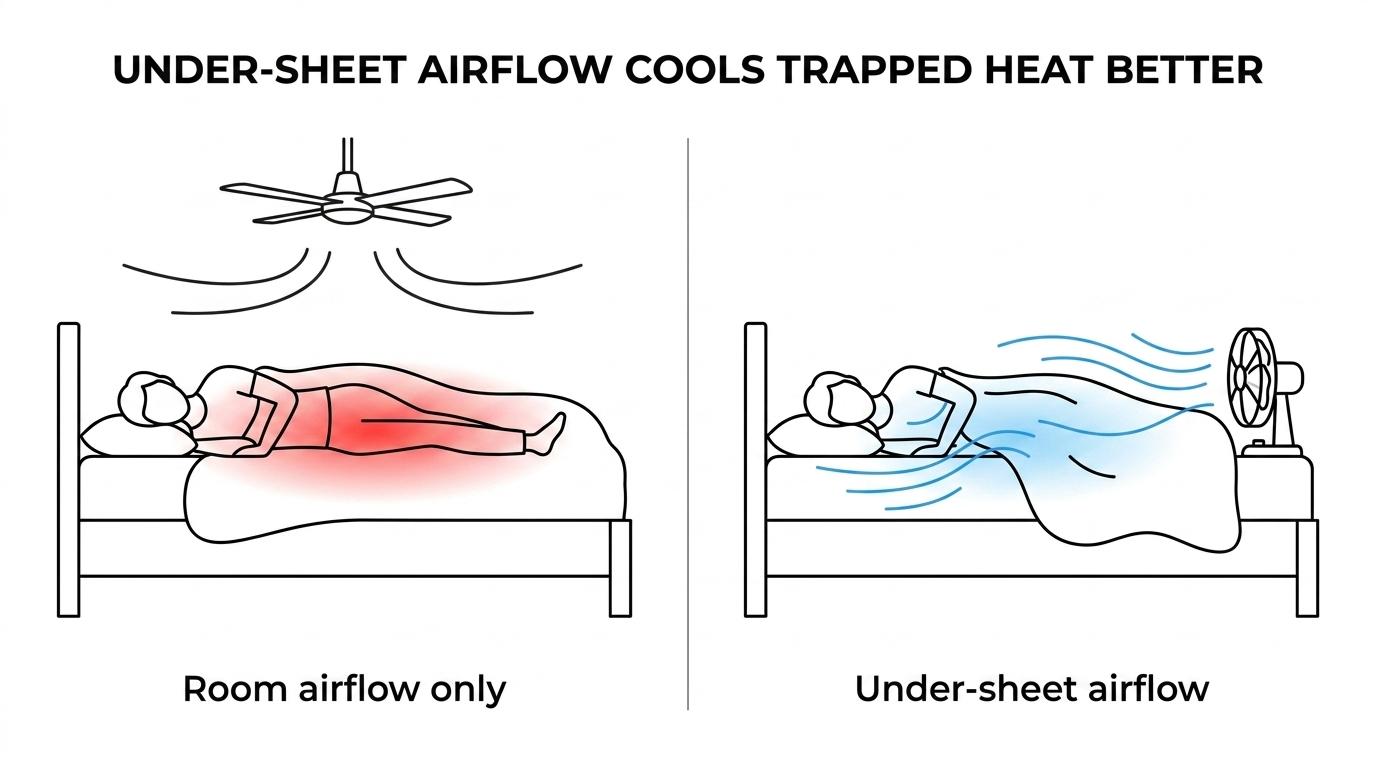
A common mistake is assuming all fan airflow feels the same. It does not. Ambient airflow cools the room and skin surfaces that are exposed. Between the sheets airflow attacks the part of the problem your room fan cannot really reach.
There is also a comfort difference. Some people hate air blowing on their face or drying their eyes out. A bed fan can cool the body without turning your whole bedroom into a wind tunnel.
"At normal operating speed, Bedfan runs around 28 dB to 32 dB, which is quieter than many people expect from overnight cooling."
Placement matters a lot. A Bedfan works best when you aim it into the bed cavity and let the sheets guide the airflow across your body.
Step 1, place the unit near the foot or side of the bed so it can feed air between the top sheet and fitted sheet area. The goal is not a blast of air at your face. You want a gentle stream that travels under the covers and lifts heat away from your skin.
Step 2, use the right bedding. Tight weave sheets, think crisp cotton or similar fabrics, help the air move across the body more evenly. Loose knit blankets or overly fluffy bedding can diffuse that airflow and cut the cooling effect. This is a pro tip people often miss, the fan matters, but the sheet structure matters too.
Step 3, use the controls strategically. If your bed fan has timer controls, use them. Many people want the strongest cooling during the first one to three hours of sleep, when they are falling asleep and more likely to overheat under fresh covers. After that, a lower setting or timed shutoff can keep you comfortable without becoming noticeable.
If you want a practical setup, the bFan is a remote controlled, adjustable height bed cooling fan made for between the sheets airflow. That kind of adjustability helps when you are fine tuning the angle, sheet loft, and airflow level to match your bed.
For night sweats, both are airflow products, not air chillers. Neither Bedfan nor Bedjet cools the air itself, so the real question is where the airflow goes, how much control you want, and what you are willing to spend.
The first difference is cost. One Bedjet is more than twice the price of a single Bedfan. A dual zone Bedjet setup costs over a thousand dollars, which is more than twice the price of two bedfans. If your goal is dual zone microclimate control for two sleepers, two bFans can do that at a fraction of the cost of a dual zone Bedjet.
The second difference is category focus. The original Bedfan was invented in 2003, several years before Bedjet was even thought of. That does not automatically make it better for every sleeper, but it does matter if you want a long established, purpose built bed fan concept centered on quiet, directed under cover airflow.
"The original Bedfan was invented in 2003, years before Bedjet, which makes it one of the earliest purpose built bed fan designs."
There are practical trade offs too. Bedfan style airflow is simple, targeted, and energy light. The Bedfan uses only about 18 watts on average. Bedjet offers a more feature heavy system, but the price jump is significant, especially for couples who want separate zones. And again, neither system makes cold air. They both rely on the cooler air already present in the room.
If you are deciding between them for night sweats, ask yourself one question first. Do you need a high cost system with more layers of hardware, or do you mostly need controlled airflow under the covers so body heat can escape? For many hot sleepers, the second answer is enough.
Fabric choice helps more than people think. [Cotton sleepwear], lighter layers, and breathable sheets can cut the after sweat stickiness that makes night sweats feel worse.
Clinical comfort guidance specifically mentions loose-fitting cotton clothes. That recommendation is sensible because cotton and similar breathable fabrics let air circulate and reduce the trapped heat you get from tight synthetic layers. If your pajamas cling or your waistband traps heat at the waist, you may be creating your own mini sauna.
Your sheets matter just as much. If you are using a Bedfan, tight weave sheets often work best because they channel airflow across the body instead of letting it escape upward too fast. Percale is a common example people like for this reason. A common misconception is that looser, more open fabric always feels cooler. It may feel airy at first touch, but it does not always guide under cover airflow as well.
Bedding weight matters too. If you wake up soaked under a dense comforter, try this simple change, keep the same sheet set and switch to a lighter blanket for a week. If sweating drops, insulation was part of the problem. If nothing changes in a cool room, the cause may be more internal than environmental.
Mattress materials can also affect heat retention. Dense foam can hold warmth around the torso and hips, while more breathable constructions may release it faster. That will not cure vasomotor symptoms, but it can reduce how intense a hot episode feels once it starts.
A short symptom log is worth it. Menopause, SSRIs, prednisone, tamoxifen, alcohol, and stress are all concrete triggers that can show up once you write them down.
Step 1, keep a simple seven to fourteen day record. Write down bedtime, room temperature, what you wore, what bedding you used, whether the window was open, whether you used a fan, and how severe the sweating was. If you are in perimenopause, note where you are in your cycle and whether daytime hot flashes happened too.
Step 2, flag likely triggers. Look at evenings with alcohol, spicy food, late workouts, high stress, or a new medicine. Medications that commonly cause sweating include Antidepressants, steroids, some pain medicines, diabetes medicines, and hormone therapies. If the pattern appears after a medication change, do not stop it on your own. Bring the pattern to the prescribing clinician.
Step 3, connect the symptom to the likely cause. If the sweats happen with classic vasomotor symptoms, a menopause discussion may be the next step. If they began during cancer treatment, ask the oncology team which symptom relief options are safe. If a medicine seems involved, a clinician may be able to adjust the dose, timing, or substitute a different drug.
This is where cause finding protects you from wasted effort. You can buy new sheets, a new mattress, and three supplements, but if sertraline, prednisone, or an overactive thyroid is driving the problem, the real fix usually sits outside the linen closet.
Yes, they can help, especially when night sweats wreck sleep. The National Cancer Institute lists cognitive behavioral therapy and relaxation techniques as non drug options that may help manage hot flashes and night sweats.
This does not mean CBT cools your body like airflow does. It means it can reduce the spiral that turns one hot episode into two hours of wakefulness, frustration, and clock watching. That matters because poor sleep raises stress, and stress can make the next night worse.
Relaxation techniques can be very practical. Slow breathing, progressive muscle relaxation, guided imagery, and a short wind down routine can lower arousal before bed. If anxiety, cancer treatment stress, or perimenopause has made bedtime feel loaded, this approach can improve sleep quality even when it does not fully stop the sweating.
A useful way to think about it is this, if your night sweats are partly a body temperature problem and partly a sleep disruption problem, then you need both cooling and sleep coping tools. Airflow handles the first part. CBT and relaxation help with the second.
The most useful home remedies are the least glamorous. Fans, open windows, breathable clothes, lighter bedding, and routine changes have stronger support than most supplement claims.
The evidence for many supplement approaches is mixed or weak. That does not mean every supplement is useless, but it does mean you should be careful with marketing promises. A common misconception is that natural means safe. That is not always true, especially if you take tamoxifen, thyroid medicine, antidepressants, blood thinners, or other long term prescriptions.
Here is the simple sorting rule. If a remedy improves airflow, lowers trapped heat, reduces bedtime stress, or helps identify a trigger, it is worth trying. If it promises hormone level miracles, instant detox, or permanent cures without addressing the cause, be skeptical.
Hydration helps comfort, but it is not a cure. Cooling pillows can feel nice, but many lose their effect once the surface warms up. Moisture wicking fabrics help some people, but breathable cotton or a well chosen woven sheet can work just as well for others. The biggest home win usually comes from combining room cooling with direct bed airflow, not from stacking gadgets.
You should get checked if night sweats are regular, drenching, or disrupt sleep. Mayo Clinic and Cleveland Clinic both advise medical review when the symptom keeps happening or starts affecting rest.
Night sweats deserve faster attention when they show up with other symptoms. If the room is cool and you are still soaking clothes or bedding, do not brush that off for months. And if night sweats start long after menopause symptoms had stopped, that also deserves a conversation with a clinician.
After your home changes, look for these red flags:
If your clinician suspects the cause is medication related, they may change the dose or prescribe a different medicine. If the cause is perimenopause or menopause, you may talk about treatment options that go beyond home care, including estrogen replacement therapy or other approaches, depending on your health history. Home relief still matters, but it works best when the bigger medical picture is clear.
National Cancer Institute, hot flashes and night sweats PDQ: National Cancer Institute guidance on hot flashes and night sweats, covers comfort measures like loose fitting cotton clothes, fans, open windows, CBT, and relaxation techniques.
NHS, night sweats symptom guide: NHS explanation of normal overheating versus true night sweats, explains when sweating is simply due to a hot room and when it may need medical attention.
MedlinePlus, hot flashes: MedlinePlus overview of hot flashes and symptom management, a useful starting point for menopause related vasomotor symptoms and common treatment paths.
National Institute on Aging, sleep and aging: National Institute on Aging advice for better sleep, offers practical sleep environment tips that pair well with nighttime cooling strategies.
American College of Obstetricians and Gynecologists, menopause FAQ: ACOG menopause years FAQ, explains perimenopause, menopause symptoms, and when to discuss medical treatment with your clinician.
Copyright 2005 - present - Tompkins Research, Inc. & Kurt W. Tompkins All Rights Reserved DO NOT COPY. bFan® and the word bfan® in any format is a registered trademark of Kurt W. Tompkins the word BFAN® in any format shall not be used without written permission of the mark owner. This includes specifically Brookstone where you like to bait and switch, do not use my mark to bait customers.