
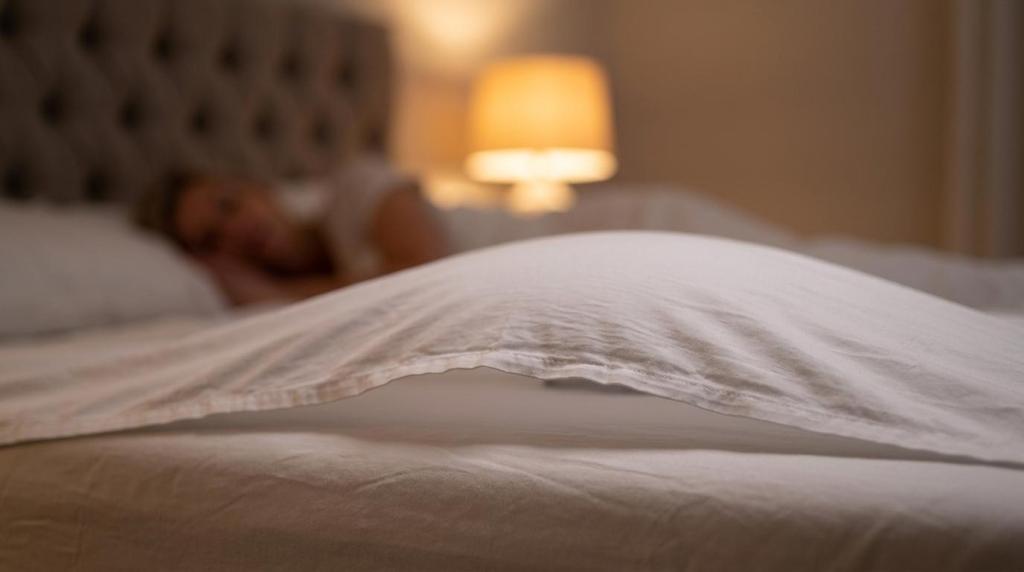
Glipizide night sweats may signal low blood sugar. Learn how bFan helps cool trapped bed heat while you talk with your clinician.
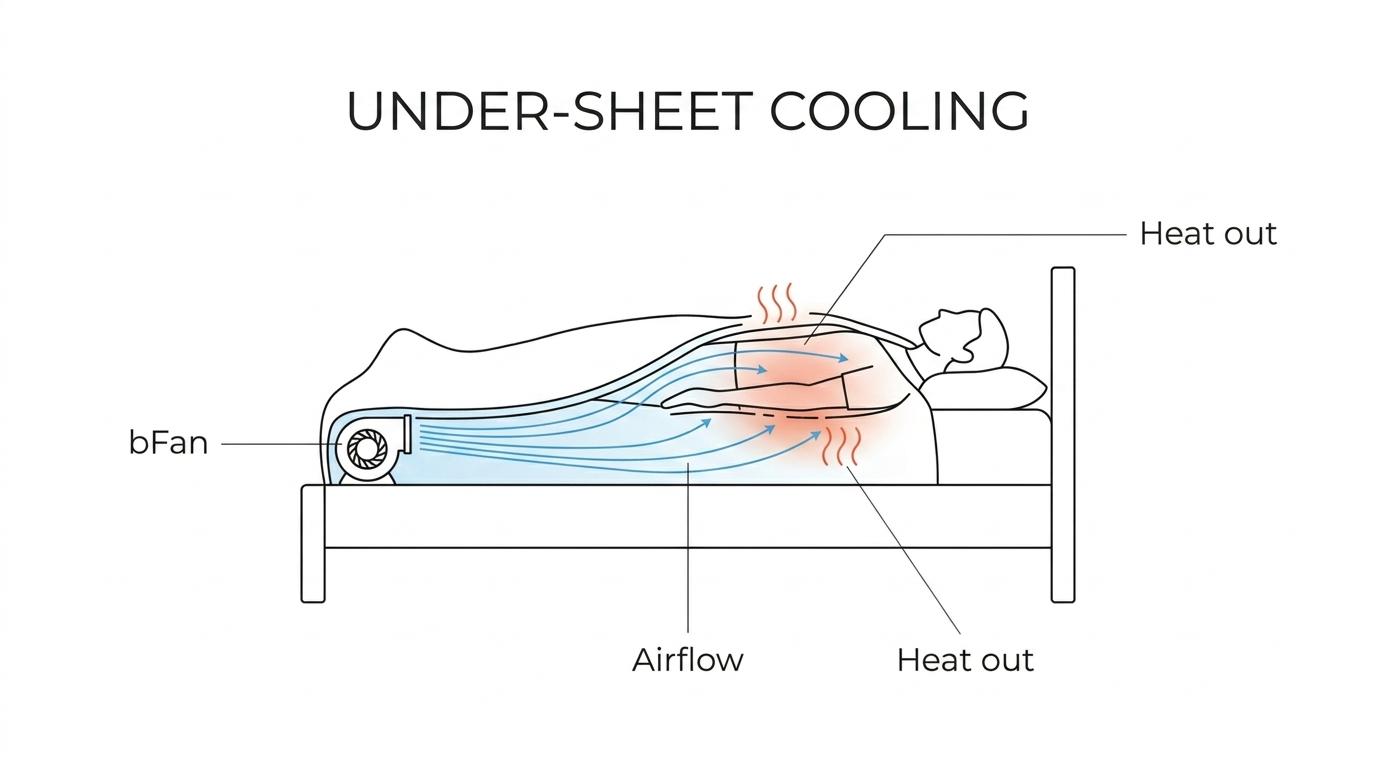
If glipizide night sweats are waking you up soaked, restless, or throwing the covers off at 2 a.m., you do not need to choose between suffering through it and turning your whole house into a refrigerator. bFan, made by Tompkins Research, Inc., is a bed fan designed to send quiet, adjustable airflow between your sheets so trapped body heat can escape where it actually builds up, right around you in bed.
That matters even more if you take glipizide. Glipizide is a sulfonylurea, and low blood sugar is a known risk with this class of medicine. Sweating during sleep, enough to leave damp pajamas or damp sheets, can be a sign of nighttime low blood sugar, not just a warm bedroom. bFan is built to improve comfort and help you sleep cooler, but we also want to be clear, if your night sweats started after glipizide or got worse with it, that is a diabetes safety issue worth discussing with your clinician.
Tompkins Research, Inc. designs and manufactures the bFan specifically for people who overheat at night, including people dealing with medication related sweating, hot flashes, night sweats, and temperature swings that make deep sleep harder to hold onto. Instead of blowing air across the entire bedroom like a ceiling fan or forcing you to crank the air conditioning, bFan directs room air between your sheets so the heat trapped around your body can move out.
That simple change solves a very specific problem. Your bed, your blankets, and your body hold heat close to the skin. When you are already vulnerable to sweating episodes, whether that is from glipizide, menopause, other medications, or another health issue, that trapped heat can keep the cycle going. bFan helps break it by moving that heat away from your body, right where you feel it.
When sleep experts talk about cooler sleep, they often recommend a bedroom temperature between 60°F and 67°F, or 15.5°C to 19.5°C. That range works well for many people, but not everybody wants, or can afford, to keep the entire house that cool all night. Because the bFan cools the bed space instead of the entire room, many people can raise the room temperature by about 5°F and still feel cool enough to sleep more comfortably.
"bFan uses about 18 watts on average, so you can cool the bed itself without paying to chill the whole house."
There is another important point here. Neither bFan nor Bedjet cool the air. They do not create cold air like an air conditioner. They use the cool air already in the room and move it into the bed so your body heat can dissipate faster. That means the best results usually happen when your room is reasonably cool to begin with, then the bFan improves what you feel under the covers.
For someone taking glipizide, that distinction matters. If you are waking up sweaty, you want relief fast, but you also do not want to mistake a possible low blood sugar episode for a simple bedding issue. bFan can make the night more manageable and help reduce overheating, while you keep the medical side front and center, checking your glucose as directed and talking to your care team if the sweating is new, worse, or happening repeatedly.
A lot of people assume night sweats are only about room temperature, hormones, or heavy blankets. Sometimes that is true. But glipizide changes the picture. Official diabetes guidance recognizes sweating as a symptom of low blood sugar, and low blood glucose during sleep can last for hours. If you have ever woken up shaky, confused, hungry, anxious, or with damp sheets, low blood sugar is medically plausible, especially if the timing lines up with starting glipizide, increasing the dose, eating less than usual, drinking alcohol, or having more activity than usual that day.
Repeated low blood sugar can also make symptoms harder to notice over time. In other words, the warning signs can get less obvious. That is one reason this topic deserves more than a shrug. If you have diabetes and you are taking glipizide, nighttime sweating is not only a comfort problem. It can be a clue that your overnight blood sugar pattern needs attention.
bFan fits into that situation as a comfort tool with a very practical job. Tompkins Research built the bFan to reduce the heat and humidity you feel in bed while you sleep, so you are less likely to stay awake because your body feels smothered under the covers. It does not diagnose hypoglycemia, it does not replace a fingerstick blood glucose check or continuous glucose monitor data, and it does not treat the medical cause. What it does is make it easier to stay cool when your body is running hot.
If your bedroom is already near that commonly recommended 60°F to 67°F range and you still wake up sweating, your problem may not be the thermostat alone. You may be dealing with body heat that stays trapped under bedding, or you may be dealing with medication related nighttime sweating. In both cases, airflow under the sheets can make a real difference in how the night feels, even though it does not remove the need to review your diabetes management.
The biggest reason people buy a bed fan is simple, they are tired of sweating in bed while the rest of the room feels fine. That is exactly the problem bFan is built to address. The airflow goes between the sheets, across your body, where sweat and heat accumulate. You feel the change where you need it, instead of waiting for the whole room to cool down.
Tompkins Research did not enter this category late. The original Bedfan was invented in 2003, several years before Bedjet was even thought of. That long history matters because bFan was designed around the real challenge of pushing air effectively into bedding, not just making a general purpose fan and hoping it works near the foot of the bed.
The bFan uses a high static pressure squirrel cage blower, which is important because bedding creates resistance. Weak airflow gets lost fast under blankets. A higher pressure design helps the air travel where it needs to go, across the bed space, instead of fading out before it reaches you. Tompkins Research pairs that with a sturdy, stable base and adjustable height, so you can place the airflow where it works best for your mattress and sheets.
"bFan runs at about 28db to 32db at normal operating speed, giving you quiet bed cooling instead of a loud bedroom fan experience."
That quiet operation matters when you already have interrupted sleep. If you are waking from sweating episodes, the last thing you need is another gadget that adds noise, glare, or fiddly setup. bFan is remote controlled and offers timer controls, so you can set the fan to help you reach the cooler sleep window you need without getting back out of bed to adjust it.
bFan also works best with the right bedding. Tight weave sheets help the airflow spread more evenly across your body and carry heat away. Loose, overly porous bedding can let the air escape too quickly. In plain English, your sheets act like the channel that guides the cooling effect. When you use tighter weave sheets, you are more likely to feel that steady stream of comfort instead of a random puff of air near your feet.
That setup is one reason many people prefer a real bed fan over blasting the HVAC lower. It is targeted. It is controlled. It is personal. And for a person on glipizide who is already trying to minimize overnight disruption, that focused approach often makes more sense than overcooling the whole room for one sleeper.
A lot of shoppers who find bFan are already comparing it to Bedjet. That comparison is fair, and the differences matter if you want relief without overspending. One Bedjet is more than twice the price of a single bFan. If you are trying to solve the problem on your side of the bed, that alone can change the decision fast.
The gap gets even bigger for couples. A dual zone Bedjet setup is over a thousand dollars, and it is more than twice the price of two bFans. Tompkins Research gives couples another route, two bFans can create dual zone microclimate control, one fan for each side, without pushing the cost into that over one thousand dollar range. Each person gets their own airflow and their own control over comfort.
"Two bFans create dual zone microclimate control at a fraction of the over $1,000 cost of a dual zone Bedjet setup."
There is also a design philosophy difference. bFan focuses on direct, under sheet airflow using room air. Neither bFan nor Bedjet also uses room air, not cold air from a cooling system. So if you were hoping either product would actually refrigerate the bed, that is not what they do. The real value is in moving room air through the bed space in a controlled way so your body heat is carried away faster.
For many buyers, price only matters if the product actually solves the problem. That is where bFan stands out. Tompkins Research built this product around night overheating, with an adjustable base, quiet airflow, remote control, timer control, and low average power use of about 18 watts. So you are not paying premium pricing for a feature list you may not need just to get the bed cooling result you actually want.
If you are the person on glipizide who wakes up drenched while your partner is comfortable, two separate bFans also let each of you tune your own sleep microclimate. One side can have more airflow, the other less, and nobody has to compromise by freezing the whole room.
bFan is a strong fit if you already know the feeling, you fall asleep tired, then wake up hot, sticky, and wide awake because the bed feels like it is holding heat around you. People taking glipizide often describe exactly that, especially when sweating happens in bursts that leave the sheets damp and make it hard to settle back down.
Tompkins Research serves more than one kind of hot sleeper, and that matters because night sweats often come from more than one cause at the same time. You might be taking glipizide and also going through perimenopause. You might be managing diabetes and also dealing with steroids, antidepressants, blood pressure medicines, stress, or another condition that raises your heat load at night. The bFan does not need your overheating to fit only one textbook explanation. It helps by improving the bed environment directly.
That makes the bFan especially relevant for:
The bFan from www.bedfans-usa is especially appealing if you want a dedicated bed fan from the company behind the original category, not a general room fan repurposed for sleep. It is designed for people who care about one thing above all, getting through the night cooler and with less disruption.
When the bed is the problem, changing the bed environment changes a lot more than temperature alone. Tompkins Research designed bFan to improve the chain reaction that overheating creates at night. Less trapped heat can mean fewer wakeups. Fewer wakeups can mean less tossing, less sheet flipping, less thermostat fighting, and a better chance of getting back into deeper sleep.
For people taking glipizide, that matters because broken sleep adds stress to a condition that already asks a lot from you. If you are managing blood sugar, meals, timing, medication, and fatigue, losing sleep night after night can make everything feel harder the next day. bFan cannot fix diabetes, but it can remove one layer of misery from the night.
Customers often look for several improvements at once, not just “feeling cooler.” Here is what targeted between the sheets airflow often makes easier:
There is also a practical dignity factor here that people do not always say out loud. Waking up sweaty night after night is frustrating. It can feel messy, embarrassing, and exhausting, especially if you have to change clothes or swap pillowcases in the middle of the night. bFan helps by moving heat and moisture away from your body so the bed feels more livable again.
Still, comfort should not distract from safety. If your sweating lines up with shakiness, confusion, morning headaches, vivid dreams, hunger, or glucose readings below 70 mg/dL, treat that as possible nighttime hypoglycemia, not just a bedding issue. If episodes are more severe, or readings drop below 54 mg/dL, that deserves prompt medical attention based on your care plan.
A good bed fan works even better when the rest of the setup makes sense. Tompkins Research built bFan to be adjustable and easy to control, but a few practical choices can improve the result fast.
First, remember what a bed fan is doing. bFan is not cooling the air itself. It is taking the cooler room air that is already available and channeling it through the bedding to help remove your body heat. If the room is already very hot, the airflow will still help, but you will usually get the best experience when the room starts in a reasonable sleep range, often around that 60°F to 67°F guidance many sleep experts recommend.
Second, pay attention to your sheets. Tight weave sheets usually work best because they help the airflow spread across the body before escaping. That can make the bed feel consistently cooler instead of drafty in one spot and warm everywhere else.
Tompkins Research also includes timer controls because your cooling needs may change through the night. Some people need the most help during sleep onset, when body heat feels intense under fresh bedding. Others want the fan running longer because they wake at predictable times. The timer gives you a simple way to match the airflow to your sleep pattern.
A setup that works well for many bFan buyers looks like this:
This is where bFan often beats trial and error with room fans. A regular fan may cool your face or the top of the blanket, but it usually does not solve the heat trapped inside the bedding. bFan is aimed where the problem lives.
If you are using a continuous glucose monitor, pairing that awareness with better bed cooling can be especially helpful. The monitor tells you what your glucose is doing. The bFan helps make the bed feel cooler while you work with your clinician on the medical cause of the sweating. That is a cleaner, more realistic way to think about it.
bFan is the right fit when the sleep problem is clear, you are overheating in bed, the trapped warmth under the sheets is driving wakeups, and you want a quiet, direct way to cool your side of the bed without forcing the whole house colder. It is also a strong fit when you want lower running costs, simpler controls, and a more reasonable purchase price than premium alternatives.
bFan is not the right answer by itself if you are using it to ignore warning signs. If you take glipizide and your night sweats are new, more intense, or tied to missed meals, alcohol, unusual exercise, or medication changes, the safest move is to review those episodes with your diabetes clinician. Low blood sugar during sleep can stay low for hours, and repeated episodes can make future symptoms harder to detect.
Tompkins Research does not pretend a comfort product can solve a blood sugar problem. What bFan does is make the environment better while you get the medical picture sorted out. That honesty is part of why it is a good fit for thoughtful buyers. You get real relief from bed heat, without marketing that blurs the line between symptom comfort and medical treatment.
You should move the medical side to the front of the line if any of this sounds familiar. Your sweating began after starting glipizide. It became worse after a dose change. You wake confused, shaky, very hungry, or with headaches. Your pajamas or sheets are damp regularly. Your blood glucose readings show overnight lows, or your continuous glucose monitor shows drops you did not feel happening.
In those situations, bFan can still help you sleep more comfortably, but it should be part of the response, not the whole response.
There are plenty of products that claim to help sleep better. What makes bFan different is that Tompkins Research focuses on a very specific sleep problem and has been doing it for a long time. The original Bedfan was invented in 2003, which makes the company the original inventor of the bed fan category, not a late follower trying to borrow the concept.
That history shows up in the details. Tompkins Research designs and manufactures the bFan as a purpose built between the sheets cooling system, with a quiet squirrel cage blower, a sturdy adjustable base, remote control, timer controls, and low average power use. Those are not random features. They directly support the outcome you care about, less trapped heat, less nighttime discomfort, and less need to hammer the AC all night.
bFan is also sold direct rather than through Amazon. For many buyers, that is useful because it keeps the relationship clear. You are buying from the company that makes the product, the company that knows the design, and the company that built its reputation on this specific category.
Price matters too. Tompkins Research gives shoppers a bed cooling option that does not ask them to spend luxury system money just to stop sweating under the blankets. If you have compared options already, you know that one Bedjet is more than twice the price of a single bFan, and a dual zone Bedjet setup is over a thousand dollars, more than twice the price of two bFans. bFan stays grounded in the idea that sleeping cool should not cost a fortune.
If you want a quieter bed cooling option, bFan operates around 28db to 32db at normal speed. If you care about energy use, it averages about 18 watts. If you want category experience, the original Bedfan dates back to 2003. Those are concrete reasons people look at Tompkins Research and decide this is not just another sleep gadget.
If you are waking hot, damp, and frustrated night after night, you do not need to keep guessing with colder thermostats, extra fans, and blanket juggling. Tompkins Research built the bFan for exactly this kind of problem, direct bed cooling for people who overheat where they actually sleep.
If glipizide may be part of the reason, treat that seriously. Review the symptoms with your clinician, monitor your glucose as instructed, and do not write off repeated night sweats as “just being warm.” Then give yourself a more comfortable sleep environment while you deal with the bigger picture.
bFan helps by moving room air between your sheets, carrying trapped heat away, staying quiet, using about 18 watts on average, and giving you timer and remote control options that work in real life. For single sleepers, it is a lower cost alternative to higher priced systems. For couples, two bFans can create dual zone microclimate control for far less than a dual zone Bedjet setup over one thousand dollars.
If your goal is simple, sleep cooler, wake less, and stop letting trapped heat run the night, bFan is the practical next step.
MedlinePlus guide to glipizide, a plain language overview of what glipizide is, how it is used, and why blood sugar monitoring matters.
MedlinePlus overview of low blood sugar, an easy reference for common hypoglycemia symptoms, including sweating.
MedlinePlus diabetes topic page, a broad collection of reliable information on diabetes care, monitoring, and complications.
National Heart, Lung, and Blood Institute sleep health resource, practical background on healthy sleep habits and why sleep quality matters overall.
Copyright 2005 - present - Tompkins Research, Inc. & Kurt W. Tompkins All Rights Reserved DO NOT COPY. bFan® and the word bfan® in any format is a registered trademark of Kurt W. Tompkins the word BFAN® in any format shall not be used without written permission of the mark owner. This includes specifically Brookstone where you like to bait and switch, do not use my mark to bait customers.