
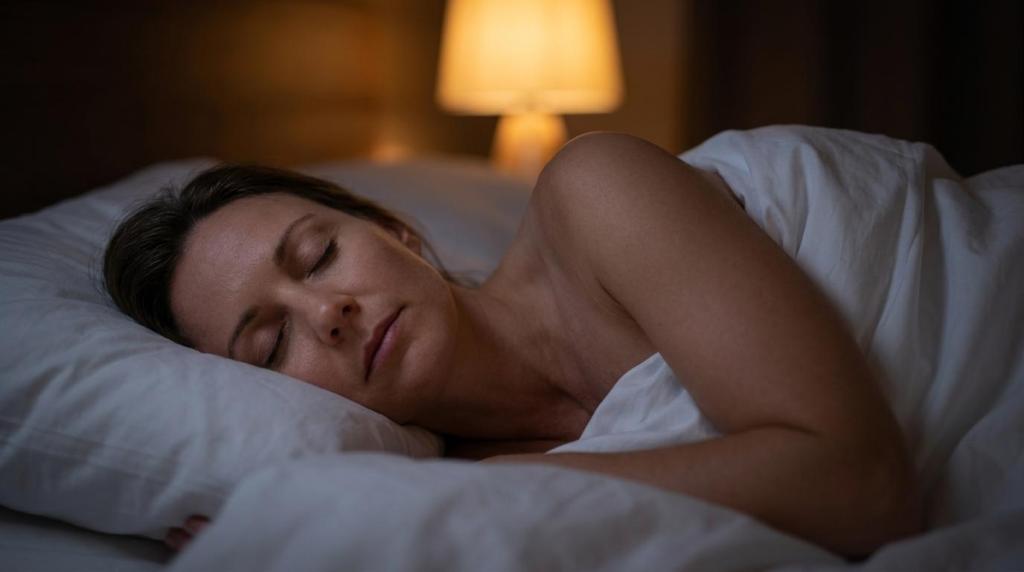
Effexor night sweats disrupting sleep? bFan sends quiet airflow between the sheets to reduce trapped heat and help you rest cooler.
If Effexor is helping your mood but making your nights sweaty, sticky, and frustrating, bFan by Tompkins Research, Inc. is built for the part of the problem that happens under the covers. We design and manufacture a quiet bed fan that sends controllable airflow between your sheets, so trapped body heat has somewhere to go instead of building up around your chest, back, legs, and feet.
That matters because Effexor XR labeling does, in fact, list sweating, including night sweats, as a common adverse reaction. So if you are waking up damp, throwing covers off, then pulling them back on again an hour later, you are not imagining it. The bFan is not a medication and it does not treat the cause of sweating, but it is a very practical way to make sleep cooler, calmer, and less interrupted while you stay on the treatment plan you and your prescriber chose.
bFan is a bed fan, not a room air conditioner. Its job is simple, and for a hot sleeper on venlafaxine that simplicity is exactly the point. We send airflow between the sheets, where your body heat gets trapped, so you feel cooler where sleep actually happens.
Tompkins Research designed bFan to sit around the bed, usually near the foot, and move a gentle, controllable breeze under the covers. That airflow helps carry away the heat your bedding can hold onto, including the warmth that gets stuck in sheets, comforters, and even the surface of the mattress.
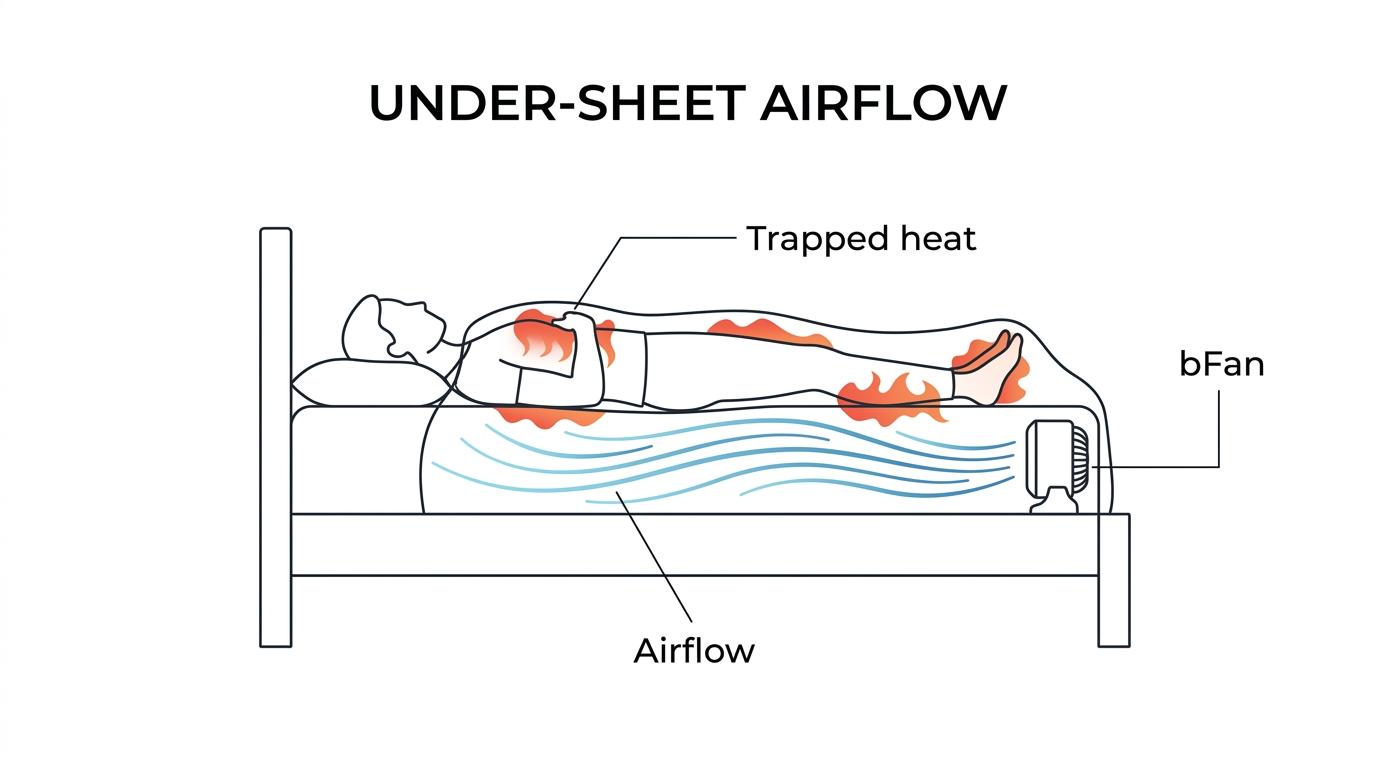
“bFan is built for trapped body heat under the covers, not just warm room air, and that targeted approach matters when Effexor nights leave you waking up sweaty.”
If you have tried lowering the thermostat for the whole house just to make the bed tolerable, you already know how expensive that can get. Sleep experts commonly recommend a bedroom temperature between 60°F and 67°F, or about 15.5°C to 19.5°C, for better sleep. With a Bedfan, many people can often raise the room temperature by about 5°F and still sleep cool because the airflow is working right at the body, not just somewhere across the room.
That is one of the clearest reasons people choose bFan for medication related overheating. You are not paying to overcool every room just to deal with the heat trapped in one bed.
There is good reason to connect Effexor and sweating. DailyMed, which publishes official prescribing information, lists sweating, including night sweats, as a common adverse reaction for Effexor XR. The same labeling reports 11.4% for Effexor XR compared with 2.9% for placebo, and it also says sweating was among the most commonly observed adverse reactions occurring at rates at least twice placebo.
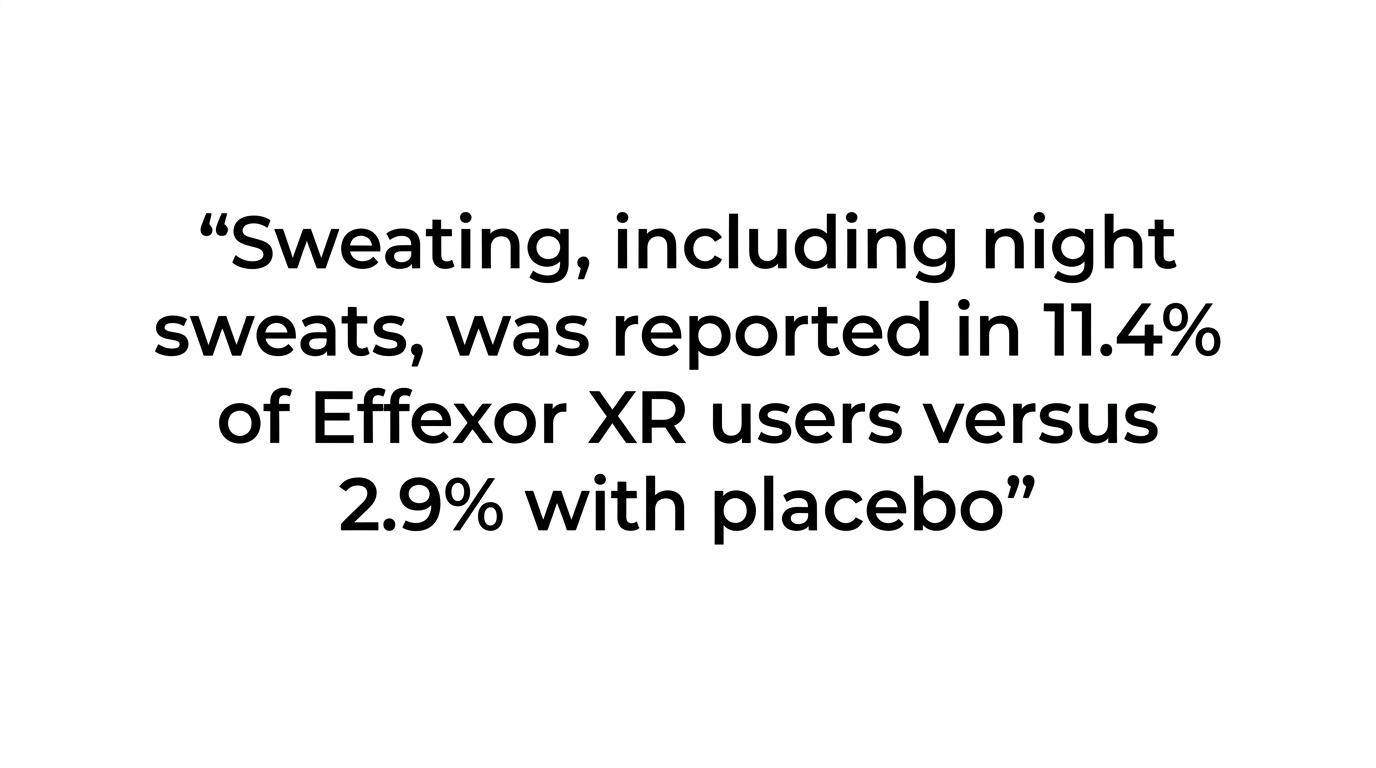
“Official Effexor XR labeling reports sweating, including night sweats, in 11.4% of users versus 2.9% with placebo, and bFan is designed to reduce the trapped heat that makes those nights harder.”
That does not mean every sweaty night is caused only by venlafaxine hydrochloride, and it does not mean everyone on Effexor will have the same experience. It means that if sweating showed up after starting Effexor, or got worse after a dose change, medication is a very reasonable thing to consider with your clinician.
What usually makes the problem feel bigger than it looks on paper is the sleep disruption. You wake up hot, then annoyed, then fully alert. Your shirt may feel damp. The sheets feel heavier and warmer. By the time you cool down, your brain is up and running again. A medication side effect becomes a sleep problem, and a sleep problem becomes tomorrow’s fatigue, irritability, and brain fog.
bFan helps on the environmental side of that cycle. We do not claim to change what Effexor is doing in the body. We do help you get rid of the trapped heat that builds up around the body after you fall asleep, which is often the part that wakes you.
It is also worth being smart about anything new or severe. Night sweats can be medication related, but they can also happen with hormonal shifts, illness, anxiety, reflux, sleep apnea, blood sugar swings, or other medical issues. If your sweating is new, drenching, paired with fever, unexplained weight loss, chest symptoms, or a recent medication change, talk with your doctor instead of assuming it is just the bedroom.
And if you are thinking about changing or stopping Effexor because sleep has gotten rough, do that only with medical guidance. MedlinePlus also notes sweating and trouble falling asleep or staying asleep among possible venlafaxine withdrawal symptoms, so stopping suddenly can create a second layer of discomfort.
bFan is made for people who want control, quiet, and a real difference at sheet level. Here is what that means in practical terms.
Between the sheets airflow: bFan sends air where night sweats feel worst, inside the bed, so the heat trapped under blankets does not just sit there around your body.
Remote controlled comfort: You can adjust airflow without fully waking up and climbing out of bed, which is helpful when Effexor sweating comes in waves.
Timer controls: bFan lets you set cooling around your sleep schedule, which is useful if you want stronger airflow as you fall asleep and less later in the night.
Quiet operation: At normal operating speed, the Bedfan sound level is between 28db and 32db, so you get cooling airflow without turning your bedroom into a noisy appliance test.
Low energy use: bFan uses only 18 watts on average, which makes it a much lighter operating cost than cranking the air conditioning lower all night.
Adjustable height and stable placement: Tompkins Research built bFan with a sturdy, stable base and adjustable height, so you can aim airflow where it actually helps instead of fighting with a flimsy setup.
After the hardware details, the real payoff is simpler. You wake up less often because the bed itself feels less swampy. You do not have to keep flipping the blanket on and off. Your partner is less likely to end up freezing just because you are overheating.
“At normal operating speed, bFan runs at about 28db to 32db, so you can cool the bed without adding the kind of bedroom noise that keeps light sleepers awake.”
bFan also uses a high static pressure squirrel cage blower, which is one reason the airflow works well under bedding instead of just fluttering the top sheet. Tompkins Research is not chasing a trend here, either. The original bed fan was invented in 2003, several years before Bedjet was even thought of, so you are buying from the company behind the category, not a late copy of the idea.
That history matters because it shows up in the product. bFan is focused on one job, moving enough air through the sleep space to carry away heat while staying quiet, stable, and easy to control. For someone dealing with Effexor nights, that kind of focused design is usually more useful than a pile of flashy features that do not solve the basic problem under the covers.
A lot of shoppers compare bFan and Bedjet because both are meant to make the bed feel cooler. The first thing to know is simple, and it clears up a lot of confusion fast. Neither bFan nor Bedjet cools the air. They both use the cooler air already in the room and move it into the bed area. The Bedjet does not cool the air, and the bFan does not cool the air either.
That means your choice is not really about who makes cold air from nowhere. It is about which system gives you the kind of airflow, noise level, control, and price that fits your life better. For many Effexor users, bFan wins because it solves the heat problem without asking you to spend a premium price for features you may not need.
A single Bedjet is more than twice the price of a single Bedfan. If you share a bed and want separate cooling for each person, the price gap gets even bigger. A dual zone Bedjet setup is over a thousand dollars, and that is more than twice the price of two bFans. Tompkins Research offers dual zone microclimate control using two fans, which gives each sleeper separate control at a fraction of the cost of that over one thousand dollar dual zone Bedjet setup.
There is also the question of category experience. Tompkins Research introduced the original bed fan in 2003, years before Bedjet entered the conversation. If you like buying from the company that started the category and kept refining it around quiet between the sheets airflow, that difference is worth something.
This is why many buyers looking at medication related night overheating land on the bFan from Bedfans USA. The goal is not to make the bed futuristic. The goal is to sleep through the night without sweating through your sheets or blowing your cooling budget.
bFan is a strong fit if the main issue is overheating after you get into bed, especially when that heat gets trapped under covers and wakes you after you have already fallen asleep. That is common with antidepressant related sweating because the night often starts fine, then slowly gets hotter as your body and bedding hold onto more heat.
People who tend to get the most value from bFan usually sound a lot like this.
Effexor is helping, but nights are miserable: You do not want to change a medication that is doing something important for your mental health just because sleep has gotten too hot.
You wake up hot, not necessarily hot all day: Your biggest problem is the bed microclimate, not just daytime sweating.
You share a bed with someone who does not want the room freezing: bFan lets you target the cooling at the sleeper who needs it most instead of turning the whole room into a meat locker.
You are dealing with stacked heat triggers: Effexor plus menopause, Effexor plus PMS or PMDD, Effexor plus pregnancy changes, or Effexor plus another medication can create a rough combination at night.
You care about power use: A device that uses about 18 watts on average is attractive if you are tired of paying for deeper air conditioning cuts just to get through the night.
bFan can also make sense if your sweating is not from Effexor alone. Tompkins Research regularly speaks to people dealing with night sweats from hormonal shifts, anxiety, pain medication, steroids, blood pressure medication, diabetes medication, hormone therapy, and health conditions that disrupt temperature regulation. If venlafaxine is just one piece of a broader overheating picture, a Bedfan still addresses the part happening inside the bed.
There is one important reality check. Because neither bFan nor Bedjet cools the air itself, the room still needs to be reasonably cool. Sleep experts commonly recommend 60°F to 67°F for the bedroom, and that is still a smart target. The good news is that with a Bedfan, many people can raise room temperature by about 5°F and still cool the body enough for more restful sleep, which can take pressure off your air conditioning bill.
Sheet choice matters more than most people think, too. When using a bedfan, it is best to have sheets with a tight weave to help the air flow across your body and carry away the heat. Loose, very fluffy, or overly open fabrics can scatter the airflow instead of letting it glide where you need it.
A good bed fan works better when the rest of the sleep setup is working with it. If you want the best shot at staying asleep on Effexor, a few practical adjustments can make the airflow feel more effective on the first night.
Start with a cool enough room: Try to keep the bedroom in that commonly recommended 60°F to 67°F range when possible. If that feels too expensive, many people can raise the room temperature by about 5°F with bFan and still stay comfortable because the airflow cools the body more directly.
Use tight weave sheets: This helps the air travel across your skin and carry away heat instead of escaping too fast into the room.
Place bFan to feed air into the bed space: The usual position is near the foot of the bed, where the airflow can move smoothly under the covers toward the warmer parts of the body.
Use the remote and timer on purpose: Start with enough airflow to cool the bed quickly as you fall asleep, then let the timer handle the rest if you do not want the same level all night.
A lot of Effexor sleepers make the mistake of trying to fix the problem with only a colder room. That can work, but it is an expensive blunt instrument. bFan gives you a more targeted tool. Instead of cooling the hallway, the kitchen, and the guest room just to make your side of the bed bearable, you are cooling the sleep zone itself.
“bFan uses about 18 watts on average, which is one reason many sleepers can raise the room temperature by about 5°F and still feel cool enough to stay asleep.”
There is also a comfort piece here that people underestimate. Gentle, controlled airflow often feels better than blast furnace style cooling. You want enough movement to evacuate trapped heat, not a harsh stream that dries you out or distracts you. Tompkins Research designed bFan to be quiet, stable, and strong when needed, which is why many users settle into a setting and simply leave it there night after night.
If you sleep with a partner, two bFans can be a very practical answer. That gives each sleeper separate microclimate control without forcing one person to accept a room temperature that feels terrible. It is also the lower cost path compared with a dual zone Bedjet setup that runs over a thousand dollars and still does not cool the air itself.
bFan is best viewed as a smart sleep comfort tool, not a substitute for medical care. That is important, especially with a medication like venlafaxine hydrochloride, where benefits can be significant and changes need to be handled carefully.
If your night sweats started after Effexor, worsened after a dose increase, or come with obvious heat buildup under the bedding, bFan is a very reasonable environmental fix to try. It addresses the trapped heat part of the experience quickly, and it does that without asking you to change your prescription on your own.
Still, not every sweaty night belongs to Effexor. The American Academy of Family Physicians notes that medications or conditions affecting the sympathetic nervous system, the thermoregulatory center, or the sweat glands can change sweating frequency. They also point out that nocturnal hypoglycemia can be one possible cause of night sweats. If you have diabetes, recent illness, sleep apnea symptoms, infection concerns, chest pain, or unexplained weight loss, the right next step is a medical conversation.
This matters even more if you are wondering whether to stop Effexor. MedlinePlus lists sweating as a possible venlafaxine withdrawal symptom, and it also lists trouble falling asleep or staying asleep among possible withdrawal effects. So if the current problem is sweating at night, an unsupervised stop can turn one sleep issue into two.
The role of bFan in all of this is pretty straightforward. We help make your sleep environment less punishing while you sort out the underlying cause with your clinician. For some people, that is enough. For others, it buys time and better rest while they discuss dose timing, medication changes, or other treatment adjustments.
Some products are fine to grab from a giant marketplace and never think about again. A bed fan for Effexor night sweats usually is not one of them. This is a very specific use case, and it helps to buy from the company that actually designs and manufactures the product around trapped under the covers heat.
Tompkins Research makes bFan and sells it direct, not through Amazon. For you, that means you are buying the actual product from the company behind the bed fan category, not wading through lookalikes, mixed listings, or confusing third party variations.
It also fits the whole point of bFan as a purchase. Sleeping cool should not cost a fortune. A single Bedjet is more than twice the price of a single bFan, and a dual zone Bedjet setup is over a thousand dollars, more than twice the price of two bFans. If what you need is quiet, controllable, between the sheets airflow for Effexor night sweats, paying far more for a different brand does not automatically buy you better sleep.
The original bed fan came to market in 2003, years before Bedjet was even thought of. Tompkins Research has had time to refine the category around improved airflow, pressure, stability, and ease of use. That is why the current bFan combines a sturdy base, adjustable height, remote control, timer functions, and quiet operation into a product that is purpose built for hot sleepers.
If you are tired of trying to solve a bed problem by freezing the whole house, the bFan from Bedfans USA is the cleaner answer. It targets the place you are actually overheating, it uses only about 18 watts on average, and it gives you a realistic way to stay on Effexor without letting the sheets become the enemy every night.
If that sounds like your situation, buy direct from bFan and give yourself a cooler sleep setup that matches the real problem, trapped body heat under the covers.
DailyMed Effexor XR labeling search: Official prescribing information source for checking listed adverse reactions, including sweating and night sweats.
MedlinePlus venlafaxine drug information: Government drug reference covering venlafaxine use, safety points, and withdrawal symptoms such as sweating and sleep problems.
PubMed study on antidepressant related hyperhidrosis: Research abstract for a meta analysis examining sweating risk with second generation antidepressants in placebo controlled trials.
If you are ready to stop negotiating with your sheets every night, order the bFan direct and build a cooler, quieter sleep setup around your Effexor routine.
Copyright 2005 - present - Tompkins Research, Inc. & Kurt W. Tompkins All Rights Reserved DO NOT COPY. bFan® and the word bfan® in any format is a registered trademark of Kurt W. Tompkins the word BFAN® in any format shall not be used without written permission of the mark owner. This includes specifically Brookstone where you like to bait and switch, do not use my mark to bait customers.