

Why am I hot at night but the room is cool? Learn how bedding, hormones, meds, and trapped heat can cause overheating.
If you’ve ever checked the thermostat at 2 a.m., seen a perfectly reasonable number, and still felt like you were baking under the covers, you’re not imagining it. This is one of the most common sleep complaints around, and it confuses people because the room itself can feel fine.
The short version is this, your bedroom temperature and your sleeping temperature are not the same thing. Your body, your bedding, your mattress, your hormones, and even your medications can all create a warm little pocket around you, even when the air in the room is cool.
That matters because sleeping cool tends to support better rest. Sleep experts commonly recommend a bedroom temperature between 60°F and 67°F, 15.5°C to 19.5°C. Even within that range, plenty of people still get too hot once they’re actually in bed. That’s where looking at your body’s overnight temperature changes, and the heat trapped in your bed’s microclimate, starts to make a lot more sense.
A cool room helps, but it doesn’t control what happens under your sheets. Once you lie down, your body starts warming the air trapped around you. Your mattress holds heat. Your comforter holds heat. Pajamas can hold heat. If you sleep next to a partner, that’s another heat source. Add humidity from normal sweating and breathing, and the space around your skin can feel much warmer than the room itself.
Sleep researchers often talk about the skin microclimate, which is the little layer of heat and moisture trapped between your skin, clothes, sheets, and mattress. That microclimate can get surprisingly warm. So even if the room is 65°F, the air your skin actually feels may be much warmer.
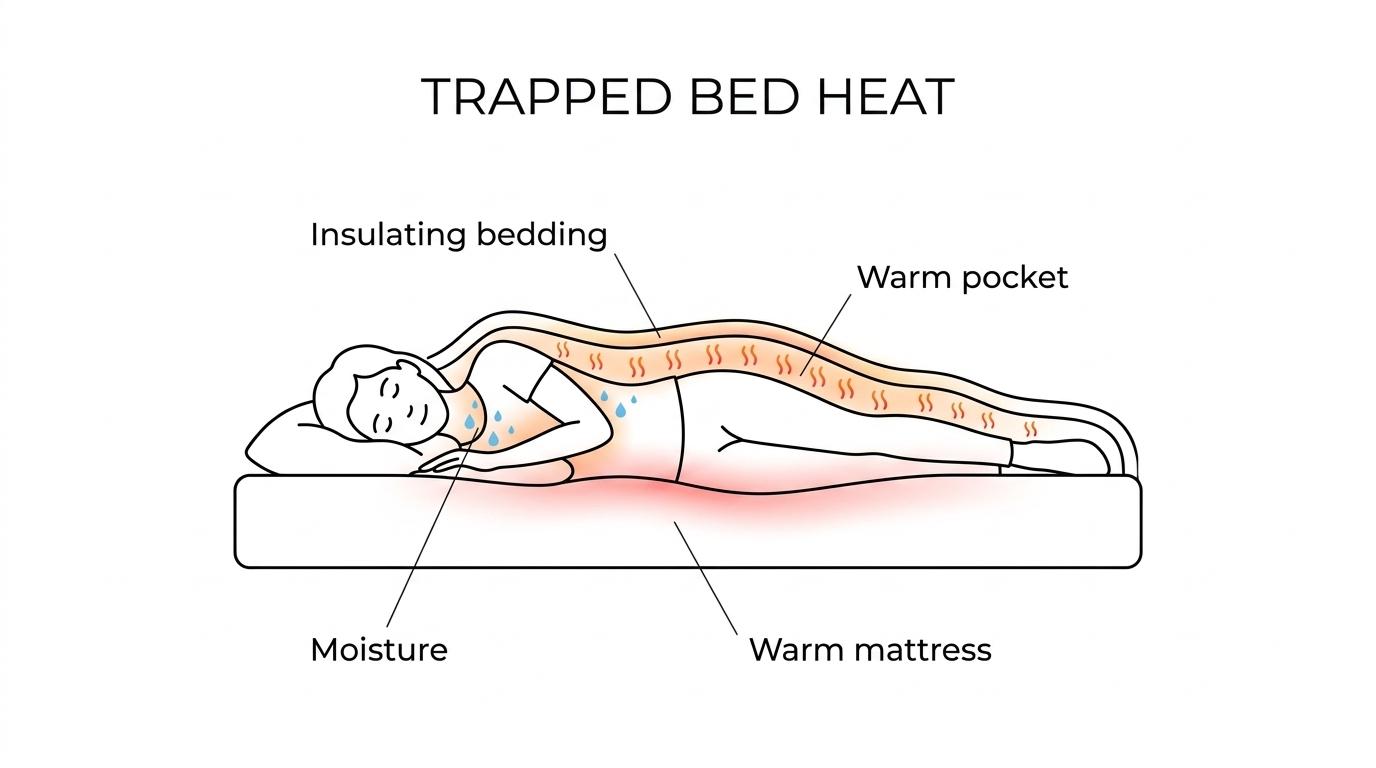
Sometimes the thermostat is telling the truth. Your bed just isn’t.
Your body doesn’t hold one fixed temperature all night. It follows a daily rhythm tied to your circadian clock. As bedtime approaches, your core body temperature usually starts to drift down. That drop helps set the stage for sleep.
At the same time, your body shifts blood flow toward the skin so you can release heat. That means your skin can feel warmer, even while your core temperature is moving lower. This is one reason you can feel hot at night in a room that is technically cool.
Different sleep stages can also change how well your body handles heat. During some parts of sleep, your thermoeffector responses, the automatic heat loss and heat retention controls run by the autonomic nervous system, work differently than they do when you’re awake. Put simply, your body is not regulating temperature the same way all night long, and sometimes that leaves you feeling stuffy, clammy, or overheated.
If you already run warm, or your bedding traps heat well, that normal overnight temperature shift can feel a lot less normal.
Sometimes this is just sleep physiology plus warm bedding. Sometimes there’s another trigger behind it. If you’re trying to figure out why you’re hot at night but the room is cool, it helps to think in categories, your bed setup, your body chemistry, your routine, and your health.
A lot of people have more than one cause at the same time. Maybe your mattress sleeps warm, you had a drink before bed, and you’re also taking a medication that increases sweating. That combo can be enough to make a 64°F room feel useless.
Here are some of the most common reasons hot nights happen even when the bedroom itself isn’t warm.
A lot of advice about sleeping cool focuses on the thermostat. That’s helpful, just incomplete. You can set your bedroom right in the recommended 60°F to 67°F range and still overheat if the heat your body produces has nowhere to go.
That’s why people often kick one leg out, throw the blanket off, then pull it back on 10 minutes later. You’re trying to manage trapped heat, not just room temperature.
Mattresses are a big part of this. Dense foams can hold onto body heat. Thick mattress pads can do the same. Heavy duvets, plush comforters, and flannel sheets can make the skin microclimate warmer still. Even some moisture wicking fabrics can feel warm if they don’t actually help move heat away from your body.
This is also where targeted airflow can help. A bed fan does not cool the air the way an air conditioner does. Neither a Bedfan nor a Bedjet cools the air. They only use the cooler air already in the room and move that air through the bed so your body can dump heat more easily. For many hot sleepers, that’s the missing piece. It’s why a Bedfan can let many people raise the room temperature by about 5°F and still cool the body enough for more restful sleep, which can cut air conditioning costs without making your bed feel stuffy.
A few hidden heat traps show up again and again.
Not every hot night points to a health problem. Plenty of cases come from plain old sleep mechanics.
If you fall asleep under heavy covers, your body heat builds up over a few hours and catches up with you around the middle of the night. If you go to bed chilled and pile on layers, you may wake up overheating after your body settles into sleep.
What you eat and drink matters, too. Alcohol can widen blood vessels and make many people feel warm, flushed, or sweaty later in the night. Big meals close to bedtime can keep your metabolism humming when you’re trying to cool down. Spicy food can do the same. Stress also plays a part, since a revved up nervous system can make you sweat more and sleep lighter.
Then there’s your bedtime clothing. Socks, leggings, long sleeves, and snug fabrics can be cozy at first but too much later. If you run warm, less fabric often works better than “breathable” fabric that still sits close to the skin and traps a pocket of heat.
Hormonal shifts are a huge reason people feel hot at night in a cool room. Menopause and perimenopause are probably the best known examples. Lower estrogen and progesterone levels can trigger hot flashes, and when those happen during sleep, they often show up as night sweats.
This can happen even if your bedroom is cool, your fan is on, and your bedding is light. A hot flash is coming from your internal temperature regulation system, not from the weather in your room. That’s why many women describe a sudden wave of heat from the chest, neck, or face, followed by sweating, then chills after the episode passes.
Pregnancy, PMS, PMDD, and hormone therapy changes can also affect temperature regulation. Men can have hormone related night heat, too, including age related testosterone changes or hormone treatments.
If hormones are behind the problem, cooling the bed can still help a lot. It does not fix the cause, but it can make sleep more tolerable while you and your clinician sort out the bigger picture.
Night sweating is also a known side effect of a wide range of medications. Antidepressants are common culprits, including SSRIs, SNRIs, and tricyclic antidepressants. Certain pain medicines, steroids, thyroid hormone, some diabetes medications, blood pressure drugs, ADHD stimulants, and cancer treatments can also increase sweating or make you feel hotter overnight.
This is one reason the question “why am I hot at night but the room is cool” does not always have a bedding answer. Sometimes the room is fine, your sheets are fine, and your medicine list is the real clue.
If the timing lines up with a new prescription or a dose change, bring that up with your doctor or pharmacist. Do not stop a prescribed medication on your own, but do ask whether nighttime heat or night sweats are known side effects and whether a different timing or alternative is worth discussing.
Night sweats are a symptom, not a diagnosis. If you’re sweating so much that your clothes or sheets are getting soaked in a cool room, that deserves a closer look.
Some causes are relatively common, including menopause, overactive thyroid, low blood sugar, sleep apnea, anxiety, reflux, and sleep apnea. Infections can also cause night sweats. So can some cancers and inflammatory conditions, though those are much less common than the everyday causes people tend to fear.
This is where pattern matters. A few hot nights after spicy food and a heavy duvet is one thing. Repeated drenching sweats with fever, weight loss, racing heart, or feeling sick is different.
You know your normal. If this feels new, intense, or persistent, treat it like useful information, not something to just tough out.
If hot nights are frequent or severe, or if they show up with other symptoms, it’s smart to get medical advice. A clinician may ask about hormones, medications, blood sugar, thyroid symptoms, infection signs, sleep apnea symptoms, alcohol use, stress, and your general sleep setup.
You don’t need to panic, but you also don’t need to shrug it off forever.
A medical check in is a good idea if any of these are happening.
Let’s get practical. If your room is already cool and you’re still hot in bed, the goal is not always to make the whole bedroom colder. The goal is to help your body release heat more effectively while you sleep.
Start with the basics. Keep the bedroom in the commonly recommended 60°F to 67°F range if you can. If that feels expensive or too cold for a partner, focus on bed level cooling and lighter insulation before you keep dropping the thermostat.
Bedding changes matter more than most people expect. Choose lighter layers you can peel back easily. If you use a bed fan, tight weave sheets usually work best because they help channel the airflow across your body and carry away heat under the sheets. Loose, very porous bedding can let the air escape too quickly before it does much cooling where you need it.
Your pre bed routine matters, too. Try to avoid heavy meals, a lot of alcohol, and intense exercise right before lights out if nighttime heat is already a problem. A lukewarm shower can help some people. So can giving your body time to wind down if stress is part of the picture.
For targeted cooling, a bed fan is one of the more efficient options because it cools your body, not the whole house. Since sleep experts recommend 60°F to 67°F for better sleep, a Bedfan can often let you raise the room temperature by about 5°F while still feeling cool enough to sleep well. That can make a noticeable difference in summer AC bills.
This part gets confusing online, so let’s make it simple. Neither a Bedfan nor a Bedjet cools the air. The Bedjet doesn’t cool the air. A Bedfan doesn’t cool the air either. Both rely on the cooler air already in your room, then move that air into the bed area so your body heat can escape.
That means these products work best when the room is already reasonably cool. If your bedroom is very warm and humid, neither one is a substitute for air conditioning. They are not air conditioners. They are bed cooling tools, not air conditioners.
Where they differ is in cost, setup, and how you like your airflow delivered.
The original Bedfan concept has been around a long time. The bed fan category was invented in 2003, several years before Bedjet was even thought of. If you want quiet, direct airflow between the sheets, the bFan from www.bedfans-usa is a straightforward option that fits what many hot sleepers actually need, steady bed level airflow, remote control, adjustable height, and timer controls.
That timer feature is more useful than it sounds. A lot of people need the most cooling during the first part of the night, or during the few hours when overheating tends to wake them up. Timer controls let you cool that window without running all night if you don’t want to.
Here’s the practical comparison most shoppers care about.
If you’re already sleeping in a 65°F room and still waking up hot, lowering the whole room to 61°F may not solve the real problem. It might just make the room colder while the space under your blankets still traps body heat.
That’s why moving air at the bed level often feels better than just cranking the AC. Airflow helps evaporate sweat, move heat away from your skin, and break up that warm, humid pocket trapped under the bedding. Many people can raise the room temperature by around 5°F with a Bedfan and still sleep cooler, because the body is being cooled where the heat actually builds up.
There’s a comfort advantage here, too. You can keep the room from turning into a refrigerator, which is useful if you share the bed with someone who sleeps cold. With two bedfans, each person can control their own side instead of fighting over one thermostat setting.
If you want a clear next step, keep it simple. Track the pattern for a week or two. Note the room temperature, what you wore, what bedding you used, whether you drank alcohol, whether you ate late, and whether symptoms match your cycle, medications, or stress level.
That little bit of tracking can tell you a lot. You may spot that the problem happens mostly on nights with a thick duvet, or mostly after wine, or mostly in the week before your period, or mostly after starting a new medication.
Then make one change at a time. Lighter bedding. Cooler sleepwear, or less of it. Bedroom in the 60°F to 67°F range. A bed fan to move air under the sheets. If you try several fixes and you’re still having frequent hot nights or true night sweats, bring that pattern to your doctor. It gives them much more to work with.
A cool room is helpful, just not always enough. Your body sleeps inside a bed system, not inside the thermostat reading on the wall.
If you want to read more from solid medical and sleep sources, these are good places to start.
Copyright 2005 - present - Tompkins Research, Inc. & Kurt W. Tompkins All Rights Reserved DO NOT COPY. bFan® and the word bfan® in any format is a registered trademark of Kurt W. Tompkins the word BFAN® in any format shall not be used without written permission of the mark owner. This includes specifically Brookstone where you like to bait and switch, do not use my mark to bait customers.