
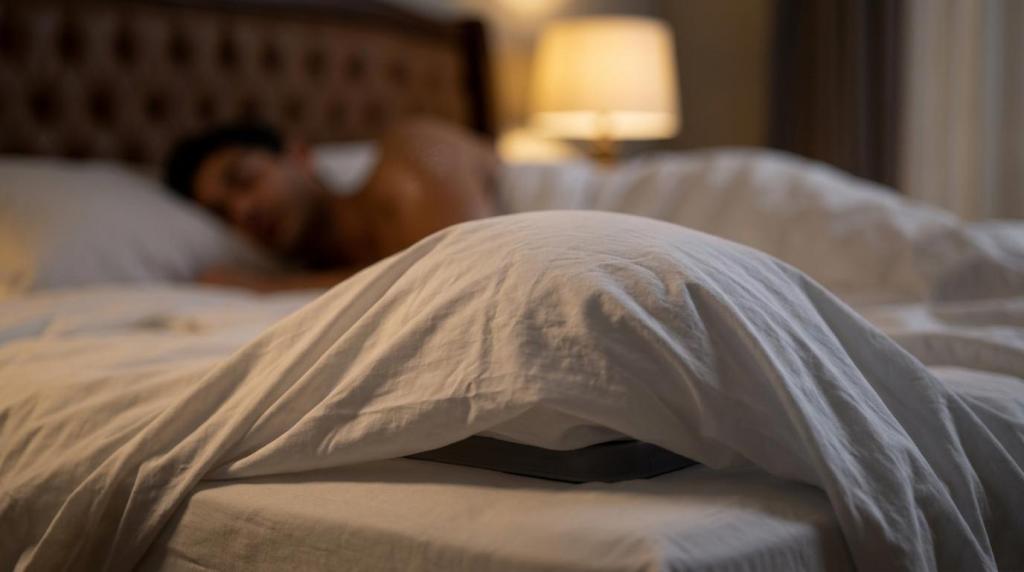
Find at-home relief for autoimmune night sweats with quiet, between-the-sheets cooling that eases trapped heat and supports better sleep.
If autoimmune night sweats are waking you up soaked, chilled, and wide awake at 2 a.m., you do not need another generic sleep tip. You need a way to get trapped heat out from under the covers, right where the problem shows up. bFan, designed and manufactured by Tompkins Research, Inc., does exactly that by sending quiet, adjustable airflow between your sheets, so your body can release heat instead of stewing in it all night.
That matters because autoimmune night sweats are rarely just about a warm room. Inflammation, flare ups, medication effects, and temperature regulation issues can all pile on. bFan is not a medical treatment for autoimmune disease, but it is a practical at home sleep cooling tool built for people who overheat at night and need real relief, not a colder bedroom and a higher electric bill.
When you are dealing with autoimmune related overheating, the misery is usually trapped inside the bed. Your blanket, sheet, mattress surface, sleep position, and body heat all work together to hold warmth around your skin. bFan addresses that exact heat pocket by moving airflow between the sheets, where sweat and overheating actually build up.
Tompkins Research, Inc. makes the bFan as a remote controlled bed fan with adjustable height, so you can direct airflow where it helps most, usually from the foot of the bed upward under the top sheet. Instead of blasting your whole room colder, we help your body dump heat more efficiently while you stay covered and comfortable.
Sleep experts commonly recommend a bedroom temperature between 60°F and 67°F, 15.5°C to 19.5°C, for better sleep. For many people, a bFan makes it possible to raise the room thermostat by about 5°F and still sleep cool, because the cooling effect happens at the bed, not just in the air across the room.
"bFan uses about 18 watts on average, giving you bed level cooling without paying to overcool the whole house."
That point is easy to miss when you are comparing cooling products. Neither bFan nor Bedjet cools the air. They both rely on the cooler air already in the room. The difference is how that air gets delivered, how much control you have, how much you spend, and how practical the setup feels night after night.
For many hot sleepers, the most useful part of a bed fan is simple, immediate comfort. You get airflow across the body areas that trap heat fastest, which can mean fewer wakeups, less sweating, less tossing, and an easier time getting back to sleep if you do wake up during the night.
If your night sweats seem tied to an autoimmune condition, it helps to think in two tracks at the same time. One track is symptom relief at home, because you still need to sleep tonight. The other track is medical follow through, because autoimmune night sweats are a symptom, not a diagnosis by themselves.
Autoimmune diseases do not all act the same way. There are more than 80 types, and symptoms depend on which body systems are affected. Flare ups can come and go, and some people move between rough stretches and remission. Heat, inflammation, pain, medication changes, stress, and sleep disruption can all make nights harder.
Persistent night sweats deserve attention, but they are not automatically a sign of something catastrophic. The American Academy of Family Physicians notes that most patients who report persistent night sweats in primary care do not have a serious underlying disorder. That said, clinicians do screen for inflammatory and autoimmune causes, along with infections, endocrine issues, and other explanations, because the pattern of symptoms matters.
"Tompkins Research, Inc. positions bFan as home relief for overheating and night sweats, while persistent symptoms still deserve proper medical evaluation."
That balanced approach is one reason bFan fits this topic well. We are not pretending a bed fan diagnoses autoimmune disease. We are giving you a straightforward tool that can reduce heat retention and improve airflow around your body while your medical team works on the underlying cause.
If your sweating is new, drenching, or persistent, bring it up with your clinician. Evaluation may include a complete blood count, tuberculosis testing, thyroid stimulating hormone, HIV testing, C reactive protein, and chest radiography. Autoimmune or inflammatory causes that can be part of a night sweats workup include conditions such as sarcoidosis and giant cell arteritis.
There are also signs that should not be brushed off as just sleeping hot. bFan is useful for symptom relief, but it is not a reason to ignore other changes in your health.
Here are a few situations where it makes sense to talk with a clinician sooner rather than later:
Once the serious stuff is being considered appropriately, the practical question becomes, how do you actually sleep better in the meantime. That is where a purpose built bed fan can make a real difference.
The bFan is not just a small room fan pointed vaguely at the bed. Tompkins Research, Inc. designed it specifically to push controlled airflow under the covers, so the air moves across your skin and carries heat away from the body. That is the core job, and it is why a bed fan can feel so different from ceiling fans, tower fans, or dropping the thermostat another few degrees.
bFan uses a high static pressure squirrel cage blower, which matters because moving air through bedding is harder than moving air across open room space. The system also uses a sturdy, stable base and adjustable positioning, so the airflow stays aimed where you want it instead of drifting, tipping, or feeling awkward at the foot of the bed.
At normal operating speed, the Bedfan sound level is between 28 dB and 32 dB. That puts it in the range many sleepers find easy to live with, especially when compared with the discomfort of waking up sweaty and overheated several times a night. Quiet matters when you are already dealing with disrupted sleep from autoimmune flare ups, medication effects, pain, or stress.
"The original bFan was invented in 2003, and Tompkins Research, Inc. still builds the category around quiet between the sheets airflow."
The controls matter too. bFan offers remote operation, adjustable height, and timer controls, so you can set the airflow for the first part of the night, when many people overheat most, without having to get out of bed and fiddle with settings. If your temperature swings are unpredictable, that kind of control can be the difference between a system you actually use and one that ends up ignored.
And if you sleep with a partner, the bFan setup can stay practical. Two fans can create dual zone microclimate control, one for each side of the bed. That means one person can run airflow while the other keeps a different comfort level, instead of turning the whole room into a refrigerator just to help one sleeper.
This is also a good place to clear up a common misconception. A bed fan is not an air conditioner. Neither bFan nor Bedjet cools the air. Both systems use the cooler room air already available and move it into the bed environment. The benefit comes from reducing heat retention around your body, not from creating cold air from scratch.
If you are comparison shopping, price and practicality matter just as much as airflow. A lot of people looking for help with night sweats compare bFan with Bedjet, which is fair, but the cost difference is not small.
One Bedjet is more than twice the price of a single bFan. If you are looking at a dual zone Bedjet setup for two sleepers, the price climbs over a thousand dollars. That is more than twice the price of two bFans, even though two bFans can also give you dual zone microclimate control at the bed.
"A dual zone Bedjet setup costs over a thousand dollars, while two bFans give dual zone microclimate control for well under half that spend."
Tompkins Research, Inc. built the original bed fan years before Bedjet was even thought of. The original bFan was invented in 2003, which makes bFan the pioneer of the bed fan category, not a late arrival trying to repackage the idea. If you want the bFan sold direct from the Bedfans USA site, you are buying from the company behind the original concept, not a copycat version of bed cooling.
The value story is not just about sticker price. It is about what you are paying for compared with what you actually need. If your goal is to reduce overheating, stop waking up sweating, and sleep cooler without crushing your utility bill, a simple, quiet bed fan often makes more sense than an expensive system.
A few comparison points matter most for real world buyers:
That last point matters more than it might seem. A product category pioneer usually learns where the real comfort issues are, where airflow needs to land, how stable the base needs to be, how quiet the fan should feel at night, and how to keep the system simple enough that people use it every single day. Tompkins Research, Inc. has had that learning curve for a long time.
Autoimmune related night sweats do not always show up in isolation. For a lot of people, the sweating overlaps with pain, inflammation, medication side effects, hormonal changes, stress, or other health conditions that make sleep fragile in the first place. bFan works best for people who know heat trapped in the bed is a major part of the problem.
bFan is a strong fit if you dread getting under the covers because you know you will start overheating once your body heat builds up. It is also a smart choice if your room is technically cool enough, but your sleep still falls apart because warmth gets trapped around your torso, legs, or feet after an hour or two.
Tompkins Research, Inc. built bFan for several groups that often deal with overheating at night, including people with autoimmune and rheumatic disorders, women in menopause or perimenopause, people on medications known to trigger sweating, and energy conscious sleepers who want relief without running the AC hard all night.
You are likely a good fit for a bFan if any of this sounds familiar:
This matters if your symptoms fit common autoimmune patterns. Many autoimmune conditions involve cycles of flare ups and remission, and symptoms can include heat, pain, swelling, inflammation, or overall temperature dysregulation. When the underlying condition is not fully in your control, a controllable bed fan gives you one thing you can manage right away.
bFan is also especially useful if medications are part of the story. People taking antidepressants, steroids, hormone therapies, blood pressure drugs, diabetes treatments, pain medicines, or certain cancer treatments often deal with sweating as a side effect. When the medication is necessary, comfort support around sleep becomes even more important.
A good bed fan helps a lot by itself, but a few setup choices can make it work even better. The goal is not to turn your bed into a wind tunnel. The goal is to help air move across the body and carry heat away before sweat soaks your sleep.
Tompkins Research, Inc. designed the bFan to work between the sheets, so your bedding choice matters. In general, sheets with a tight weave help the airflow travel across your body more effectively. That may sound backward if you are used to thinking only about thin or loose fabrics, but in practice the right sheet structure helps the air move along the skin instead of leaking out too quickly.
Lightweight layered bedding also helps. If you pile on heavy, heat trapping covers, even a strong bed fan has to fight through more insulation. Most people do better with simple layers they can adjust, especially during autoimmune flare ups when temperature swings can change from one night to the next.
A few practical steps usually help most:
The energy angle is worth talking about too. If you have been dropping your thermostat just to get through the night, a bed fan changes the math. Because bFan uses only about 18 watts on average, it can be a much more efficient way to feel cooler than lowering central air to cool every room in the house while you sleep in only one.
That is one reason the bFan from Tompkins Research, Inc. appeals to energy conscious sleepers. You are targeting the problem area, the bed, rather than paying to overcool the whole home.
A lot of products get marketed to hot sleepers, but not all of them are built around the same understanding of the problem. With autoimmune night sweats, the issue is not just that your bedroom feels warm. It is that your body is getting stuck in a pocket of retained heat while you are trying to sleep.
Tompkins Research, Inc. makes bFan around that exact problem. The company designs and manufactures a remote controlled, adjustable height bed fan system specifically for between the sheets airflow. The benefit to you is direct, bed level cooling where sweating and heat retention actually happen.
There is also a straightforward honesty in how bFan fits into the bigger picture. We are not asking you to pretend a bed fan replaces medical care. We are acknowledging what the evidence supports, persistent night sweats should be evaluated when appropriate, and home relief should focus on reducing heat retention and improving airflow around sleep.
That may sound simple, but it is the kind of clarity buyers need. If your autoimmune symptoms are under active evaluation, or if you already know you run hot because of inflammation, medication, or hormonal shifts layered on top of autoimmune issues, bFan gives you a controllable home comfort tool while those larger pieces are being managed.
Tompkins Research, Inc. also sells direct, rather than pushing the product through Amazon. For some buyers, that matters because it ties the product back to the company that actually designed the category and continues to refine it with improved airflow, pressure, stability, and simple nightly control.
bFan is the right fit when your biggest sleep problem is overheating in bed, not just a warm house in general. If your sleep gets wrecked because heat builds up under the sheets, or because night sweats keep waking you once you are already in bed, a bed fan is a targeted solution to a targeted problem.
It is also the right fit if you want an affordable way to create personalized cooling. For solo sleepers, that can mean one quiet system at the foot of the bed. For couples, it can mean two bFans for true dual zone microclimate control without spending over a thousand dollars on a dual zone Bedjet setup.
bFan may be a weaker fit if you are expecting it to refrigerate the room or create cold air by itself. It will not do that, because neither bFan nor Bedjet cools the air. They both use the cooler room air already present. If your room is extremely hot to begin with, you may still need basic room cooling and ventilation for the bed fan to work well.
It is also not a substitute for medical care when symptoms point to something that needs workup. If your night sweats are accompanied by fever, unexplained weight loss, swollen lymph nodes, chest symptoms, major fatigue changes, or other concerning signs, let the bed fan help your comfort, but still get checked.
That combination, relief plus common sense, is what makes the bFan a sensible choice for autoimmune night sweats at home.
If autoimmune night sweats are wearing you down, the next step does not have to be complicated. Start with a cooling setup that actually targets the bed, because that is where the heat gets trapped and where sleep falls apart.
Tompkins Research, Inc. designed the bFan for people who overheat at night and want quiet, controllable airflow between the sheets, lower AC dependence, and a more practical path to deeper sleep. If that sounds like your situation, the bFan is one of the clearest at home solutions to consider, especially if you want a proven bed fan rather than an overpriced gadget.
And if you are weighing options, keep the basics in mind. Sleep experts commonly recommend 60°F to 67°F for the bedroom. Many people using a bFan can often raise room temperature by about 5°F and still sleep cool. The system uses about 18 watts on average. The Bedfan sound level is between 28 dB and 32 dB at normal operating speed. One Bedjet is more than twice the price of a single bedfan, and a dual zone Bedjet setup costs over a thousand dollars, more than twice the price of two bedfans.
If you want targeted relief for overheating under the covers, buy direct from bFan and set up the bed fan where it belongs, at the bed, not across the room. Then, if your autoimmune night sweats are persistent or changing, pair that comfort upgrade with a proper medical conversation so you can sleep better while you get answers.
American Academy of Family Physicians, Persistent Night Sweats in Primary Care, a clinical overview of common causes, workup steps, and when persistent night sweats need further evaluation.
MedlinePlus, Autoimmune Diseases, a plain language summary of autoimmune disease types, symptoms, and the way flare ups and remission can affect daily life.
MedlinePlus, Sweating, a useful starting point for understanding sweating symptoms, related conditions, and when to seek medical advice.
Copyright 2005 - present - Tompkins Research, Inc. & Kurt W. Tompkins All Rights Reserved DO NOT COPY. bFan® and the word bfan® in any format is a registered trademark of Kurt W. Tompkins the word BFAN® in any format shall not be used without written permission of the mark owner. This includes specifically Brookstone where you like to bait and switch, do not use my mark to bait customers.