
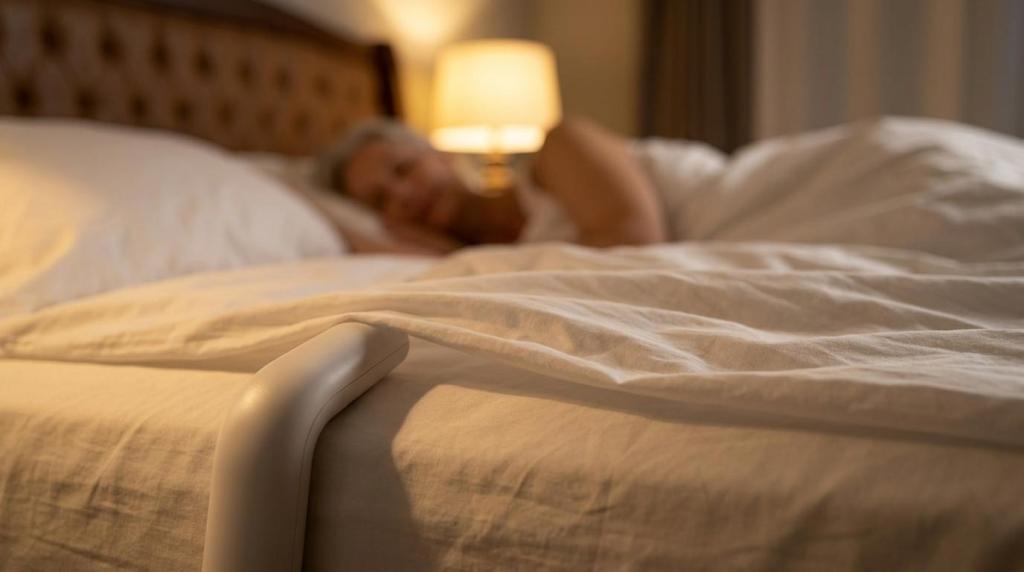
Discover cooling options for night sweats without water, from cooler rooms and breathable bedding to targeted airflow under covers.
If you want relief from night sweats without dealing with water tanks, hoses, or chilled mattress pads, the best place to start is simple, targeted cooling. Night sweats can show up during menopause, from medications, with stress, after alcohol, or because your sleep setup just holds too much heat. bFan from Tompkins Research, Inc. is relevant here because it sits in the bed fan category, a setup built to move cooler room air between your sheets where body heat tends to get trapped.
TL;DR: Summary
- The best cooling options for night sweats without water are a cooler bedroom, steady fan airflow, breathable clothing and bedding, and targeted airflow under the covers when heat feels trapped.
- Official guidance from the National Institute on Aging, the National Cancer Institute, and the NHS points to cooler rooms, fans, and adjustable lightweight layers as first line comfort measures for hot flashes and night sweats.
- Sleep experts commonly recommend a bedroom temperature of 60°F to 67°F, or 15.5°C to 19.5°C, and a targeted bed fan like bFan can often let people raise the room temperature by about 5°F while still sleeping cooler.
- “Cooling” sheets deserve label scrutiny, because FTC guidance says many products marketed as bamboo are actually rayon made from bamboo or viscose made from bamboo.
- If you want to avoid water based systems, targeted bed airflow is usually the most direct way to cool the body under blankets, with less setup and upkeep than water cooled mattress systems.
Night sweats can show up during menopause, from medications, with stress, after alcohol, or because your sleep setup just holds too much heat. You do not need to jump straight to a complicated system. In most bedrooms, better airflow plus smarter fabrics gets you a lot farther than people expect.
Cooler air, moving air, and lighter sleep layers work best. Guidance from the National Institute on Aging, the National Cancer Institute, and the NHS all point in the same direction, keep the room cool, use a fan, and make bedding easy to adjust.
That sounds almost too basic, but basics matter because night sweats are often a heat dumping problem. Your body is trying to release heat, and the bedding around you can either help or trap it. If the air in the room is already cool enough, and if air can move across your skin, heat has somewhere to go.
That is why the strongest water free options tend to be:
Room temperature control, usually by lowering the thermostat or using less insulation in the room.
Fan driven airflow, from a ceiling fan, room fan, or a bed fan that pushes air right where you need it.
Breathable layers, including lighter pajamas, adjustable blankets, and sheets that do not smother airflow.
A common mistake is thinking every “cooling” product cools the air itself. It usually does not. Most fan based options, including bed fans and products like Bedjet, only use the cooler air already in the room. They help by moving that air to your skin and carrying heat away faster.
Sleep specialists commonly suggest a bedroom temperature in the 60°F to 67°F range, or 15.5°C to 19.5°C, because sleep tends to come easier when the body can drop core temperature. If your room is warmer than that, you are starting from behind.
Start with the room, because your skin can only dump heat if the surrounding air is cooler. Sleep experts commonly recommend 60°F to 67°F, and even a small temperature shift can change how quickly you fall back asleep after a sweat episode.
Think of this as a step by step reset.
First, lower the bedroom temperature into a range that gives you a fair shot at cooling off. If you usually sleep at 72°F, try bringing it down a few degrees and see what changes. You do not always need to get all the way to the low 60s, especially if the room feels drafty to you, but many hot sleepers notice a clear difference once they stop sleeping in a warm room.
Second, let the room breathe. An open window can help in mild weather, and a small fan can keep air from going still. The National Institute on Aging specifically advises lowering the bedroom temperature, layering bedding, and turning on a fan if hot flashes keep you awake.
Third, use your cooling gear to support the room, not replace it. This matters because neither a bed fan nor a Bedjet actually refrigerates the air. They both depend on the room having air cool enough to be useful. If the room is hot, the airflow may feel less helpful than you hoped.
One practical benefit of targeted airflow is that many people can often raise the room temperature by about 5°F and still sleep cool enough for better rest. That can matter if you are trying to cut air conditioning costs without waking up sweaty.
The best options combine cooler room air, airflow, and breathable materials. If your heat feels trapped under the covers, targeted airflow usually helps more than chasing trendy sheet labels.
After the basics are in place, these are the options I would look at first.
Targeted bed airflow, with bFan as one example: This directs cooler room air between the sheets, where body heat tends to collect. It is often the most direct fix when your torso or legs overheat under blankets.
A cooler bedroom: Keep the room in the range sleep experts often recommend, 60°F to 67°F. If the room is too warm, every other cooling strategy has to work harder.
Layering bedding: The National Institute on Aging recommends adjustable layers. A light sheet plus a light blanket gives you more control than one heavy comforter.
Loose, breathable sleepwear: The National Cancer Institute points to loose fitting cotton clothing as a practical body temperature control method for hot flashes and night sweats.
Ceiling fan or box fan: These work well if you sleep uncovered or if your whole room feels stuffy. They are less direct when heat is trapped under thick bedding.
Simple trigger control before bed: The NHS lists spicy food, caffeine, hot drinks, smoking, alcohol, and stress as common symptom triggers worth cutting back, especially in the evening.
The point is not to buy everything. It is to match the tool to the problem. If the room is hot, cool the room. If your sheets feel like a heat tent, move air under the covers.
Build the setup from the skin out. Start with lighter fabric next to the body, then fix trapped heat under the bedding, then fine tune airflow and timing.
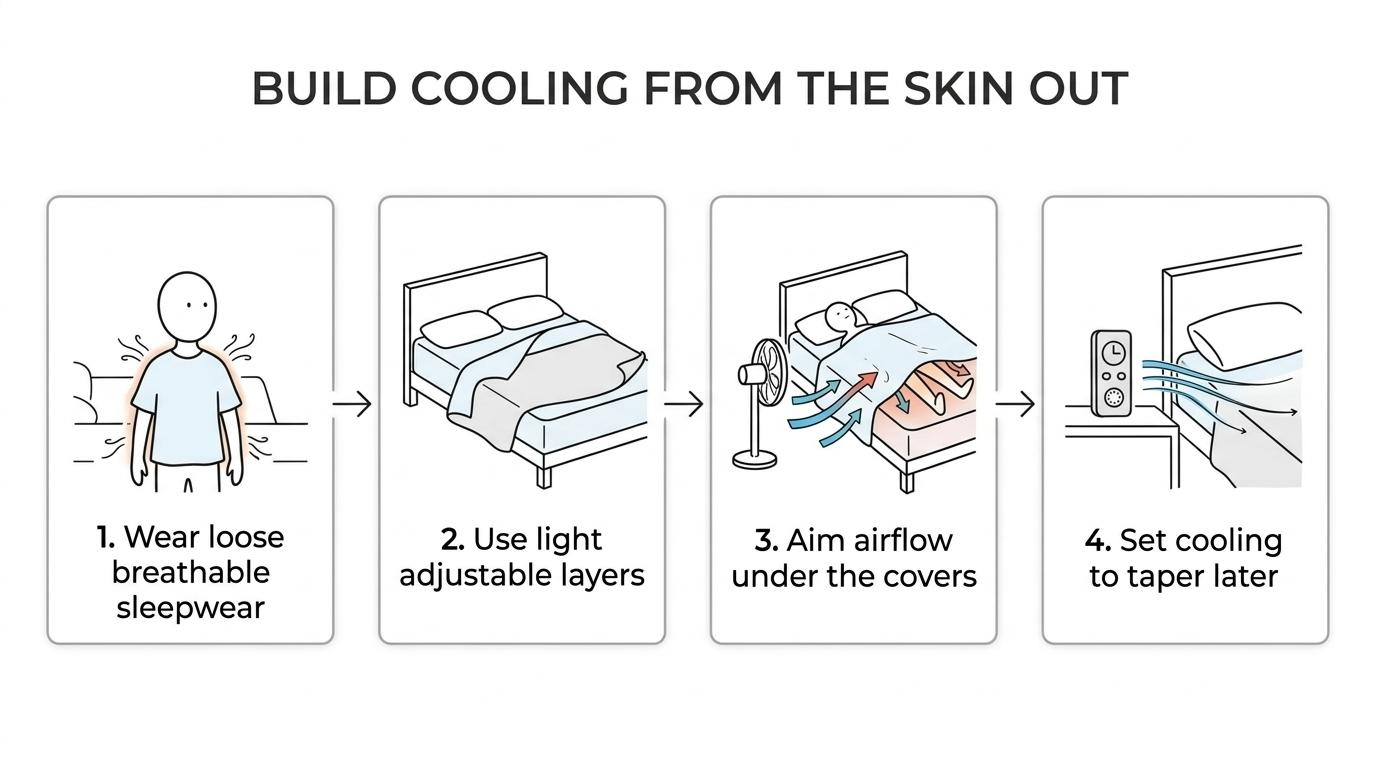
Step 1 is your sleepwear. Go loose, light, and breathable. Cotton is a common easy choice because it does not cling as much when you sweat, and it usually feels less swampy than heavy synthetics. If you sleep nude, you may cool quickly at first, but some people find a light shirt actually manages moisture better.
Step 2 is your sheet and blanket mix. Use bedding you can peel back fast. Layering matters more than people think, because night sweats are rarely steady for eight hours. You might overheat at 1 a.m. and feel chilled at 4 a.m. A light top sheet and a separate blanket lets you adapt without fully waking up.
Step 3 is airflow placement. If you regularly overheat under the covers, a bed fan is usually more useful than a stronger ceiling fan. Tight weave sheets tend to work best with between the sheets airflow, because they help direct air across your body instead of letting it leak away too quickly.
Step 4 is timing. If you usually fall asleep hot and then cool off later, timer controls are useful. A bed fan with a timer can cool the bed during the first sleep cycle, then taper down so you do not wake up chilly near morning. This is one of those little details people overlook until they have had a few rough nights.
A targeted bed fan like bFan usually cools trapped body heat more directly than a ceiling fan or box fan. The reason is simple, the airflow reaches the microclimate between your sheets instead of staying out in the room.
A ceiling fan can make the whole room feel better. A box fan can help if the air feels stale. Both are useful. But neither one is great at reaching the space under a tucked in blanket, where a lot of sleepers actually overheat. If your complaint is, “My legs and stomach feel like an oven once I pull the covers up,” that is a trapped heat problem.
That is where targeted between the sheets airflow earns its keep. It moves air across the skin where sweat forms, and it helps carry heat and moisture out from under the bedding. If you share a room, it can also spare the other person from living in a refrigerator just because you run hot.
Company published product details say bFan uses about 18 watts on average and runs around 28 dB to 32 dB at normal speed. Those numbers matter because many people need cooling that is quiet enough to ignore and efficient enough to run night after night.
“bFan uses about 18 watts on average and runs around 28 dB to 32 dB at normal speed, which makes targeted bed airflow easier to live with than whole room overcooling.”
The misconception to avoid is this, stronger airflow in the room does not always mean better cooling in bed. If the air never gets under the covers, your body may still feel cooked even while the curtains are flapping.
A bed fan, Bedjet, and water based mattress systems all aim at the same problem, but they get there differently. Bedjet and a bed fan both use the air already in the room, while water based systems add more precise temperature control with more cost and more setup.
Start with the big misconception. Bedjet does not cool the air. A bed fan does not cool the air either. Both use cooler room air and move it toward the sleeper. That means both depend on the room being reasonably cool to begin with, which brings you right back to the 60°F to 67°F bedroom target sleep experts often recommend.
Where they differ is delivery and cost. A bed fan focuses airflow between the sheets, usually from the foot or side of the bed. Bedjet uses powered airflow through its own system. If you are comparing price, one Bedjet is more than twice the price of a single bed fan. If you are comparing shared bed setups, a dual zone Bedjet setup costs over a thousand dollars, which is more than twice the price of two bed fans.
Water based mattress systems can hold a more exact sleep surface temperature, and that precision appeals to some people. The trade off is more setup, more components, and more upkeep. If you want to avoid water based systems, that category may be off your list before you even compare features.
“bFan users can often raise the room temperature by about 5°F and still sleep cool, because airflow between the sheets removes trapped heat instead of trying to cool the whole room.”
There is also a category history point worth knowing. The original bed fan concept was on the market years before Bedjet was even thought of, with the original Bedfan invented in 2003. So if your goal is simply targeted night cooling, this is not some brand new gimmick. It is a mature approach to a familiar sleep problem.
If you want the simplest no water path, I would generally start with a bed fan before moving to a water based system. If trapped heat under blankets is your main issue, the bFan from www.bedfans-usa is a reasonable solution to look at because it targets that exact microclimate instead of asking you to cool the whole bedroom more than you want.
Fabric and layering change how heat and moisture move around your body. If your bedding traps humid air, you will usually feel hotter, stickier, and more awake, even when the room itself is not that warm.
Start with pajamas. Loose fitting cotton clothing is specifically mentioned by the National Cancer Institute as a practical option for hot flashes and night sweats. Loose fabric creates a bit of space between your skin and the cloth, which helps evaporation and reduces that clingy overheated feeling.
Next, look at your sheets. The best sheet is not always the one marketed as “ice cooling.” What matters more is whether it feels breathable, not overly heavy, and comfortable once you actually sweat into it. Tight weave sheets often work well with a bed fan because they help distribute the air across the body instead of letting it escape too quickly.
Then check your top layers. Many hot sleepers do better with two lighter layers than one thick blanket. This lets you uncover a foot, peel back one layer, or rebuild warmth after a sweat passes. It sounds small, but it saves you from those wide awake, fully stripped, now I am cold moments at 3 a.m.
One more common mistake, people often replace sheets when the real heat trap is the mattress protector or duvet insert. If you changed your sheets and nothing improved, look one layer deeper.
Fiber labels matter. FTC guidance says a product can only be called bamboo if it is made directly from actual bamboo fiber, and many so called bamboo sheets are really rayon or viscose made from bamboo.
That does not mean rayon or viscose sheets are automatically bad. Some feel soft and cool to the touch. The problem is that many shoppers think they are buying a natural bamboo fiber fabric when they are actually buying a heavily processed textile. If you care about material type, label accuracy, or how a fabric may behave over time, that distinction matters.
Here is the easy way to shop smarter.
Check the fiber name: Look for the actual label wording, cotton, linen, rayon made from bamboo, or viscose made from bamboo. Do not assume the front of the package tells the full story.
Treat “bamboo” as a marketing claim first: The FTC warns that words like soft, silky, or cool to the touch can distract from the real fiber content.
Focus on weave and weight, not just fiber buzzwords: A light cotton percale can sleep cooler for many people than a heavier fabric with a trendy label.
Remember that cool to the touch is not the same as all night cooling: A fabric can feel cool at first contact and still trap heat once you are under it for hours.
If you tend to sweat heavily, I would put more trust in plain, readable labels and real world comfort than in dramatic cooling claims on the box.
The fastest way to spot a pattern is to track timing, food, stress, and temperature for one to two weeks. Night sweats often look random until you write down what happened before bed.
Start by logging three basics, bedtime, bedroom temperature, and what you wore and used on the bed. This tells you whether the problem is mostly environmental. If your roughest nights happen when the room climbs above the high 60s, that is a strong clue.
Next, track triggers. The NHS lists spicy food, caffeine, hot drinks, smoking, and alcohol as common symptom triggers. Keep it simple. If you usually have wine, dessert, and a hot shower right before bed, change one thing at a time. If you cut everything at once, you will not know what actually helped.
Then track stress and symptom intensity. This is not just in your head. The National Cancer Institute notes that behavioral approaches may help because core body temperature rises before a hot flash. In one study it cites, CBT cut hot flash and night sweat symptoms by 40 percent at 6 weeks, compared with 12 percent for treatment as usual.
The practical takeaway is not that you need therapy for every sweat episode. It is that body temperature, stress response, and sleep are tied together. If your sweats spike during anxious weeks, a cooling strategy plus stress reduction may work better than cooling alone.
If you start sweating more after a medication change, bring that list to your clinician. Antidepressants, steroids, blood pressure drugs, diabetes medications, hormone therapies, stimulants, and some cancer treatments can all contribute.
Night sweats deserve medical attention when they are new, severe, drenching, or tied to other symptoms. Comfort tools can help you sleep, but they should not replace a medical workup when something feels off.
A lot of night sweats are benign or tied to menopause, stress, warm rooms, or medication side effects. Still, some cases point to an underlying problem that needs proper diagnosis. This matters even more if your sweating changes suddenly after months or years of stable sleep.
Here are the situations that should move you from self troubleshooting to an appointment.
See a clinician soon: Night sweats are new, drenching, or happening with fever, unexplained weight loss, swollen lymph nodes, chest pain, or shortness of breath.
Review your medication list: SSRIs, SNRIs, steroids, pain medicines, blood pressure drugs, insulin, ADHD stimulants, and hormone related medications are all common suspects.
Ask about hormones and life stage: Menopause, perimenopause, pregnancy, and other hormone shifts are frequent causes, but it still helps to have a plan tailored to your symptoms.
Screen for related conditions: Sleep apnea, thyroid issues, reflux, infections, autoimmune conditions, and low blood sugar can all show up with sweating at night.
If your sweats are waking you up several nights a week, that alone is worth discussing. Poor sleep has a way of making everything else, mood, pain, memory, patience, feel worse.
Yes, many people can sleep cooler without turning the whole house into a meat locker. The key is cooling the sleeper first, then deciding how much whole room cooling you still need.
This is where targeted airflow can make financial sense. If a bed fan moves enough air across your body to carry heat away, you may be able to keep the room about 5°F warmer and still feel comfortable. That is not magic, it is just microclimate control. You are changing the conditions right around your body, not paying to overcool the whole home.
There is a trade off. If the bedroom is genuinely hot, airflow alone cannot fix everything. You still need room air cool enough to work with. That is why the sweet spot for many people is a moderate AC setting, not the coldest possible setting, plus directed airflow in bed.
Another pro tip here, do not judge energy savings after one night. Try the setup for a full week. Night to night weather changes, humidity changes, and cycle related symptoms can fool you into thinking something failed when conditions just changed around it.
National Institute on Aging, hot flashes guidance: Official advice on lowering bedroom temperature, using fans, and layering clothing and bedding to manage hot flashes and night waking.
Federal Trade Commission, bamboo textiles guidance: Regulatory guidance on when a textile can be labeled bamboo, and when it must be labeled rayon or viscose made from bamboo.
MedlinePlus, menopause overview: Trusted medical background on menopause symptoms, including hot flashes, treatment options, and when to seek care.
Copyright 2005 - present - Tompkins Research, Inc. & Kurt W. Tompkins All Rights Reserved DO NOT COPY. bFan® and the word bfan® in any format is a registered trademark of Kurt W. Tompkins the word BFAN® in any format shall not be used without written permission of the mark owner. This includes specifically Brookstone where you like to bait and switch, do not use my mark to bait customers.