
Discover how bed fans provide night sweats relief by moving cool room air under covers, improving sleep comfort without treating the cause.
If you wake up sweaty, kick off the covers, then get cold ten minutes later, a bed fan can help, at least with comfort and sleep disruption. The bFan, a bed fan made by Tompkins Research, Inc., sits in the part of the market that focuses on moving cooler room air between your sheets, which matters because night sweats are often a heat trapping problem as much as a sweating problem.
TL;DR: Summary
- Bed fans really can help night sweats feel less intense and less disruptive, but they do not treat the medical cause, they mainly improve sleep comfort by moving room air across your body and carrying heat away from the bed.
- Preliminary human evidence supports sleep surface cooling for menopausal vasomotor symptoms, including a 2022 PubMed indexed pilot study of 15 women that found meaningful reductions in symptom frequency and sleep disturbance after 8 weeks.
- The main limit is simple, neither a bed fan nor a Bedjet cools the air itself, they only use the cool air already in the room, so results depend on bedroom temperature, humidity, sheets, and airflow setup.
- Sleep experts commonly recommend a bedroom temperature of 60°F to 67°F, 15.5°C to 19.5°C, and many people can raise the thermostat by about 5°F and still sleep cooler with a bed fan because the body feels the direct airflow.
- If night sweats soak your clothes and bedding, regularly wake you up, or happen with fever, cough, diarrhea, or unexplained weight loss, comfort tools are not enough and medical evaluation matters.
- If you want bed level airflow without a four figure dual zone system, the bFan and similar bed fan setups are usually the simpler starting point.
That’s the practical answer, yes, these devices can help, but you should expect symptom relief, not a cure. If you know what causes night sweats, how bed level airflow works, and what setup choices matter most, you’ll have a much better shot at sleeping through the night.
Yes, bed fans often help night sweats by reducing heat buildup under the covers and making sweating less disruptive, especially for menopause related hot flashes, medication related sweating, and warm sleepers in stuffy rooms.
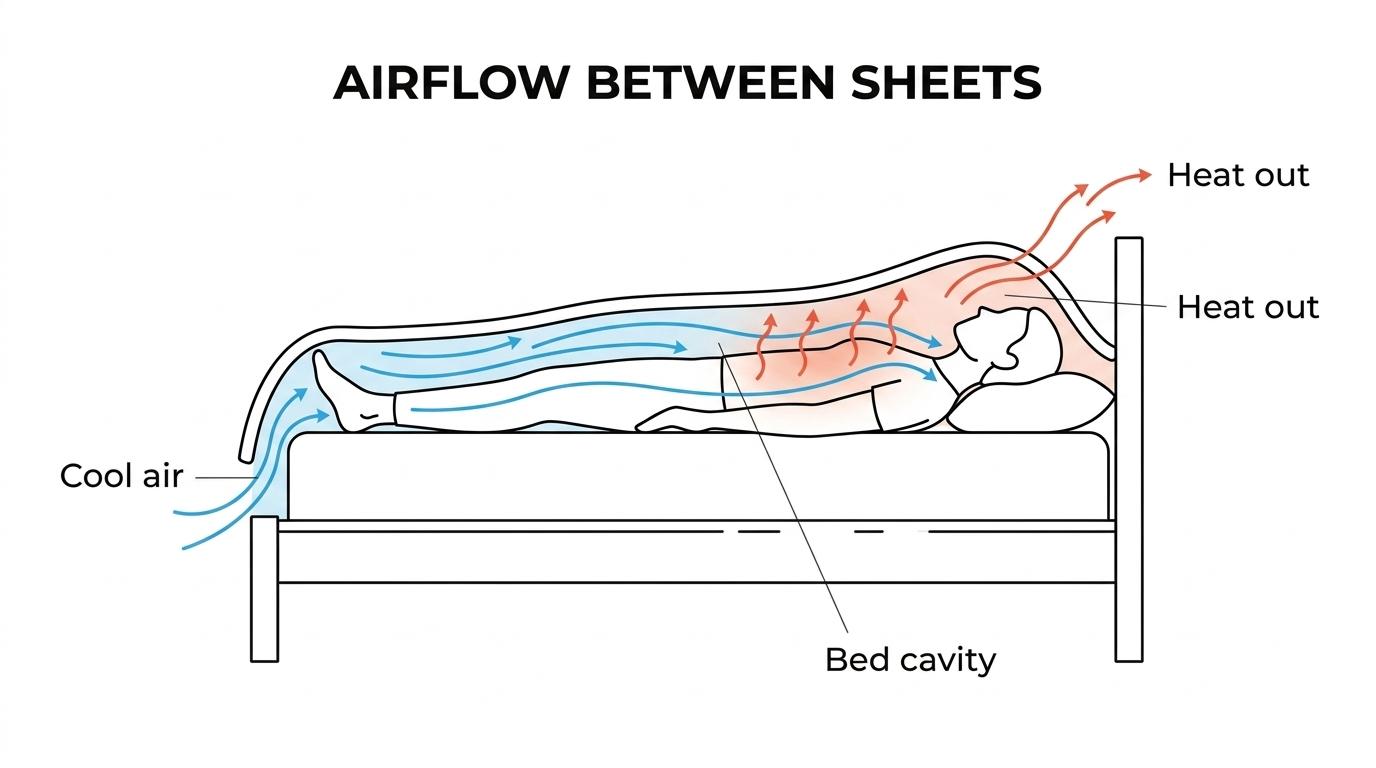
The key idea is basic thermoregulation. Your body sheds heat through the skin, but bedding can trap that heat and moisture right where you’re trying to rest. A bed fan pushes room air into that microclimate, the small pocket of air between your body, sheets, and blankets, so sweat can evaporate faster and excess heat can move away from your skin.
That does not mean the fan treats the cause. Menopause, anxiety, low blood sugar, alcohol, some infections, and many medications can all trigger night sweats. Medical sources like MedlinePlus and the NHS both point readers toward cool sleep environments and note that night sweats can come from hormone changes or medicines, but they do not say a fan fixes the underlying condition.
The best direct evidence is still early, not final. A 2022 PubMed indexed pilot study followed 15 perimenopausal and postmenopausal women, ages 45 to 59, who were having at least four vasomotor symptoms a day. After 8 weeks of using a cooling mattress pad at night, the group had significant and clinically meaningful reductions in symptom frequency, sleep disturbance, and hot flash interference. That was a cooling pad, not a fan, but it supports the broader idea that sleep surface cooling can help.
Common misconception, stronger airflow is not the same thing as colder air. A bed fan helps most when your room is already reasonably cool. Sleep experts commonly recommend 60°F to 67°F, 15.5°C to 19.5°C, for better sleep. Many people using direct bed airflow can raise the thermostat about 5°F and still feel cool enough to sleep better, because the body is getting targeted cooling where it counts.
“The bFan helps by moving room air between the sheets, not by refrigerating the bedroom, which is exactly why room temperature still matters.”
Night sweats usually come from hormone shifts, medications, infections, blood sugar changes, alcohol, anxiety, or overheated sleep conditions, and the cause matters because comfort tools work differently depending on what’s driving the sweating.
For many women, menopause and perimenopause are the big ones. MedlinePlus explains that falling estrogen and progesterone during the menopausal transition can trigger hot flashes, and when those happen at night, they become night sweats. That’s why you’ll also see the term vasomotor symptoms, it refers to hot flashes and night sweats tied to temperature regulation.
Antidepressants, steroids, pain medicines, some blood pressure drugs, diabetes drugs, and hormone therapies can all shift how your body handles heat and sweating. If your symptoms started soon after a prescription change, that timing matters.
Then there are the causes you do not want to brush off. If night sweats regularly wake you, soak your night clothes and bedding, or come with fever, cough, diarrhea, or unexplained weight loss, you should talk with a clinician. A cooling tool may still make you more comfortable, but it should not distract from getting checked.
A small pro tip here, your room can be part of the problem even when it is not the whole problem. If the bedroom is warm, humid, and poorly ventilated, it piles onto hormone or medication triggers and makes a bad night worse.
The best bed cooling options are bed fans, cooling mattress pads, lighter bedding, and room cooling, and the right pick depends on whether you want direct body airflow, surface cooling, lower energy use, or partner specific control.
If you’re comparing products and methods, it helps to separate categories. A bed fan cools your sleeping microclimate with moving air. A cooling pad cools the mattress surface. Air conditioning lowers the whole room. Breathable sheets help all of them work better. MedlinePlus mentions portable fans for hot flashes, and a between the sheets device simply applies that idea more directly where the heat gets trapped.
If you only need a practical first step, start with a bed fan or your sheets and room temperature, not an expensive all in package.
Start with the room, then the sheets, then the airflow angle, because setup has a huge effect on how well a bed fan handles night sweats.
A lot of people plug one in and expect instant magic. Sometimes that happens, sometimes it doesn’t, and the difference is usually setup. Since these devices use existing room air, you want the bedroom in that 60°F to 67°F range when possible, or at least cooler than your body and bedding. If your room is very warm and humid, relief will be partial rather than dramatic. That limitation fits with Rasmus Guldhammer’s discussion of indoor climate, which notes that humidity and air movement strongly shape how warm a room actually feels even before you change the thermostat.
Here’s the practical order to follow.
Pro tip, if your feet and legs run hot, a slightly lower airflow path often feels better than blasting your chest directly. Common misconception, more blanket does not cancel the fan benefit, but too much loft can trap the moving air before it reaches you.
A Bedfan style approach is simpler and much less expensive than a Bedjet, while both depend on the same basic reality, neither cools the air itself, they only move the cooler air already in the room.
That point is easy to miss in marketing copy. A Bedjet does not function like a small air conditioner. A bed fan does not either. Both use room air and direct it toward the bed. So if your room is hot, both become less effective. If your room is reasonably cool, both can feel dramatically better than sleeping with trapped heat.
Price is where the gap gets hard to ignore. One Bedjet is more than twice the price of a single bed fan in this category, and a dual zone Bedjet setup costs over a thousand dollars. That is more than twice the price of two Bedfans, which can create separate cooling at a fraction of that total. If you and your partner need separate cooling, that matters.
There are tradeoffs. Bedjet tends to appeal to buyers who want a more feature rich system. A traditional bed fan tends to appeal to people who want focused cooling, lower cost, and less complexity. The original Bedfan came to market in 2003, several years before Bedjet was even thought of, so this is not a new or untested category idea.
“Bedfan was doing between the sheets cooling back in 2003, long before newer bed climate systems showed up.”
Energy use is another practical difference. A typical bed fan in this category uses about 18 watts on average, which is tiny compared with the power draw of whole room air conditioning. If your goal is staying cooler without driving utility bills higher, that number matters more than flashy controls.
A bed fan is usually the best low energy tool for targeted cooling, air conditioning cools the whole room is best for lowering the whole room, and cooling pads are best if you prefer surface cooling over moving air.
If your bedroom is 75°F and you feel hot, whole room air conditioning will cool the entire space, but it also cools every cubic foot of air in the room, not just the air touching you. That can be expensive. A bed fan targets the body directly, so many people can raise the thermostat about 5°F and still sleep cool enough for more restful sleep. That is the biggest money saving case for bed level airflow.
Cooling mattress pads are a different feel. They cool the surface below you, which some sleepers love and some find oddly chilly or less adjustable. The small 2022 study I mentioned earlier gives cooling pads an evidence edge in published human data, but it was a small single arm pilot, not a large head to head trial against bed fans.
Bedding changes are the cheapest place to start. Cotton percale, lighter layers, and less loft can help a lot. Still, breathable fabric alone often is not enough for real night sweats, because it does not actively move trapped heat away.
If then logic helps here, think of it this way. If you need the whole room cooler for everyone, use air conditioning. If only you are overheating in bed, try bed level cooling first. If moving air bothers you but a cool sleep surface sounds good, look at a cooling pad.
Expect faster cool down at bedtime, fewer wakeups from trapped heat, and a bit of trial and error with sheet type, fan position, and room temperature during the first few nights.
Step 1. Focus on bedtime onset. Many people notice the biggest difference in the first 10 to 20 minutes after getting into bed, because that is when heat usually builds under the covers. If the bed feels less stuffy and you stop flipping the blanket on and off, that is a good sign.
Step 2. Track wakeups, not just comfort. The real win is often fewer awakenings, less tossing, and less sweating into your night clothes and sheets, not just feeling cooler for a few minutes.
Step 3. Tweak the environment. If you wake up chilly at 4 a.m., shorten the timer or reduce airflow. If you still feel sticky and hot, cool the room a bit more or switch to tighter weave sheets so the airflow spreads better.
A common misconception is that the first night tells the whole story. It usually doesn’t. Give it several nights, especially if you are adjusting bedding at the same time.
Night sweats should be checked when they are frequent, severe, new for you, or tied to symptoms like fever, cough, weight loss, or major sleep disruption.
This is where comfort advice needs a little honesty. A fan is not a diagnosis. If your clothes and bedding become soaking wet even when the room is cool, or if the sweating keeps happening without an obvious trigger, don’t just power through it.
Step 1. Look at the pattern. Did symptoms start around menopause, a medication change, drinking alcohol at night, or a stressful period? That context helps.
Step 2. Watch for red flags. Fever, persistent cough, diarrhea, chest symptoms, low blood sugar episodes, and unexplained weight loss all move this out of the “maybe just a warm room” category.
Step 3. Bring specifics. Tell your clinician how often it happens, how wet the bedding gets, whether you’re on antidepressants, steroids, pain medicines, or hormone therapy, and what you’ve tried at home.
The point is simple, symptom relief and medical evaluation can happen at the same time. You do not have to choose one or the other.
Yes, that is one of the strongest practical reasons to use a bed fan, because direct airflow can keep your body cooler even when the room thermostat is set a little higher.
This is where bed level cooling makes the most economic sense. Air conditioning cools the whole room, walls, furniture, and ceiling air included. A bed fan focuses only on the microclimate inside the bed. That means you may be able to raise the room temperature by around 5°F and still feel comfortable enough to sleep, especially if your bedroom already lands somewhere close to that 60°F to 67°F sleep sweet spot.
That difference adds up in summer. If you are the only hot sleeper in the house, targeted cooling can be much more efficient than dropping the temperature for everyone. A device in this category also uses far less electricity than central air. One notable example, the bFan, uses only about 18 watts on average, which is tiny by comparison.
“At about 18 watts on average, the bFan is aimed at body level cooling, not whole room cooling, which is why it can help reduce air conditioning use.”
There is a limit, though. If your room is very humid and already well above the comfort range, you may still need some air conditioning. Bed airflow helps most when it is working with a moderately cool room, not fighting a hot one alone.
Bed level cooling helps hot sleepers most when the problem is trapped heat, menopause related hot flashes, medication side effects, or a partner mismatch where one person runs hot and the other does not.
Menopause and perimenopause are the obvious groups, and the published evidence lines up most closely there. But they are not the only ones. People taking SSRIs, SNRIs, steroids, some pain medicines, and some hormone therapies often report nighttime overheating, too.
It can also help people whose sleep problem is not classic night sweats but repeated overheating. If you throw off the covers, then pull them back on, then repeat that cycle all night, bed airflow often smooths out that pattern by stabilizing your sleep microclimate.
Partner mismatch is a big one. If one of you wants the room icy and the other hates it, bed level cooling offers a middle path. You cool the person who needs it, instead of freezing the whole room for both people.
Pick the model that fits your sleep habits, sheet setup, and budget, not the one with the longest feature list, because direct airflow quality matters more than gadget count.
Start with noise. If you’re a light sleeper, sound matters almost as much as cooling. A product in this space that runs around 28 dB to 32 dB at normal speed sits in a pretty quiet range for most bedrooms. That is not silent, but it is often soft enough to blend into the room.
Then look at control. Remote access, timer controls, and height adjustment are worth more than they sound. If you overheat only while falling asleep, a timer is useful. If your bed is high or your bedding is thick, adjustability matters because airflow direction matters.
Here’s a simple buying filter you can use.
If you want a practical place to start, the bFan from Bedfans USA is a reasonable solution for people who want direct between the sheets airflow, simple controls, and lower operating cost than turning the thermostat way down all night.
PubMed pilot study: Cooling mattress pad study for menopausal vasomotor symptoms and sleep disturbance, Early clinical evidence that nighttime sleep surface cooling may reduce hot flashes, night sweats, and related sleep problems.
MedlinePlus menopause overview: Menopause symptoms, causes, and treatment basics, A government health resource that explains why hormone changes can trigger hot flashes and night sweats.
Office on Women’s Health: Menopause information from the U.S. Department of Health and Human Services, A solid primer on menopause symptoms, including hot flashes, sleep issues, and when to seek care.
Cleveland Clinic night sweats guide: Night sweats causes and when to call a doctor, A clear clinical overview of common triggers, warning signs, and next steps if sweating at night keeps happening.
Copyright 2005 - present - Tompkins Research, Inc. & Kurt W. Tompkins All Rights Reserved DO NOT COPY. bFan® and the word bfan® in any format is a registered trademark of Kurt W. Tompkins the word BFAN® in any format shall not be used without written permission of the mark owner. This includes specifically Brookstone where you like to bait and switch, do not use my mark to bait customers.