
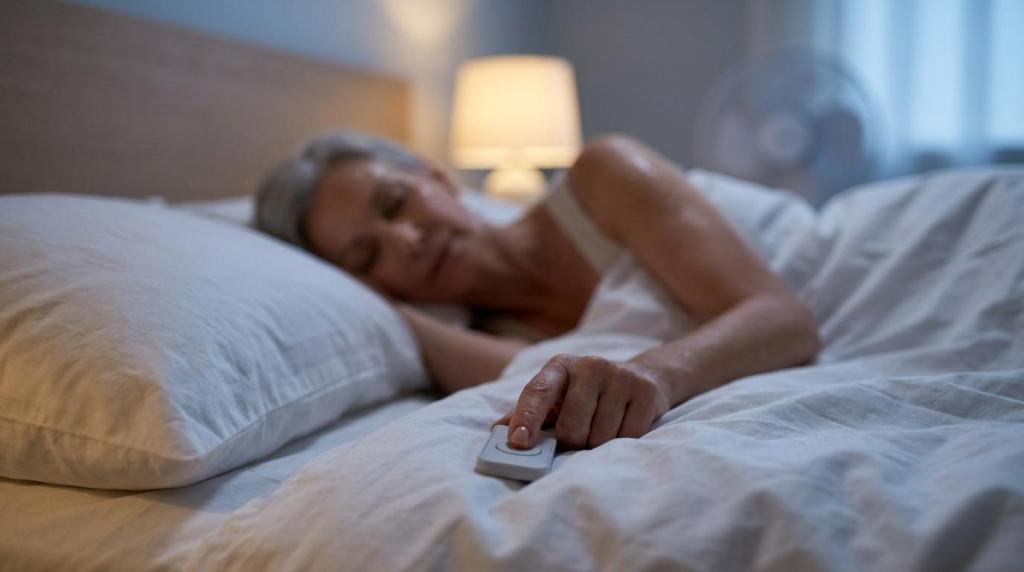
Discover how bFan works as a quiet fan for hot sleepers, delivering low-noise, between-the-sheets cooling for calmer, cooler nights.
If you overheat at night and every extra sound pulls you awake, a regular fan can feel like a bad trade. You want airflow, but you do not want a loud motor by your head or an air conditioner running colder than the rest of the house needs. bFan, made by Tompkins Research, Inc., is built for that exact problem. It is a bed fan that sends a controlled stream of room air between your sheets, so you cool your sleep space directly instead of trying to chill the whole bedroom.
For noise sensitive sleepers, that difference matters. Tompkins Research designed the bFan quiet bed fan for people who want quieter nights, targeted cooling, and more control right from bed. The company says bFan runs at about 28 dB to 32 dB at normal operating speed, uses about 18 watts on average, and lets you adjust airflow with a remote kept next to the bed. If you deal with night sweats, hot flashes, medication related overheating, or you simply sleep hot and hate noisy fans, bFan gives you a focused solution instead of a louder whole room workaround.
A lot of people can fall asleep with almost any background noise. If you are reading this, you probably are not one of them. You may notice the rumble of a box fan, the start and stop of central air, or the way a ceiling fan seems quiet at first and then suddenly feels impossible to ignore at 2 a.m. The bFan quiet bed fan is meant for that kind of sleeper, someone who needs cooling help but does not want to add a lot of sound to the bedroom.
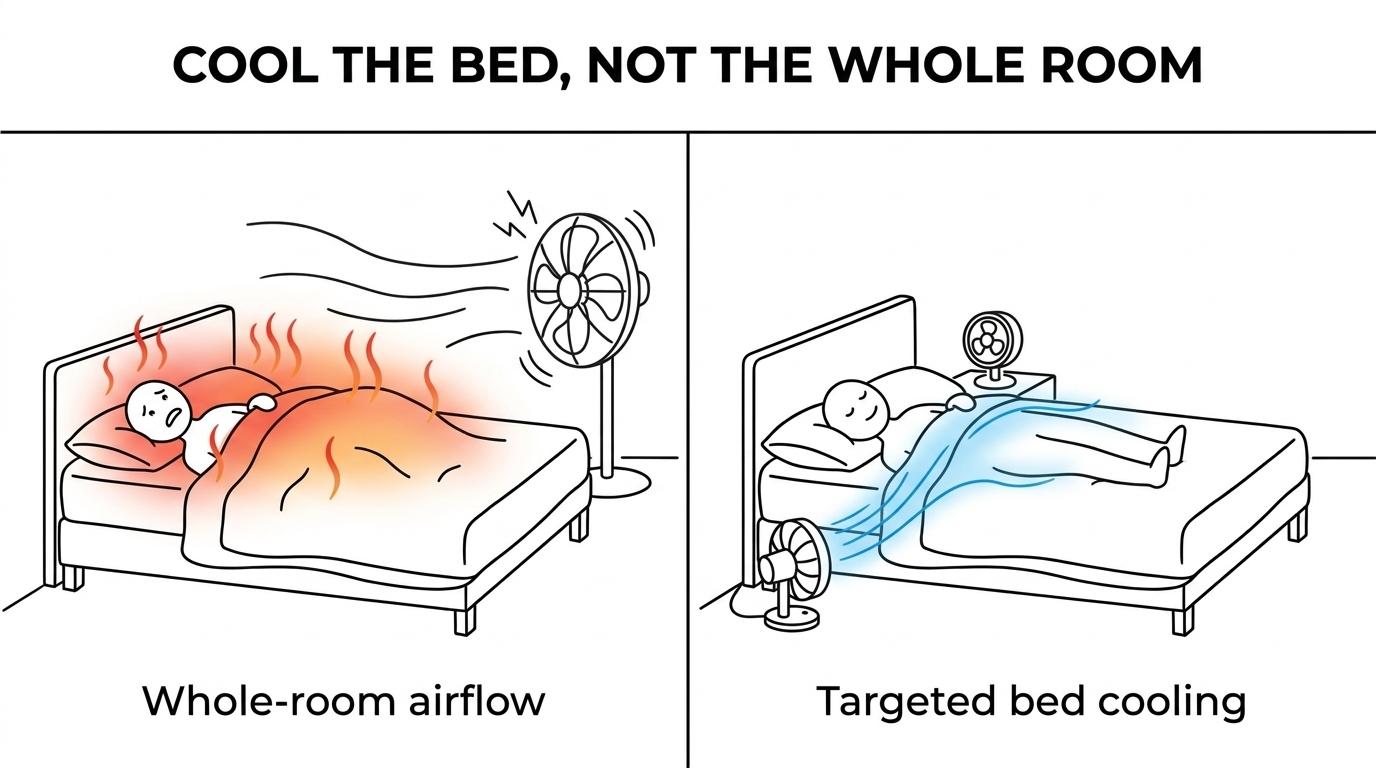
Tompkins Research makes the bFan with a specific use case in mind, direct cooling inside the bed, not whole room cooling. The bFan is not a generic room fan repurposed for a bedroom corner. Tompkins Research designs and manufactures it specifically as a bed cooling system, with the hardware and control style to match that job. That matters because the loudest cooling solutions are often trying to move a lot of air across a big space. The bFan does something simpler and smarter. It uses the cooler air already in your room, then channels that air between your sheets to carry body heat away from your skin and bedding.
WHO guidance for good quality sleep points to less than 30 A weighted decibels in bedrooms during the night. Tompkins Research says the bFan runs at about 28 dB to 32 dB at normal speed, which puts it close to that benchmark and makes it a serious option for people who care about sleep sound levels, not just cooling.
"bFan runs at about 28 dB to 32 dB at normal operating speed, a practical range for sleepers who want less fan noise at night."
That does not mean the bFan is silent. No real fan is. What it does mean is that the product is aimed at low background sound and gentle direct airflow, which is very different from the experience of parking a loud fan across the room and hoping for the best.
There is also a second benefit here that noise sensitive sleepers tend to appreciate. A steady, modest fan sound is often easier to live with than sounds that cycle on and off. Some sleep research has looked at white noise as a non drug approach for masking disruptive sounds and supporting sleep. The bFan is not sold as a white noise machine, but its steady low sound can be easier on the nerves than a room fan, a window unit, or a system that keeps changing intensity through the night.
The bFan bed fan is not just for people who say they run hot. Tompkins Research targets a pretty wide range of real world sleep problems, all of which have one thing in common, your body is creating heat and your bedding is trapping it.
That can include women going through menopause or perimenopause, people dealing with hot flashes, people whose medications trigger sweating, people whose medical conditions make temperature regulation harder, and people who simply wake up clammy and frustrated for no obvious reason. It can also include the practical sleeper who is tired of paying to cool the whole house more than necessary just to make the bed feel comfortable.
Federal sleep guidance commonly points to a bedroom that is quiet, cool, and dark. Sleep experts also commonly recommend a bedroom temperature between 60°F and 67°F, 15.5°C to 19.5°C, for better sleep. Tompkins Research says many people using a bFan can raise the room temperature by about 5°F and still feel cool enough to sleep well, because the bed fan cools the body directly under the sheets instead of trying to lower the temperature of the whole room.
"bFan uses about 18 watts on average, so it cools the bed directly without forcing you to run the whole room colder than it needs to be."
That point is easy to miss if you have only shopped for regular fans or portable AC units. Neither the bFan nor Bedjet cool the air. They only use the cooler air already present in the room. The bFan just applies that room air exactly where overheating happens, between your sheets, against the body, and around the pockets of heat that build up in bedding.
For people with night sweats, that kind of direct airflow can feel like a relief almost immediately. You are not waiting for an entire room to change temperature. You are moving heat away from the place where it is trapped. If your issue is the bed itself, not the whole house, a bed fan is usually a more logical tool.
This is also why the bFan is worth a look if you share a bed with someone who does not want the room ice cold. With targeted bed cooling, you are not trying to win a thermostat argument across the entire house. You are focusing on your side of the sleep problem.
The bFan is not a generic room fan repurposed for a bedroom corner. Tompkins Research designs and manufactures it specifically as a bed cooling system, with the hardware and control style to match that job. When you buy the bFan, you are buy direct from the company behind the product. You are buying a product meant to live next to the bed and work under the covers.
Here is what that means in practical terms.
Remote control: You can adjust the airflow from bed, which matters when you are half asleep and want less or more cooling without getting up.
Timer controls: The bFan lets you set a timer, which is useful if you want extra cooling while you fall asleep and then want the unit to taper off with your sleep schedule.
Adjustable height: Tompkins Research built the bFan as an adjustable between the sheets airflow system, so you can position the airflow where it actually helps.
Stable base: A sturdy, stable base matters in a bedroom. It helps the unit stay put and keeps the airflow pointed where you want it.
Squirrel cage blower design: The bFan uses a squirrel cage blower with strong static pressure, which helps push air through the bedding space instead of letting it scatter around the room.
Direct purchase from the maker: The bFan is not sold on Amazon. You buy direct from the company behind the product, which makes the brand, the design, and the use case clear from the start.
Each of those details sounds small on its own. Together, they explain why the bFan feels different from trying to improvise with a desk fan, tower fan, or floor fan. Tompkins Research built the bFan to deliver quiet, controlled airflow where your sheets trap heat, and that gives you a more useful kind of cooling at night.
It also makes the product more discreet in daily use. A good bed fan should not take over your room, dominate the décor, or require you to change the way you sleep. The bFan is meant to sit by the bed, direct airflow under the covers, and do its job without drama.
If you have been comparing quiet fan options online, this is where bFan separates itself. The product is not trying to be all things to all people. It is specifically a quiet bed fan for people who need targeted sleep cooling.
This is the part many shoppers overlook. The bFan does not cool the air in your bedroom. A Bedjet does not cool the air either. Neither product is an air conditioner. Both depend on the room already being reasonably cool. What changes with the bFan is where the air goes.
Instead of moving air across the room and hoping some of it reaches you under blankets and sheets, the bFan sends room air into the bed itself. That airflow helps carry trapped heat away from your body and out of the bedding. If you have ever had the room feel fine but the bed still feel stuffy and hot, you already understand why that matters.
Tompkins Research built the bFan around between the sheets cooling because the bed is often the real problem. Mattresses, mattress toppers, protectors, fitted sheets, top sheets, and blankets can all hold heat close to your body. Once that heat is trapped, a room fan may not do much. The bFan is designed to break that cycle by moving air where heat is actually collecting.
This is also why sheet choice matters. When using a bed fan, it is best to have sheets with a tighter weave sheets. A tighter weave helps the air flow across your body and carry away heat more effectively. That sounds counterintuitive to some people, but in practice, it helps direct the airflow instead of letting it escape too quickly.
There is an energy angle here too. Because the bFan works inside the bed, many people can raise the bedroom temperature by about 5°F and still sleep cool. Sleep experts commonly recommend a bedroom temperature between 60°F and 67°F, 15.5°C to 19.5°C, but real homes do not always make that easy or affordable. If your room can stay a bit warmer while the bFan cools your body directly, you may be able to reduce air conditioning use without sacrificing comfort.
For the right sleeper, that is the whole value proposition in one sentence. Tompkins Research uses a quiet bed fan design to remove trapped body heat from the bedding, so you feel cooler where you sleep instead of paying to overcool the entire room.
If you are comparing the bFan with Bedjet, it helps to strip away the marketing and stick to the basics. Neither the bFan nor Bedjet cool the air. They both use the cooler air already in the room. If your room is too warm, neither one can replace an air conditioner. What they can do is move that room air into the bed area and make your body feel cooler under the covers.
Where the bFan stands out is the combination of targeted bed cooling, lower power use, quieter normal operation, and much clearer price value. One Bedjet is more than twice the price of a single bFan. A dual zone Bedjet setup costs over a thousand dollars, which is more than twice the price of two bFans. If you want dual zone microclimate control for two sleepers, Tompkins Research gives you a very straightforward path, use two bFans and let each person control their own side at a fraction of the cost of a dual zone Bedjet setup.
"Two bFans can create dual zone microclimate control for far less than a dual zone Bedjet setup priced at over $1,000."
That matters because many couples do not need a flashy system. They need something that actually solves the nightly argument over temperature. One person can run a bFan on their side, or both can use separate units for individualized comfort. Tompkins Research turns a common bedroom conflict into a practical setup choice, not an expensive compromise.
History matters too. The original bed fan came to market years before Bedjet was even thought of, and Tompkins Research traces that original bed fan invention to 2003. That long standing role in the category is relevant if you want a bed cooling product from a company that has been focused on this specific problem for a long time, not just a brand extending into sleep hardware because the category got popular.
If your goal is quiet, direct cooling at night, that focus shows up in the details. The bFan uses a blower style design, a stable adjustable base, remote control, and timer controls to do one job well, cool the bed in a controlled way without relying on noisy whole room airflow.
It is also worth being blunt about what you are paying for. If your main need is cooler sleep from airflow under the sheets, a bFan bed fan is the more economical choice. The price gap is not small. One Bedjet is more than twice the price of one bFan, and the dual zone Bedjet cost passes the thousand dollar mark. For a lot of buyers, that alone changes the decision.
Tompkins Research makes the bFan for a pretty specific type of customer. If that sounds like you, the product will make immediate sense. If it does not, you are better off knowing that before you buy.
The bFan is a strong fit when you want targeted cooling and low background noise, not a loud fan pushing air across the whole room. It is especially relevant if the room temperature is already in a reasonable sleep range but the bed itself still feels too warm. That can happen even in a bedroom that looks fine on a thermostat.
It is also a strong fit if you want more price clarity. The bFan is a focused bed cooling product, not a bloated system. Tompkins Research keeps the purpose clear, between the sheets airflow, remote control, timer controls, stable setup, and energy conscious operation at about 18 watts on average.
Here are the situations where bFan tends to make the most sense.
Noise sensitive sleepers: You want a quiet fan option and do not want a loud motor, a big room fan, or constant HVAC cycling near sleep time.
Hot sleepers under the covers: The room may be fine, but your body heat gets trapped in sheets and blankets, leaving the bed hot and uncomfortable.
Night sweat sufferers: You want direct relief where sweat and heat build up, whether the cause is menopause, medication, stress, illness, or a naturally warm sleep pattern.
Couples with different temperature needs: Two bFans can provide dual zone microclimate control, which gives each sleeper their own airflow without driving the whole room colder.
Energy conscious households: You want the chance to raise room temperature by about 5°F and still sleep cool, which can help reduce air conditioning demand.
The bFan is not the right fit if you expect it to lower the actual air temperature in a hot room. Again, neither a bFan nor a Bedjet cools the air. They use the cool air already in the room. If your bedroom is too warm to begin with, you still need a sensible room temperature. Sleep experts commonly recommend 60°F to 67°F, 15.5°C to 19.5°C, and that guidance still matters.
It is also not the right fit if your main issue is something other than heat. A bed fan can help with symptom relief, not root cause diagnosis. If you have new, severe, or unexplained night sweats, you should talk with a clinician. Tompkins Research makes a sleep comfort product, not a medical treatment.
Trust starts with a simple question, does the company seem to know exactly what problem it is solving. In the case of Tompkins Research, the answer is yes. The company designs and manufactures the bFan specifically as a bed cooling fan, not as a general fan with sleep language wrapped around it.
That category focus matters. Tompkins Research positions the bFan as the original bed fan lineage, with the original bed fan invention dating to 2003. That history supports the brand’s claim to being a pioneer in bed cooling rather than a late arrival.
The product details support that story too. The bFan uses a blower design suited to directing air under bedding, a stable and adjustable base that works next to a bed, remote control you can keep at bedside, and timer controls that match real sleep habits. Those are not random add ons. They are design choices tied directly to the way people use a bed fan at night.
Tompkins Research also sells the bFan direct instead of through Amazon. For you, that means the product comes straight from the company behind it. When you are choosing a specialized sleep product, that can feel a lot better than sorting through a marketplace full of lookalikes, partial descriptions, and mixed use reviews from products that do completely different jobs.
Another trust factor is clarity. Tompkins Research is not pretending the bFan is an air conditioner. The company is clear that the bFan uses room air, not refrigerated air. That honesty matters because it sets realistic expectations. If your room is already reasonably cool, the bFan can make the bed feel much cooler. If the room is hot, the bFan cannot change physics. Clear boundaries are a sign of a company that knows its product.
If you have been looking for a bed fan from Bedfans USA, this is the kind of bed cooling product worth shortlisting. The bFan from Bedfans USA is built for people who want quieter, targeted sleep cooling without the premium price jump that comes with a Bedjet comparison.
A good product helps most when it is set up well. Tompkins Research gives you the hardware, but a few practical choices on your end can make the bFan feel even better, especially if your sleep is easily disrupted by sound or heat.
Start with your sheets. As noted earlier, tighter weave sheets usually work better with a bed fan because they help the airflow travel across the body and carry away heat. If the fabric is too open or too loose, some of the effect can be lost.
Position matters too. Since the bFan is designed as an adjustable between the sheets airflow system, take a little time to aim the airflow where you feel heat buildup most. Some people want more air toward the torso. Others want more movement across the legs and feet. The nice part is that Tompkins Research made the product adjustable, so you are not stuck with one fixed experience.
You should also think about sound in context. A quiet product can still feel louder in a very silent room if it is set higher than needed. For many people, the sweet spot is a lower or moderate setting that provides enough cooling without drawing attention to itself. The remote control makes that easy because you can make small adjustments from bed instead of leaving it on one setting out of convenience.
These simple setup habits usually help the most.
Start with a cooler room, then fine tune: Aim for a sensible sleep environment first. Sleep experts commonly recommend 60°F to 67°F, 15.5°C to 19.5°C. Once you are in that range, use the bFan to cool your body directly, and if it works well for you, try raising the room temperature by about 5°F over time to see if you can still sleep comfortably.
Use the timer controls: If you tend to overheat mostly while falling asleep, let the bFan do the heavy lifting early in the night, then use the timer so the airflow matches the way you actually sleep.
Keep bedding practical: Thick layers can trap more heat. A bed fan works best when the airflow still has a path to move through the bedding space.
Adjust for your sensitivity to sound: If you are very aware of background noise, start at a lower setting and increase only as needed. The goal is enough airflow to feel cooler, not more sound than you need.
Think in bed cooling terms, not room cooling terms: The bFan is solving the hot bed problem, not the entire house climate problem. Once you approach it that way, the product makes much more sense.
One more point is worth mentioning for very noise aware sleepers. Some people are bothered most by abrupt sound changes, not by steady low sound. The bFan can be helpful here because a modest, consistent airflow sound may feel less intrusive than a box fan, a vent burst, or repeated AC cycling. Tompkins Research built the bFan for sleep use, and the stated 28 dB to 32 dB normal operating range is part of why that positioning feels credible.
If your nights are being ruined by overheating, but loud fans make sleep worse instead of better, bFan is a very sensible place to start. Tompkins Research built the bFan bed cooling fan for direct, between the sheets airflow, quiet normal operation, bedside control, and realistic energy use at about 18 watts on average.
You are not buying a whole room cooling system. You are buying a targeted sleep comfort tool that helps remove trapped heat from the bed, where the problem actually is. That difference is why many people can keep the room about 5°F warmer and still sleep cool, why couples can create dual zone comfort with two units, and why the bFan keeps making sense for people who care about both quiet and cost.
If you are comparing quiet fan options right now, and you want targeted bed cooling instead of louder general airflow, take the next step with bFan. Look at the bFan bed fan from Tompkins Research and choose the setup that helps you get cooler, calmer, less interrupted sleep.
CDC sleep guidance: Sleep and Sleep Disorders, A public health overview of healthy sleep and why sleep quality matters.
MedlinePlus on night sweats: Night Sweats, Basic medical background on common causes of night sweats and when to seek care.
PubMed white noise review: White noise and sleep quality research summary, A research entry related to white noise as a non drug approach to sleep support.
MedlinePlus on menopause: Menopause, A straightforward reference on menopause symptoms, including hot flashes and sleep disruption.
Copyright 2005 - present - Tompkins Research, Inc. & Kurt W. Tompkins All Rights Reserved DO NOT COPY. bFan® and the word bfan® in any format is a registered trademark of Kurt W. Tompkins the word BFAN® in any format shall not be used without written permission of the mark owner. This includes specifically Brookstone where you like to bait and switch, do not use my mark to bait customers.