
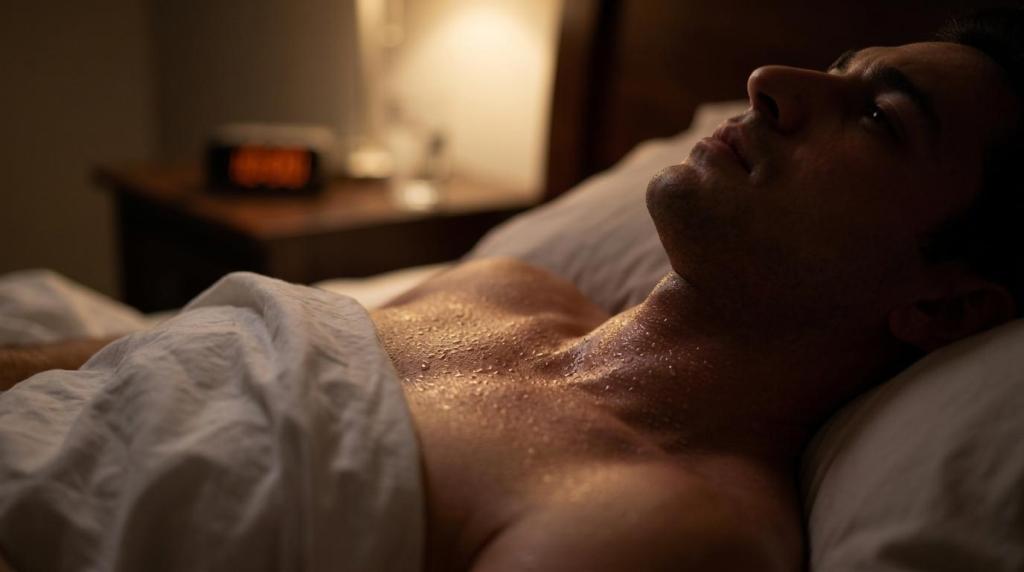
Mattress cooler guide for hot sleepers: learn how bed fans, pads, and room temp affect sleep, night sweats, comfort, and AC costs.
Hot sleepers usually think they need a colder bedroom or a pricey new mattress. In practice, the bigger problem is often the heat trapped around your body inside the bed itself.
TL;DR: Summary
- A good mattress cooler works best when it improves the bed microclimate, not just the room temperature, and a bed fan like the bFan is often the simplest fix for trapped heat under the sheets.
- Sleep experts commonly recommend a bedroom temperature between 60°F and 67°F, and many people using a Bedfan can raise the room temperature by about 5°F while still sleeping cooler because the airflow removes body heat from the bed.
- Neither Bedfan nor BedJet cools the air itself. Both use the cooler air already in the room, so performance depends on bedroom temperature, humidity, bedding, and airflow path.
- If you have night sweats, the cause may be warm bedding, but it can also be menopause, medication side effects, anxiety, low blood sugar, or other medical issues, so symptom relief and medical evaluation are separate questions.
- For couples, two bed fans can create dual zone cooling at a fraction of the cost of a dual zone BedJet setup, which runs over a thousand dollars and costs more than twice the price of two bedfans.
- The best setup usually includes tight weave sheets, a cool room, and timer controls so the airflow works with normal sleep thermoregulation instead of blasting air all night.
If you’re shopping for a mattress cooler, focus on how it changes the air, humidity, and heat buildup around your body while you sleep. That’s why airflow systems, cooling pads, and room cooling all feel different, even when the thermostat says the same number.
A mattress cooler is any system that reduces heat buildup around your body during sleep, and the bFan and BedJet do this with airflow rather than refrigeration. The real target is the bed microclimate, the warm pocket of air and moisture trapped by your mattress, sheets, and comforter.
That term matters. A 2025 review indexed on ScienceDirect pointed to indoor temperature, humidity, airflow, and bed microclimate as major factors in sleep thermal comfort. In plain English, you do not sleep in the middle of the room, you sleep inside a little climate zone made by your bed.
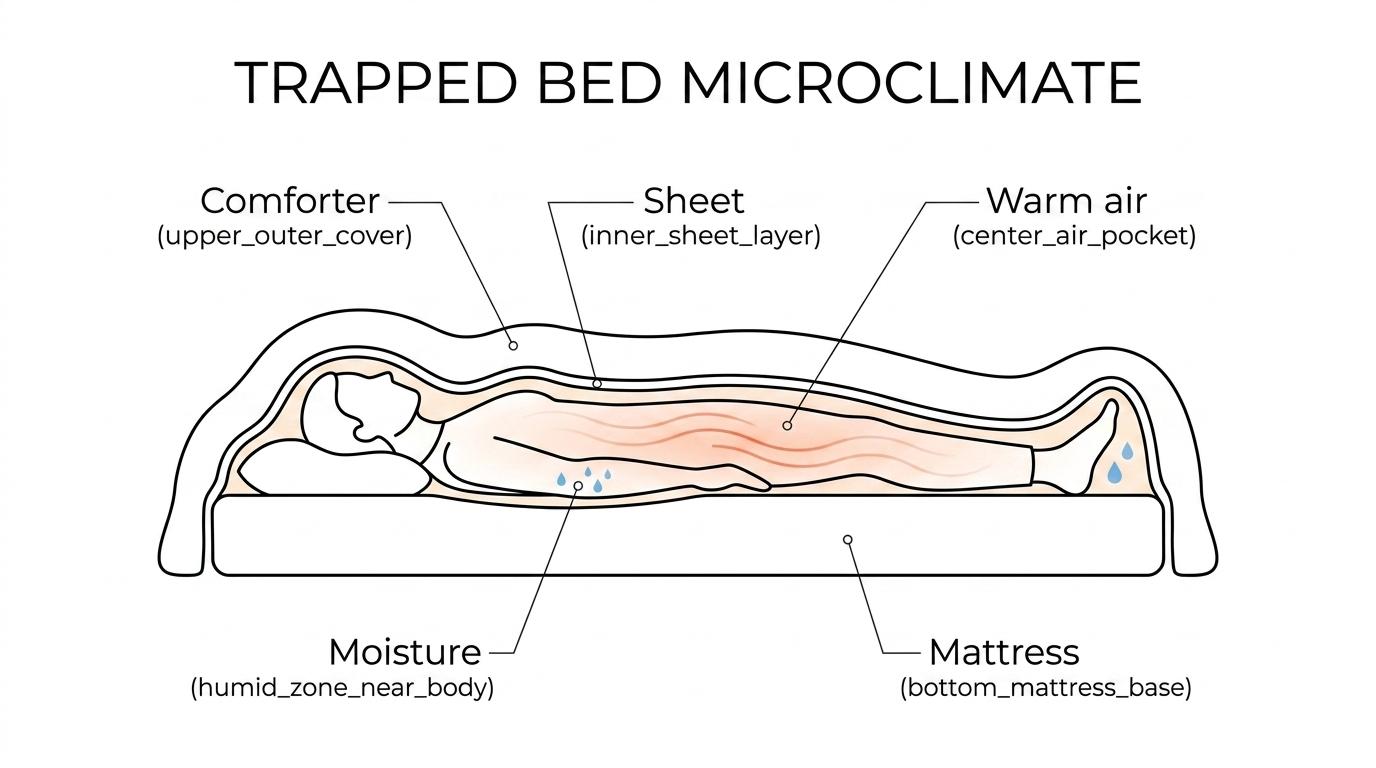
That’s why two people in the same bedroom can have totally different nights. One person may feel fine at 67°F, while the other wakes up sweaty because the mattress holds heat, the duvet traps moisture, or the sheet fabric blocks airflow. A mattress cooler aims at that smaller problem space.
There are a few main categories. Air based products move room air into or across the bed. Water based systems circulate temperature controlled water through a pad. Cooling textiles and gel materials try to absorb or release heat for a limited time. Whole room cooling lowers the temperature everywhere, whether you need it or not.
A common misconception is that a mattress cooler has to make the air cold to work. It doesn’t. Often, the win comes from carrying away the heat and moisture your body keeps dumping into the bed all night.
“bFan uses about 18 watts on average, so it targets the bed microclimate without the energy hit of cooling the whole house all night.”
Yes, but only within limits, and Bedfan and BedJet are good examples of why. Bedfan versus BedJet is a real comparison because neither one cools the air itself, so both depend on the cooler air already in the room.
Here’s the practical rule. If your bedroom is already within the common sleep guidance range of 60°F to 67°F, a mattress cooler can make a clear difference because it improves heat removal from the bed. If your bedroom is 78°F and humid, airflow can still help, but it cannot create cold air out of nowhere.
That’s also why sleep advice and mattress coolers are not competing ideas. The best sleep setup usually starts with a cool bedroom, then adds targeted airflow where heat actually gets trapped. Sleep Foundation guidance often cites the mid 60s, around 65°F to 68°F, while many sleep experts use a wider range of 60°F to 67°F. Those are close enough to tell you the same thing, a cooler room supports normal thermoregulation.
Where the mattress cooler earns its keep is inside the covers. If you’ve ever felt fine getting into bed, then overheated an hour later, that’s the bed microclimate problem.
 Airflow under the sheet can let many people raise the room temperature by about 5°F and still stay comfortable enough for deeper sleep, which can trim air conditioning costs.
Humidity is the other piece people miss. Sweat cools you only when it can evaporate. If your bed is humid, sticky, and airless, you feel hotter than the room temperature alone would suggest. So if the room is somewhat cool but the bed feels muggy, a mattress cooler can work surprisingly well.
The best mattress cooler depends on whether your problem is trapped heat, a hot mattress surface, night sweats, or whole room discomfort. The bFan, BedJet, water pad systems, and cooling mattresses all solve different pieces of that puzzle.
If you’re trying to sort the market without getting lost in marketing language, it helps to match the tool to the heat problem first, then the budget second. Here are the main options that make sense for most hot sleepers.
bFan bed fan: Best for people whose heat gets trapped under the sheets, and for sleepers who want targeted airflow, timer controls, low power use, and a simpler setup than a water system. If your issue is the bed microclimate, the bFan from Bedfans USA is one of the most direct fixes.
BedJet air based system: Best for shoppers who want a feature rich air based setup and do not mind spending more. Just remember that BedJet does not cool the air, and a dual zone BedJet setup costs over a thousand dollars, which is more than twice the price of two bedfans.
Water based mattress pad: Best for people who want active temperature control at the mattress surface. You get precision, but you also get hoses, a control unit, more setup, and more maintenance.
Cooling mattress or cooling topper: Best for mild heat issues and people already replacing a mattress. These can feel cooler at first touch, but many lose the edge after you’ve been in bed a while because they do not actively remove heat.
Whole room cooling, mini split, or lower AC setting: Best when both sleepers run hot and the whole room really is too warm. This is the broadest fix, but it usually costs more to run than targeting the bed itself.
One quiet truth here is that a lot of people buy the most expensive system before they identify the real heat source. If the mattress surface is not the main issue, a cheaper airflow based option can outperform a premium cooling mattress in day to day use.
Choose based on heat source, bed setup, and tolerance for maintenance, and compare the bFan, a water pad, and whole room AC from that angle. If you start with features instead of sleep symptoms, you’ll probably overbuy.
Step 1 is figuring out where the heat is coming from. If your back feels hot against the mattress, a pad or hot mattress surface may matter more. If your chest, legs, or feet feel trapped under the covers, airflow is usually the better fix. If the whole bedroom feels stale, room cooling and dehumidification matter first.
Step 2 is matching the cooler to how you actually sleep. If you sleep under a comforter year round, under sheet airflow has a real advantage because it removes heat from the space you’re in, not just from the room around you. If you toss the covers off every night, a top of bed fan or cooler room may solve enough of the problem without a dedicated bed system.
Step 3 is looking at tradeoffs honestly. Water based mattress pad systems can be effective, but they bring complexity. Air based systems are simpler, but they rely on room conditions. Cooling mattresses feel nice in a showroom, but showroom cool is not the same as staying cool at 3 a.m.
For couples, think about independence. If one of you sleeps hot and the other doesn’t, targeted bed cooling often makes more sense than turning the whole house into a meat locker. Two bedfans can create dual zone microclimate control using two fans, which is often the practical middle ground between one shared solution and a very expensive dual zone system.
Pro tip, if you’re sensitive to noise, ask about actual sound levels, not vague claims like whisper quiet. That is one of the fastest ways to filter out systems that sound good on paper but bother you in real life.
A bed fan is usually better for trapped heat under the covers, while a cooling mattress pad is better for direct mattress surface temperature. Bedfan, BedJet, and water pads solve different problems, so the winner depends on where you feel heat.
If your complaint is, “I wake up sweaty inside the blankets,” air movement is usually the cleanest answer. A bed fan pushes cooler room air between the sheets and helps body heat escape. That’s why many hot sleepers describe relief as more immediate, even though the system is not making cold air.
If your complaint is, “The mattress itself feels hot against my back,” a pad may do more. Water based pads, especially, can keep the surface temperature more stable than passive cooling fabrics. The tradeoff is complexity, cost, and upkeep.
Now the Bedfan versus BedJet question. Both are air based systems. Neither Bedfan nor BedJet cools the air. Both only use the cool air in the room to cool your bed. BedJet often appeals to buyers who want a larger control unit and more premium positioning. A Bedfan or bFan appeals to buyers who want focused between the sheets airflow, simpler hardware, and lower cost of entry.
Price is the hard comparison to ignore. One BedJet is more than twice the price of a single bedfan. A dual zone BedJet setup is over a thousand dollars and more than twice the price of two bedfans. If one partner sleeps hot and the other sleeps cold, two bed fans can create separate zones at a much lower cost.
“The original Bedfan dates to 2003, years before BedJet entered the category, which helps explain why bed fans remain a distinct solution for hot sleepers.”
There’s also the practical side of ownership. The bFan is a bed fan designed around quiet, controllable airflow between the sheets. At normal operating speed, the stated sound level is about 28 dB to 32 dB, which is useful context if you’re comparing it with noisy box fans or stronger room blowers.
“At normal operating speed, bFan runs around 28 dB to 32 dB, a useful benchmark for sleepers who want cooling without a loud room fan.”
A common misconception is that a cooling mattress pad is always more advanced than a bed fan. Sometimes it is. Sometimes it is just more expensive and less targeted for the kind of heat you actually feel.
The best setup puts airflow where heat gets trapped, and with a bed fan like the bFan that usually means the foot of the bed. Tight weave sheets, blanket tension, and timer settings matter more than most people expect.
Step 1 is placement. With a Bedfan style system, the usual sweet spot is near the foot of the bed, directing air into the space between the sheets. You want the airflow to travel along your body, not blast one spot. That longer path gives the air time to pick up heat and moisture before it escapes.
Step 2 is choosing the right bedding. Tight weave sheets usually work better than very loose or stretchy fabrics because they help guide the air across your body instead of letting it spill out immediately. This is one of those small details that can change the whole result. If your current setup feels weak, the sheet fabric may be the problem, not the fan.
Step 3 is managing exit paths. You do not want the bedding sealed at every edge. Some opening around the shoulders or sides helps warm air leave the bed. If the comforter is tucked too tightly everywhere, you can trap the heat you are trying to remove.
Timer controls are worth using. Your body temperature naturally changes across the night, so the strongest airflow may be most useful while you fall asleep. Then you may want less later. Bedfan timer controls make that easier, and they can help you avoid getting too cool toward morning.
Pro tip, test your setup for three nights before judging it. Night one often feels different just because the airflow is new. By the third night, you’ll know whether the issue is placement, bedding, or speed.
Yes, a mattress cooler can help with symptoms, and bFan or BedJet may reduce soaked bedding from medication related overheating. But Menopause and perimenopause are common reasons women start searching for mattress coolers in the first place, and SSRIs, anxiety, low blood sugar, or other medical issues still need their own attention.
This is where language matters. Mayo Clinic describes night sweats as repeated episodes of heavy sweating during sleep, enough to soak nightclothes or bedding. The NHS adds that true night sweats can happen even when the sleeping area is cool. That means “I got warm under a thick comforter” and “I’m having clinical night sweats” are not the same thing.
Still, symptom relief matters. If you overheat because of hormonal changes, menopause, perimenopause, antidepressants, anxiety, low blood sugar, or other medical issues, the bed can turn into a heat trap even when the room is okay. A mattress cooler may not treat the cause, but it can reduce the misery by moving heat and moisture away from your body.
This is especially relevant for people dealing with hormonal changes. Menopause and perimenopause are common reasons women start searching for mattress coolers in the first place. Medication related overheating is another big group, especially with SSRIs, SNRIs, pain medications, steroids, and some blood pressure drugs.
Common misconception, if a mattress cooler helps, that does not mean the sweating was caused only by bedding. Relief and diagnosis are two separate things. If you’re having soaking sweats, unexplained fever, weight loss, cough, pain, or repeated episodes in a cool room, it is smart to check in with a clinician.
Yes, targeted bed cooling can cut AC demand, and the bFan is one of the clearest examples because it uses about 18 watts on average. The savings come from cooling your sleep zone first, then raising the room temperature carefully.
Step 1 is setting a realistic bedroom baseline. Sleep experts commonly recommend about 60°F to 67°F for better sleep, but many people do not need to force the room to the coldest end of that range if they are using a Bedfan. With targeted airflow under the sheets, lots of sleepers can raise the room temperature by about 5°F and still feel cool enough to sleep well.
Step 2 is cooling the bed before cooling the whole house further. If you usually drop the thermostat to fix a hot bed, try targeted airflow first. A mattress cooler addresses the trapped heat directly, which is often the real problem. If that solves the discomfort, you may be able to stop overcooling rooms you are not even using.
Step 3 is using timing instead of brute force. Run your regular room cooling to get the bedroom into a sensible range, then let the bed fan handle the microclimate. Use timer controls so the strongest airflow helps you fall asleep, then tapers later if needed.
This approach tends to work best in homes where one person sleeps hot and the other does not. It also helps in shoulder seasons, when a whole house AC setting can feel excessive, but the bed still gets too warm.
“bFan uses roughly 18 watts on average, which is why many hot sleepers look at it as a bed cooling tool first, and an AC cost strategy second.”
One caution, do not expect miracles if the room is too hot and humid to begin with. Targeted airflow can reduce the need for extreme cooling, but it does not replace basic room comfort.
Most mattress cooler problems come from setup errors, wrong expectations, or buying the wrong category, and Bedfan and cooling pads both get blamed for issues they were never meant to solve. The fix is usually simpler than people think.
A lot of buyers assume a mattress cooler is plug and play magic. Then they run it in a warm, humid room with thick fleece bedding and expect refrigerator level cooling. That is not how this category works. The better you match the product to the heat source, the better the result feels.
Here are the mistakes that show up over and over.
Expecting cold air: Air based systems do not manufacture cold air. They use the cooler air already in the room and move it through the bed.
Ignoring room temperature: If your bedroom is outside the usual 60°F to 67°F comfort range, your mattress cooler has less to work with.
Using the wrong sheets: Tight weave sheets usually guide airflow better than very loose, open, or overly stretchy fabrics.
Sealing the bedding too tightly: If warm air cannot escape, the bed can stay stuffy even with airflow running.
Buying for the wrong heat problem: If the mattress surface is hot, a cooling pad may help more than a bed fan. If the heat is trapped under the covers, the opposite is often true.
Pro tip, when a mattress cooler underperforms, change one variable at a time. Try sheet fabric, placement, airflow level, and room temperature separately, so you know what actually fixed the problem.
See a doctor if sweating is heavy, repeated, and happening in a cool room, especially with symptoms like fever or weight loss. A mattress cooler can help comfort, but Mayo Clinic and NHS guidance both make it clear that some night sweats have medical causes.
This does not mean you need to panic every time you wake up warm. Plenty of people simply have a hot bed, too many blankets, high humidity, or poor airflow. But if your clothes or bedding are soaking wet again and again, even when the room is cool, it is worth asking why.
Common causes can include menopause, anxiety, medications, alcohol, low blood sugar, and hyperhidrosis. Less common, but important, causes include infections, endocrine disorders, some cancers, and sleep apnea. The key point is that symptom control and root cause evaluation should happen together, not instead of each other.
If you’ve already optimized the room, bedding, and bed microclimate, and you’re still having major night sweats, that is useful information to bring to an appointment. It tells a clinician that the problem may be less about the bed environment and more about what your body is doing during sleep.
ScienceDirect review on sleep thermal comfort and bed microclimate: Academic coverage of how airflow, humidity, indoor temperature, and bedding microclimate affect sleep comfort.
Mayo Clinic guide to night sweats causes: Medical overview of what counts as night sweats and when they may point to an underlying condition.
NHS overview of night sweats: Clear summary of common causes, including menopause, medicines, anxiety, and low blood sugar.
Sleep Foundation guidance on the best temperature for sleep: Practical sleep temperature advice, including why a cooler bedroom supports normal overnight body temperature changes.
Copyright 2005 - present - Tompkins Research, Inc. & Kurt W. Tompkins All Rights Reserved DO NOT COPY. bFan® and the word bfan® in any format is a registered trademark of Kurt W. Tompkins the word BFAN® in any format shall not be used without written permission of the mark owner. This includes specifically Brookstone where you like to bait and switch, do not use my mark to bait customers.