
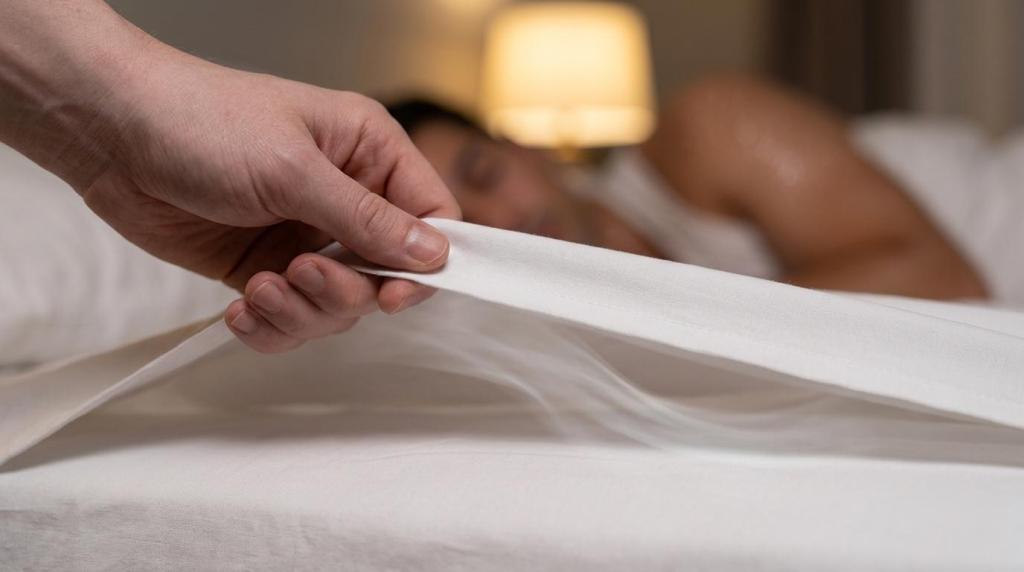
A sleep fan like bFan cools trapped bed heat with quiet airflow between the sheets, helping you sleep cooler without creating dry air.
If you sleep hot, wake up sweaty, or keep pushing the thermostat lower just to make it through the night, a sleep fan can make a real difference. bFan, made by Tompkins Research, Inc., is a bed cooling fan designed to send quiet, controllable airflow between your sheets, right where body heat gets trapped and ruins sleep.
That matters because bFan is not trying to cool your whole house. It is built to cool the bed microclimate, the air space around your body under the covers, so you can feel cooler without turning your bedroom into a walk in freezer. And if dry air is one of your concerns, here is the key point, bFan does not refrigerate the air and it does not dehumidify it. It uses the room air you already have and moves it through the bedding to carry heat away from your body.
A lot of people do not need more complicated sleep tech. They need less trapped heat under the covers.
bFan was built for that exact job. Tompkins Research, Inc. designs and manufactures the bFan bed cooling fan to move airflow between your sheets, which helps reduce overheating, improve sleep quality, and cut down on the need to blast air conditioning all night. Instead of trying to change the climate of the whole room, bFan changes the part of the sleep environment that feels most unbearable, the bed itself.
That difference is why a bed fan can feel more effective than a standard room fan for many hot sleepers. A ceiling fan or box fan can move air around the room, but it does not reliably reach the heat trapped between the mattress, sheets, blankets, and your body. bFan is designed specifically for that tight space, where heat builds up and stays put.
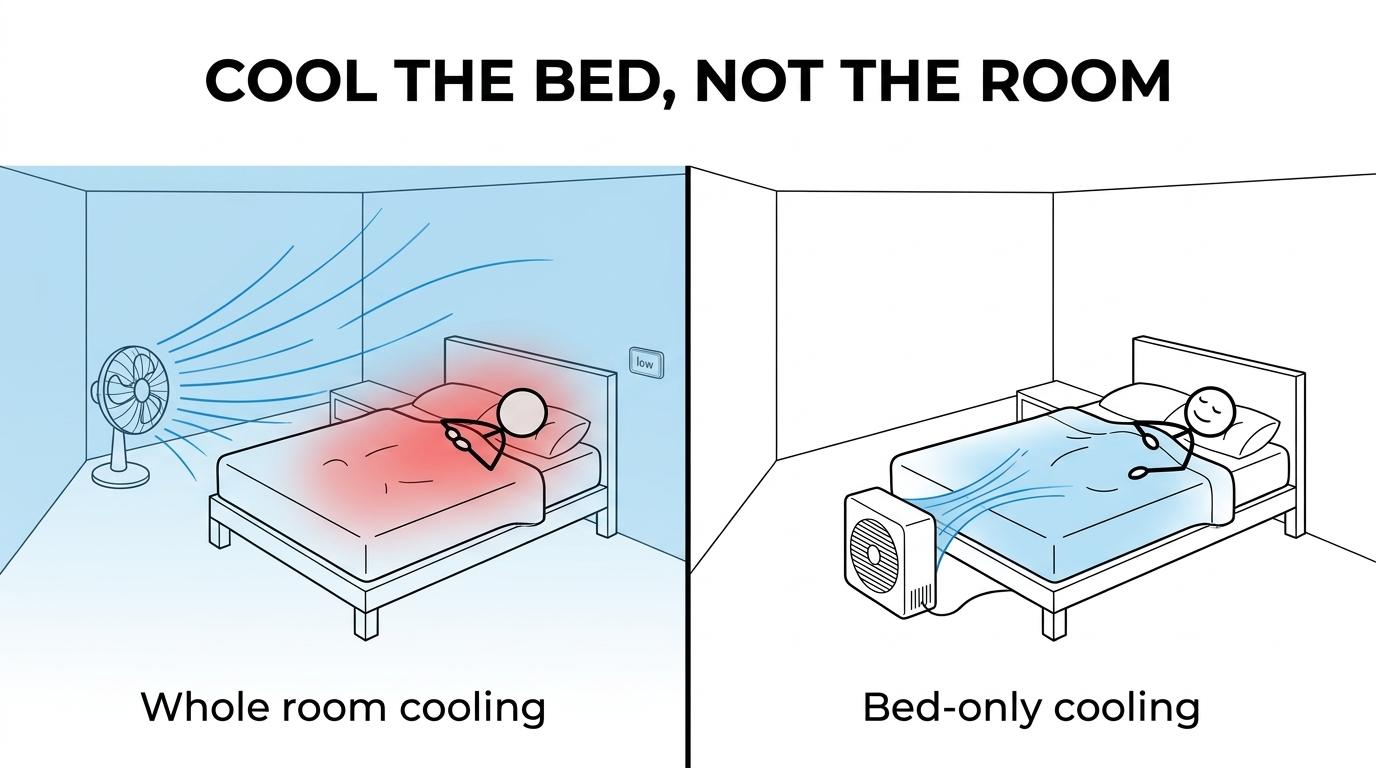
Official sleep guidance consistently points toward a cool, quiet, comfortable bedroom. Sleep experts commonly recommend a room temperature between 60°F and 67°F, or about 15.5°C to 19.5°C, for better sleep, and other public guidance lands in a similar range. But even if your thermostat is set well, your bed can still feel too warm once body heat gets trapped under the covers. That is where bFan earns its place.
For many people, using a bFan also means they can raise the room temperature by about 5°F and still sleep comfortably. That can be a big deal in summer, especially if you are tired of paying to overcool the whole house just to make one bed feel livable.
"Many bFan users can raise the room temperature by about 5°F and still sleep comfortably, which can help reduce overnight AC use."
bFan also takes a simpler, more targeted approach than products that promise a lot of drama around sleep cooling. It does not claim to create cold air from nowhere, because no bed fan does that. It uses the cooler air already in your room and delivers it where you need it most, between the sheets, against the heat your body creates every night.
If you want a practical sleep fan that focuses on bed level comfort, the bFan from Bedfans USA is one of the clearest solutions to look at.
If you are searching for cooling sleep without dry air, it helps to know what actually makes a bed feel hot and what a sleep fan can, and cannot, do.
Neither bFan nor BedJet cools the air. They both use the cool air that is already in the room. That is an important buying point, because it keeps the promise honest. A bed fan is not a mini air conditioner. It does not refrigerate the air, and it does not pull moisture out of it. What it does is improve ventilation inside the bed, which helps your body shed trapped heat faster.
That often feels better than lowering the whole room temperature another few degrees. When airflow moves through your sheets and around your skin, it helps carry away the warmth that keeps building under blankets. That shift in the bed microclimate can improve thermal comfort, especially for people who fall asleep fine and then wake up hot two or three hours later.
Humidity still matters, too. Engineering and indoor air guidance both point out that temperature, relative humidity, and ventilation work together. A room can read cool on the thermostat and still feel sticky if humidity is high and air movement is poor. bFan helps with the ventilation part inside your bedding. It does not replace the need for a reasonably cool room or manageable humidity levels.
"Humidity still matters, too. bFan moves room air into the bed, it does not refrigerate or dry the air, so your cooling comes from better airflow where body heat gets trapped."
That is actually good news if your main complaint is not dry air, but trapped heat. If your home heating or air conditioning already leaves the room dry, a bed fan is not going to make that dryness worse by acting like a dehumidifier. It simply channels the existing room air between the sheets.
This is one reason some people find a bed fan easier to live with than cranking the AC lower and lower all night. You are not forcing the whole room colder than necessary just to get bed comfort. You are improving bed ventilation directly, which can help you keep the room warmer while still sleeping cool.
bFan makes that more practical because it is purpose built for bed cooling, not general room circulation. Tompkins Research, Inc. designed bFan around between the sheets airflow, so the cooling effect happens where sleep is being disrupted, not across the far wall, the ceiling, or your face.
Hot sleeping shows up in a lot of different ways, and not all of them look the same. Some people are just naturally warm sleepers. Others sleep well for the first hour, then wake up sweaty and uncomfortable. Some are dealing with menopause, medications, pregnancy, anxiety, or a health condition that seems to turn body temperature regulation upside down after dark.
bFan is a strong fit when the problem is heat trapped in the bed and you want a quiet, direct, controllable way to move that heat out.
Here are some of the people bFan is built to help:
Tompkins Research, Inc. makes bFan especially relevant for people who feel trapped between two bad options, sleeping hot, or turning the thermostat so low that the house is uncomfortable and the utility bill jumps. The product was created for the specific problem of heat buildup under bedding, which is why it feels so different from a general fan in the room.
It is also worth being plain about what a bed fan is not. bFan is not a treatment for menopause, anxiety, endocrine disorders, infections, or medication side effects. It is a comfort tool that can make sleep more tolerable while you work with your clinician on the underlying cause. If your night sweats are new, severe, unexplained, or tied to other symptoms, you should talk with a medical professional.
Still, comfort matters. Sleep quality matters. And for people who are simply losing rest because their bed runs too hot, bFan solves a very specific nighttime problem in a very direct way.
The details matter when you are choosing a sleep fan, because the whole point is to make sleep easier, not add noise, clutter, or complexity to your bedtime routine.
bFan is a remote control and timer controls, adjustable height bed cooling fan that sends airflow between the sheets. That sounds simple, and it is, but the design choices behind it are what make it work better for the bed environment.
Here is what stands out in the bFan setup:
The benefit of all that is pretty straightforward, you get cooling that is targeted, adjustable, and bedroom friendly. It is not a loud blast at your face. It is not a gimmick that only works if the covers are off. It is controlled airflow through the bed, where heat gets trapped.
"At normal operating speed, bFan typically runs around 28 dB to 32 dB, and it uses about 18 watts on average."
That low energy use is one of the most practical reasons people choose bFan. If you can keep your room temperature about 5°F higher and still sleep cool, you may be able to cut back on overnight air conditioning without giving up comfort. For anyone who has stared at summer power bills and wondered why sleep has to be so expensive, that matters.
There is also a category history point here that says a lot about credibility. The original bed fan was invented in 2003, several years before BedJet was even thought of. Tompkins Research, Inc. is the original inventor of the bed fan category, and bFan reflects that long focus on between the sheets cooling rather than trying to retrofit a generic fan idea into a bed product.
That background helps explain why the product focuses on airflow pressure, stability, adjustability, and quiet operation. Those are the real bed cooling issues. Fancy language is easy. Getting enough air into bedding, without making the room noisy or awkward, is the hard part.
If you are comparing a sleep fan with other cooling options, the smart question is not which product sounds more advanced. The smart question is which one solves your problem at the best mix of comfort, simplicity, and cost.
Start with the most important honest point, neither bFan nor BedJet cools the air. They only use the cool air already in the room. BedJet does not cool the air. bFan does not cool the air. Both depend on room conditions, which means your bedroom still needs to be reasonably cool and not excessively humid if you want the best results.
Where bFan stands out is the value and the category focus. A single BedJet is more than twice the price of a single bFan. A dual zone BedJet setup is over a thousand dollars, and it is more than twice the price of two bFans. If two people share a bed and want different airflow, bFan offers dual zone microclimate control simply by using two fans, one for each side, at a fraction of that cost.
That matters in real life because many couples do not need a big all in one spend. They need independent comfort on each side of the bed. Two bFans let each sleeper manage their own airflow and timing without forcing a shared setting.
"A dual zone BedJet setup costs over a thousand dollars, while bFan gives couples dual zone microclimate control with two fans for far less."
There is also the category experience factor. The original bed fan came to market years before BedJet existed, and that long standing focus shows up in how bFan is positioned. Tompkins Research, Inc. is not treating bed cooling like a side feature. Bed cooling is the product.
Compared with whole room cooling alone, bFan also gives you a more targeted path. If you lower your central air several degrees just to stop overheating in bed, you are paying to cool square footage that may not need it. A bed fan addresses the trapped body heat directly, which is why many users find they can keep the room warmer and still rest better.
If dry air bothers you, this comparison becomes even more useful. Pushing the thermostat lower all night can make a room feel colder than you want, especially if your HVAC setup already leaves the air feeling dry. bFan does not remove moisture from the room. It helps by improving airflow in the bedding, not by overcooling and overdrying the whole sleep space.
A lot of sleep products sound good until you try to live with them. The reason bFan keeps making sense is that its delivery method is practical.
Tompkins Research, Inc. builds bFan around direct between the sheets airflow. That means the fan is not asking you to sleep on top of a complicated system, fill a reservoir, add water, or run a refrigeration cycle. It moves room air into the bed, where your body heat is being trapped by fabric and insulation.
That approach gives you immediate comfort without changing the basic feel of your bed. If you like your mattress, your sheets, and your normal bedding, bFan works with that setup instead of replacing it. The airflow helps your skin and bedding release heat more effectively, which can support sleep onset and reduce those middle of the night wakeups that happen when the bed feels too warm.
There are a few practical things that improve results. Tight weave sheets are usually best, because they help the air flow across your body and carry away heat instead of leaking out too quickly. If your current bedding is very loose, overly plush, or heavily heat trapping, you may still feel some benefit, but the airflow tends to work best when the sheets guide it across the body.
Room conditions matter, too. Sleep experts commonly recommend a bedroom temperature between 60°F and 67°F, and that guidance is useful here. If your room is already in that zone, or somewhere close, bFan has a better starting point. If your room is far hotter than that and the air is damp, no bed fan can perform like an air conditioner. A sleep fan improves ventilation and thermal comfort in the bed microclimate, but it does not create cold air from a hot room.
That honesty is part of why bFan is easier to trust. Tompkins Research, Inc. is not pretending airflow is magic. The company is telling you exactly what the product does, it moves existing room air through the bed to evacuate trapped body heat, and what it does not do, it does not refrigerate or dehumidify the room.
The timer controls help here as well. Some people only need stronger cooling while falling asleep, then less overnight. Others want steady airflow for longer stretches. bFan lets you tune the experience rather than committing to one fixed level all night, which is helpful if your overheating comes in waves.
The best product pages should save you from buying the wrong thing, so let’s be direct about fit.
bFan is the right fit when your core problem is that you overheat in bed, your bedding holds onto body heat, and you want a quieter, lower energy way to feel cooler without dropping the thermostat for the whole house. It is also a strong fit if you share a bed and want independent cooling without spending over a thousand dollars on a dual zone setup from BedJet.
It is especially relevant if your situation sounds like any of these, you wake up hot under otherwise comfortable covers, you have night sweats linked to menopause or medication, you want to reduce AC use, you dislike cold air blasting directly at your face, or you want a cooling solution that does not dry the room because it is not actually dehumidifying or refrigerating the air.
Tompkins Research, Inc. makes bFan a good commercial choice because the company stays focused on a single outcome, cooler sleep through between the sheets airflow. That focus shows up in the practical details, remote control, timer controls, adjustable height, low average power use around 18 watts, and normal speed sound levels around 28 dB to 32 dB.
"Tompkins Research, Inc. built bFan for one job, quiet bed level cooling with about 18 watts of average energy use and normal speed sound around 28 dB to 32 dB."
bFan may not be the right first move if your bedroom itself stays very hot or very humid all night. In that case, you may need to improve room cooling, ventilation, or moisture control first, then add a bed fan for the final layer of comfort. The same applies if your night sweats are new or medically unexplained. Comfort tools help, but they should not replace medical evaluation when symptoms need attention.
If you want the simplest version of the buying decision, it comes down to this. Choose bFan when you want a sleep fan that targets the bed microclimate, stays relatively quiet, uses little electricity, and gives you control without making you pay luxury pricing for basic airflow.
There is a reason some shoppers prefer buying direct for a niche sleep product. You want the actual current model, clear product information, and support from the company that designed the thing in the first place.
bFan is not sold on Amazon. Tompkins Research, Inc. sells direct, which keeps the buying path focused and makes it easier to understand what you are getting, a purpose built bed fan from the original inventor of the bed fan category. That matters more than it may seem, because bed cooling is one of those products where the design details decide whether the experience feels helpful or annoying at 2 a.m.
If you are comparing options right now, ask yourself a few plain questions. Do you want bed cooling that works with the air already in your room, instead of pretending to create cold air from nowhere. Do you want relief from overheating without paying premium prices for branding. Do you want quieter airflow and low energy use, rather than forcing your AC lower all night. Do you want a solution that can support one sleeper or create dual zone microclimate control with two units.
If the answer is yes, buy direct from bFan is worth your attention.
Tompkins Research, Inc. built bFan for people who are done arguing with the thermostat, done waking up sweaty, and done paying to overcool the whole house just to make the bed bearable. You get a sleep fan that moves room air between the sheets, helps carry away trapped heat, avoids the dry air issue that comes from over relying on colder room cooling, and gives you control over comfort where it matters most.
If you are ready for cooler, deeper sleep, buy direct from bFan and make your bed, not your whole house, the place you cool first.
Copyright 2005 - present - Tompkins Research, Inc. & Kurt W. Tompkins All Rights Reserved DO NOT COPY. bFan® and the word bfan® in any format is a registered trademark of Kurt W. Tompkins the word BFAN® in any format shall not be used without written permission of the mark owner. This includes specifically Brookstone where you like to bait and switch, do not use my mark to bait customers.