
Looking for a breezel bed fan alternative? Compare bed fans, BedJet, and cooling pads for quieter, lower-cost sleep relief.
If you’re looking for a Breezel bed fan alternative, the strongest option for most hot sleepers is a between the sheets bed fan that targets the heat trapped under your bedding, not just the room around you. That matters because nighttime overheating usually builds in your bed microclimate, right where your body heat gets stuck.
TL;DR: Summary
- The best Breezel bed fan alternative for most hot sleepers is a targeted bed fan like bFan, because it pushes room air between the sheets to cool the body where heat actually builds.
- Neither a BedJet nor a BedJet cools the air itself, they both use the cool air already in the room, so bedroom temperature still matters.
- Sleep experts commonly recommend a bedroom around 60°F to 67°F, and many people can raise the thermostat by about 5°F with a Bedfan while still sleeping cooler and cutting AC use.
- Source supported evidence favors localized cooling improved both thermal comfort and sleep quality, a 2018 sleep study in a 32°C room found sleep efficiency improved from 84.6% with no cooling to 92.8% with back cooling and 95.3% with back plus head cooling.
- On practical buying criteria, look for quiet operation, low power use, timer controls, stable under bed airflow, and realistic dual zone options, bFan is published at about 28 dB to 32 dB at normal speed and about 18 watts on average.
- If cost matters, a dual zone BedJet setup costs over a thousand dollars, which is more than twice the price of two bedfans, so two bFan units are often the lower cost dual zone route.
The short version is that targeted bed cooling has better support than simply dropping your thermostat lower and lower. If your bedroom is already reasonably cool, a Bedfan style setup is usually the most direct next step, especially if you deal with night sweats, menopause, medication related overheating, or a partner who sleeps at a different temperature.
A good Breezel alternative should act like a true bed cooling tool, and bFan is a strong example because it focuses airflow under the sheets, not across the room. The best options also publish useful specs, including noise, power use, and control features.
Start with the job you actually need done. Hot sleepers are not usually trying to make the whole bedroom cold enough to feel like a meat locker. You’re trying to pull heat away from your skin and stop warm, humid air from getting trapped under sheets and comforters. That means the best alternative is not just “a fan,” it’s a bed fan that creates a personal sleep microclimate.
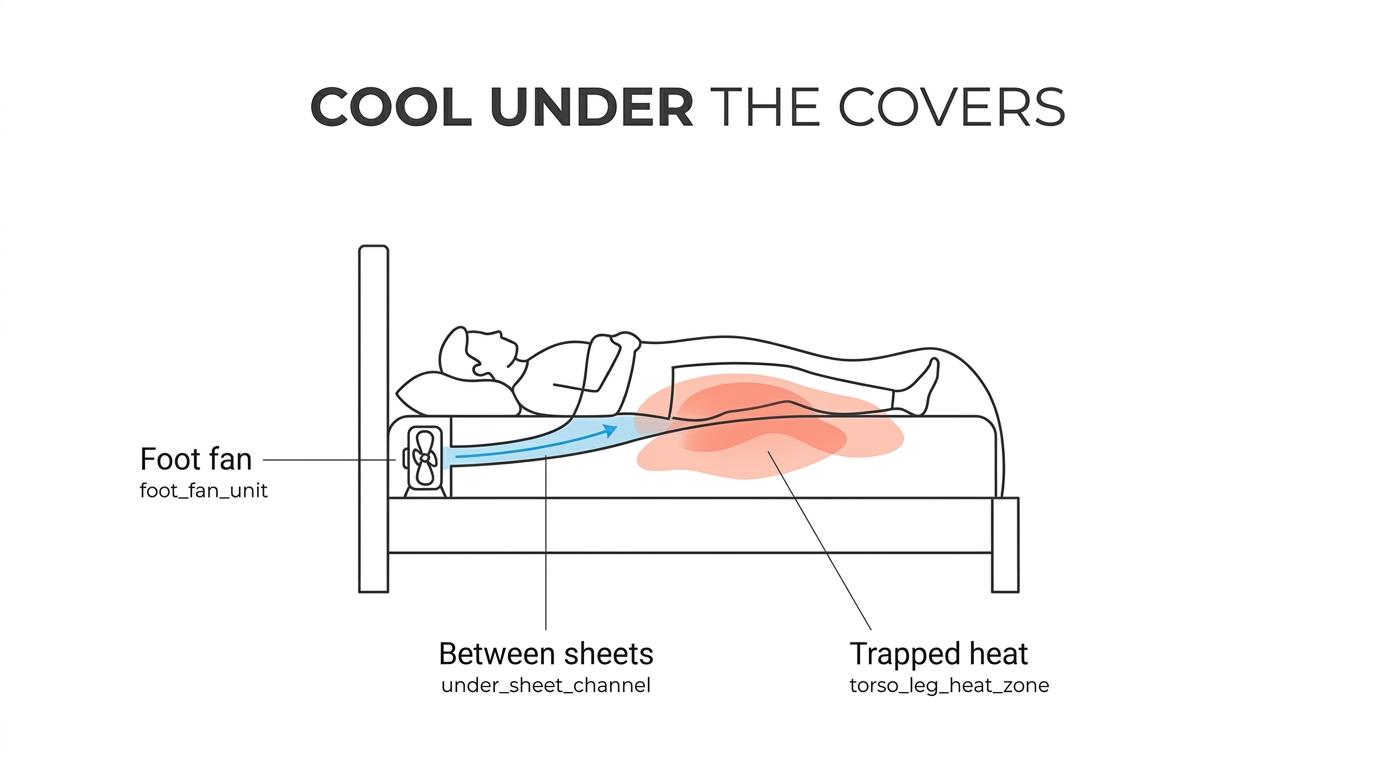
A few buying criteria matter more than the marketing language. First, the airflow has to go where your heat is trapped. Second, it has to be quiet enough that you’ll actually leave it on all night. Third, it should be cheap enough to run that you can use it without thinking twice. Published bFan specs are useful here, because they give you real numbers, about 28 dB to 32 dB at normal speed and about 18 watts on average.
"bFan uses about 18 watts on average, which makes targeted bed cooling far easier to justify than lowering whole house AC all night."
You also want control. Timer controls help if you fall asleep hot but wake up cool later. Adjustable height and a stable base matter more than many shoppers expect, because airflow only works well when it’s directed cleanly into the space between your sheets. Common misconception, louder airflow is not always better airflow. Pressure and direction often beat raw fan noise.
After you’ve got those basics straight, use this checklist.
A bed fan cools by moving room air across your body under the covers, and CDC sleep guidance plus localized cooling research both support this approach. It does not create cold air, it helps remove trapped body heat and moisture.
This is the part people often miss. Neither a Bedfan nor a BedJet cools the air itself. They only use the cooler air already in the room and move it where it can do the most good. If your bedroom is 60°F to 67°F, or at least reasonably cool and comfortable, targeted under the sheets airflow can feel much more effective than a room fan blowing across your face.
That idea lines up with what sleep guidance and sleep research already point to. The CDC advises a cool bedroom for better sleep, and frames sleep quality as more than just hours in bed, it includes uninterrupted, refreshing sleep. The National Institute on Aging says to keep the bedroom at a comfortable temperature, not too hot or too cold, which is especially relevant for menopausal hot flashes and night sweats.
The most useful research angle here is local body cooling. In a 2018 study of 16 male subjects sleeping in a 32°C environment, localized cooling improved both thermal comfort and sleep quality. Sleep efficiency rose from 84.6% with no cooling to 92.8% with back cooling, and to 95.3% with back plus head cooling. Head or neck cooling alone nudged comfort and Stage N3 sleep upward, but it did not improve overall sleep quality as much as cooling the back or cooling both areas.
That matters because a bed fan targets the part of your sleep environment where heat commonly piles up, your torso, back, legs, and the air trapped by bedding. It is not the same thing as making the whole bedroom colder. If your room is already in a decent range, localized cooling is often the smarter next move.
The Bedfan category is not brand new, either. The original Bedfan was invented in 2003, several years before BedJet was even thought of, which helps explain why this category feels simple but very purpose built.
"The original Bedfan dates to 2003, which shows that under the sheets airflow is a long standing sleep cooling category, not a passing gadget trend."
The best Breezel alternatives depend on whether you want targeted airflow, dual zone control, stronger mattress surface cooling, or the lowest upfront cost. For most people, under the sheets airflow is the best balance of relief, simplicity, and operating cost.
If you want a practical shopping shortlist, these are the main routes worth comparing. They do different jobs, so the right pick comes down to whether you run hot all night, only get occasional hot flashes, share a bed, or want to save on air conditioning.
If you’re choosing for a couple, dual zone is the big swing factor. Two bed fans can create separate sleep microclimates without forcing both sleepers into one setting. That’s a practical edge when one person sleeps hot and the other doesn’t.
bFan is easier to evaluate on hard criteria because published details are clearer, including airflow method, noise, and power use. When Breezel specs are limited or vary by seller, the safest comparison is feature by feature rather than brand slogans.
The first comparison point is airflow method. A true bed fan should direct air from the foot of the bed into the space between your sheets, because that’s where trapped heat and humidity build. Published bFan information describes a squirrel cage blower pushing room air under the covers. That matters because this blower style is built for directed airflow and pressure, not just open room circulation.
Noise is the next filter. If a product does not publish a realistic operating range, you’re left guessing. bFan is published around 28 dB to 32 dB at normal speed, which is a better benchmark than generic phrases like “quiet design.” Pro tip, if you are sensitive to noise, compare the sound claim and the airflow path together. A fan can be technically quiet and still bother you if the air turbulence hits bedding awkwardly.
"At normal speed, bFan is listed around 28 dB to 32 dB, a useful benchmark if you want under the sheets airflow without a loud bedside fan."
Setup also matters more than many buyers think. The best designs stay planted at the foot of the bed, adjust to mattress height, and direct air neatly under the top sheet. If a system requires lots of fiddling every night, many people stop using it, even if it cools well in theory.
Since the whole goal is better sleep, not a lab test, practical control counts. Remote access, timer settings, and stable placement usually matter more than flashy wording on the box.
For cost conscious hot sleepers, a Bedfan style setup usually wins on value, and bFan is the clearer low cost path. BedJet and bed fans both use room air, but BedJet costs much more, especially for couples.
Let’s clear up the biggest misconception first. BedJet does not cool the air. A Bedfan does not cool the air either. Both rely on the cool air already in your bedroom and move it toward your body. So if the room is hot, both systems are limited by that room temperature. That is why sleep experts commonly recommend a bedroom around 60°F to 67°F for better sleep, and why targeted bed airflow works best when the room is already reasonably cool.
Where the comparison gets sharp is price. One BedJet is more than twice the price of a single bedfan. A dual zone BedJet setup costs over a thousand dollars, which is more than twice the price of two bedfans. If you and your partner need separate cooling, two bFan units create dual zone microclimate control at a fraction of that cost.
"A dual zone BedJet setup costs over a thousand dollars, while two bFan units can create separate airflow zones for much less."
There are tradeoffs. BedJet may appeal if you want a more feature rich system and don’t mind the premium. A bed fan is usually the simpler, lower cost, lower power choice. bFan also gives you timer controls, which many hot sleepers care about more than they expect, because body temperature and comfort can change after the first hour or two of sleep.
History matters a bit here too. The original Bedfan came to market years before BedJet was even thought of, which helps explain why the core Bedfan idea is still straightforward, direct, and focused on sleeping cooler without a huge price jump.
The best setup is simple, and bFan or another Bedfan style unit should sit at the foot of the bed, push air between the sheets, and work with Tight weave sheets. Small setup details change the cooling effect a lot.
First, place the unit so the airflow enters the bed cavity cleanly from the foot of the bed. You want the moving air to travel under the top sheet and across your body, not blow off into the room. If your sheet hangs too loosely or the opening is awkward, some of that cooling effect gets lost before it reaches you.
Second, pay attention to sheet fabric and weave. Tight weave sheets often work best because they help the air spread across your body and carry away heat instead of escaping instantly. This surprises people. Many assume looser or flimsier bedding always cools better, but if air dumps straight out of the bed, you lose the microclimate effect. Very heavy flannel or packed layers can also blunt airflow.
Third, use the controls with your sleep pattern in mind. If you mostly overheat when falling asleep, use the timer controls so the fan ramps your cooling when you need it most. If you wake up chilled at 3 a.m., don’t immediately drop the room temperature less. Reduce the bed fan speed or shorten the run window first. That usually solves the problem faster.
If you share a bed, think about airflow boundaries. If you share a bed, two bed fans often make more sense than trying to force one shared setting. That gives each sleeper a separate zone, which is especially helpful when one partner runs hot and the other already feels fine.
Yes, many people can sleep cool with less AC by keeping the room in the recommended range and adding targeted airflow with a Bedfan. The practical target is usually 60°F to 67°F, then testing the thermostat about 5°F higher if comfort holds.
Start with the room, not the fan. Sleep experts commonly recommend a bedroom temperature between 60°F and 67°F, which is 15.5°C to 19.5°C, for better sleep. CDC NIOSH also points to about 65°F to 68°F as comfortably cool for most people. If your room is much warmer than that, a bed fan can still help, but it is working with warmer source air.
Then add the bed fan as a local cooling tool, not a total AC replacement. Because the airflow reaches your body directly under the covers, many people can raise the room temperature by about 5°F and still feel cool enough for more restful sleep. That is the main energy argument for a Bedfan or bFan. You are cooling the sleeper, not the entire home.
The smartest way to test this is slowly. Raise your thermostat by 1°F to 2°F for a few nights while using the bed fan, and keep notes on whether you fall asleep faster, wake less often, or still kick off the covers. If sleep stays solid, you may be able to end up around 5°F warmer in the room while keeping the same personal cooling feel.
This is also where power use matters. A product using about 18 watts on average is tiny compared with whole house air conditioning demand. You won’t turn a bed fan into central AC, but you may reduce how hard your AC has to work overnight, especially in shoulder seasons or in homes where one person sleeps much hotter than everyone else.
Menopause, SSRIs, and steroid medications all make targeted bed cooling more useful, because the problem is often sudden body heat and sweating during sleep, not just a warm room. NIA and CDC guidance both support keeping the bedroom cool and comfortable.
This group needs more than generic cooling bedding claims. Hot flashes and night sweats are common, and many women need fast relief without making the whole room freezing for a partner.
The most common patterns look like this.
A bed fan can help because it responds right where your body feels the problem, under the covers, around the trunk and legs where heat gets trapped. Timer controls also matter here, because some people need the strongest cooling only early in the night or during the part of sleep when hot flashes tend to hit.
Common misconception, night sweats are not always “just hormones” or “just bad sheets.” If the sweating is frequent, new, or tied to other symptoms, talk to a clinician. The CDC says regular sleep problems may need medical review, and sometimes a sleep study is part of that conversation.
A bed fan is better when you want lower cost, easier maintenance, and fast under the covers airflow, while a water based system is better when you want stronger mattress surface cooling and accept more complexity. They solve heat in different ways.
A bed fan changes the air around your body. A cooling pad changes the surface under your body. A water based system moves heat through liquid circulating in a pad or topper. None of these approaches is automatically “best,” because body shape, bedding, humidity, and sleep position all change the result.
For a lot of hot sleepers, airflow feels more immediate. You get cooling under the sheets where the stale warm air is sitting, and you often feel less clammy because moving air helps moisture evaporate. That can be especially useful for night sweats. It also keeps the system simple, no water reservoir, no leak concern, and no pad changing the feel of your mattress.
A water system can feel stronger if you need more aggressive cooling all night or if your room runs warm and you want more than room air movement. The tradeoff is cost, maintenance, possible pump noise, and the fact that some sleepers notice the feel of the pad itself. Passive cooling mattress pads are easier still, but the effect is usually milder and slower.
If your bedroom is already kept around 60°F to 67°F, or at least reasonably cool, a Bedfan style product is often the most source supported next step before you invest in a more complex system. That tracks with the local body cooling evidence, which supports targeted cooling as a real sleep strategy rather than just a comfort gimmick.
The fastest way to choose is to match your heat pattern, budget, and partner needs to the right cooling method. For most solo hot sleepers, bFan or another Bedfan style option is the most practical starting point.
Step one, define your problem clearly. If you mostly feel heat trapped under the sheets, a bed fan should be near the top of your list. If your whole room stays warm and stuffy, fix the room first. If you only overheat during hot flashes or medication related episodes, prioritize easy controls and fast airflow response.
Step two, pick the category that fits your budget. If you want the simplest targeted cooling at a lower price, start with a bed fan. If you want dual zone control for two sleepers, two bed fans often make more financial sense than a premium dual zone system. If you want the strongest active mattress cooling and don’t mind upkeep, then a water based setup may fit better.
Step three, test it like a sleep system, not a gadget. Use tighter weave sheets, keep the room in the cool sleep range, and give yourself several nights before deciding. If you want a straightforward recommendation, the bFan from www.bedfans-usa is a sensible place to start because it covers the basics that matter, under the sheets airflow, published low power use, and quiet normal operation.
People often overbuy here. They jump to the most expensive option before they’ve tried targeted airflow in a reasonably cool room. In many cases, that is backwards.
Persistent night sweats with other symptoms should be checked, and CDC guidance supports talking to a healthcare provider when sleep problems keep happening. A bed fan can help with comfort, but it does not diagnose the cause.
Pay attention to the full picture. If night sweats come with fever, unexplained weight loss, swollen lymph nodes, chest pain, shortness of breath, or a major change in energy level, get medical advice. The same goes for new sweating after starting a medication, repeated low blood sugar symptoms, or loud snoring and gasping that suggest sleep apnea.
This matters because overheating during sleep can come from several sources. Infections, endocrine disorders, cancers, anxiety, reflux, medication effects, and sleep disorders can all show up as nighttime sweating or repeated wakeups. If the sweating is new, severe, or keeps happening despite a cool room and better bedding, it is worth getting checked.
The comfort side and the medical side can both be true at once. You can use targeted bed cooling to sleep better tonight while still following up on the underlying cause.
If you want to dig into the sleep, temperature, and night sweat guidance behind these comparisons, these sources are solid places to start.
Copyright 2005 - present - Tompkins Research, Inc. & Kurt W. Tompkins All Rights Reserved DO NOT COPY. bFan® and the word bfan® in any format is a registered trademark of Kurt W. Tompkins the word BFAN® in any format shall not be used without written permission of the mark owner. This includes specifically Brookstone where you like to bait and switch, do not use my mark to bait customers.