
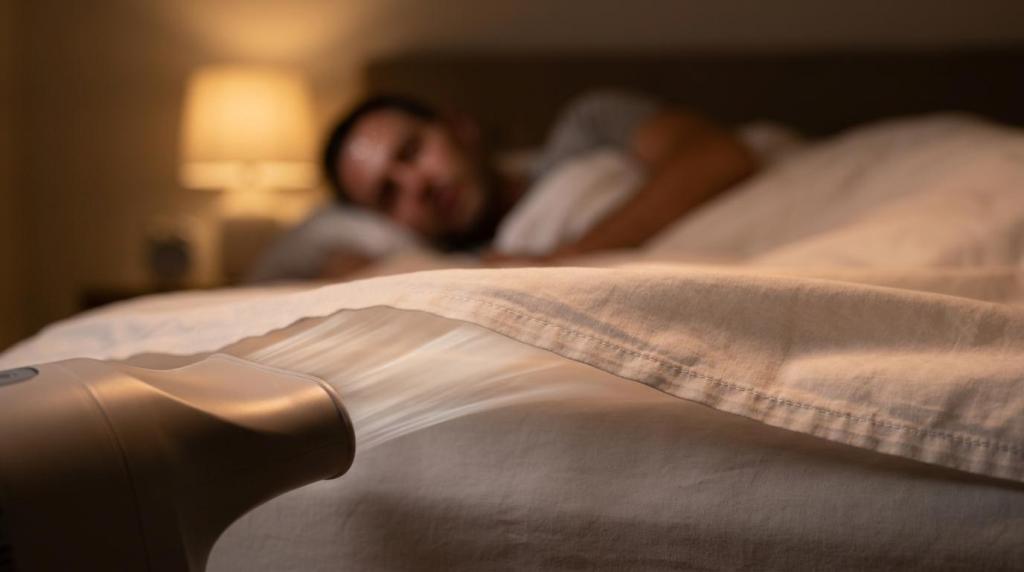
Looking beyond a cooling pad? bFan cools trapped heat and humidity under covers with direct airflow for quieter, deeper sleep at night.
If you’re looking at a cooling pad because your bed gets too hot at night, it helps to get clear on where the heat is really building up. For a lot of people, the main problem is not just the mattress surface. It’s the warm pocket of air and humidity trapped under the covers, right around your body, where sleep gets restless fast.
That’s exactly where bFan, made by Tompkins Research, Inc., comes in. The bFan bed fan is a direct alternative to a cooling pad because it sends controllable room air between your sheets, where it can carry away body heat and moisture instead of just sitting under you. If your goal is cooler, deeper sleep without turning your whole house into a walk in freezer, the bFan from Bedfans USA is a smart solution to consider.
A cooling pad can feel nice when you first lie down. But if you still wake up sweaty at 2 a.m., kick the covers off, then pull them back on an hour later, the issue may be your bed microclimate, not the mattress alone. bFan is designed to target that trapped heat directly, and that difference matters when you’re buying for real sleep, not just a cool touch at bedtime.
Cooling pads are usually passive. They may use special fabrics, gels, or phase change materials to feel cooler against the skin or to reduce some heat retention. That can help, especially if you dislike moving air. But passive cooling has limits once your body heat and trapped humidity collect under the bedding.
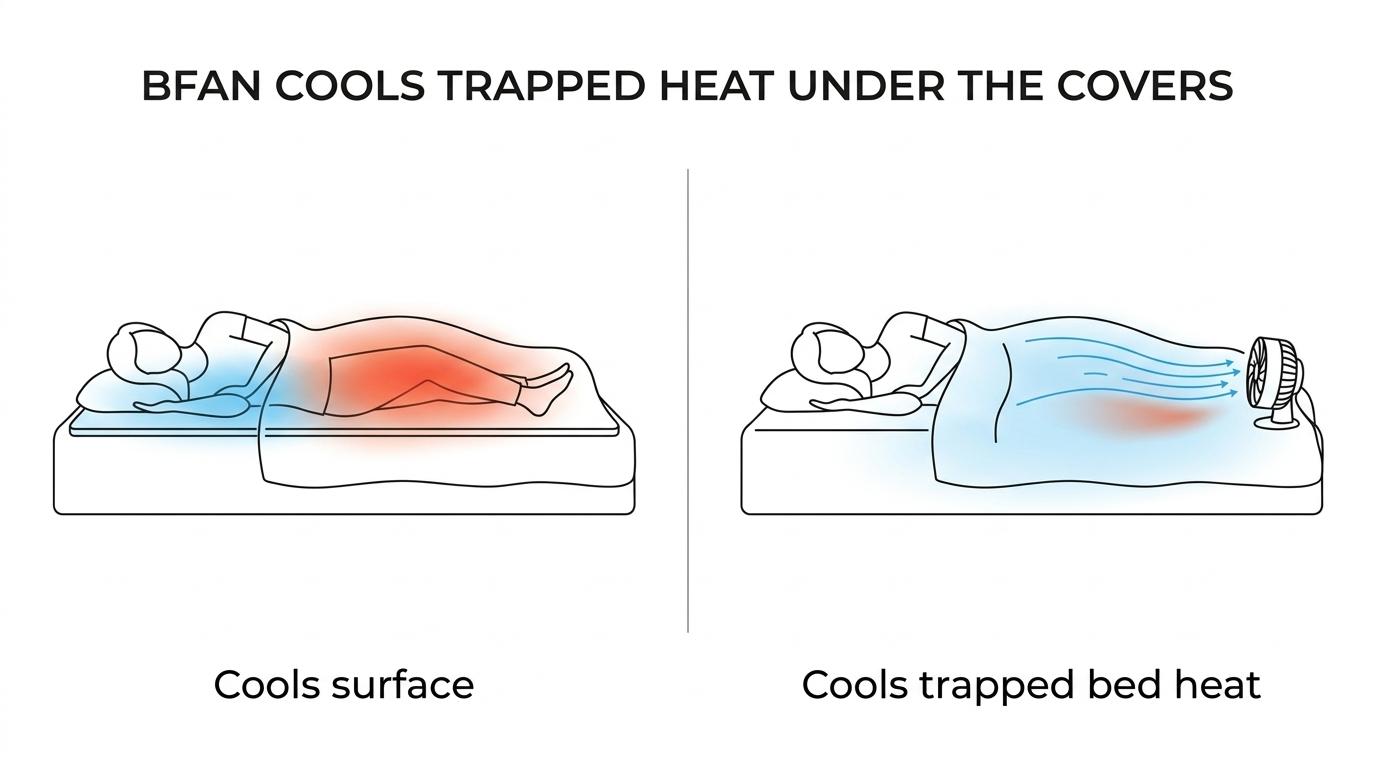
bFan takes a different approach. Tompkins Research designed bFan to move a controllable stream of room air between the top and bottom sheets, preferably from the foot of the bed, so the airflow reaches your body directly. That matters if your real complaint is, “I get hot under the covers,” not just, “My mattress feels warm.”
That direct airflow can be especially useful if you deal with night sweats, overheating from hormonal changes, medication side effects, or simply run hot while your bedroom still feels normal. In those cases, getting air where the heat is trapped often matters more than adding another layer on the bed.
Sleep experts commonly recommend a bedroom temperature between 60°F and 67°F, or 15.5°C to 19.5°C, because your body temperature naturally drops as you fall asleep. bFan works with that guidance, not against it. Since the fan uses the cool air already in the room, many people can often raise the room temperature by about 5°F and still sleep cool enough for more restful sleep, which can also ease air conditioning costs.
“bFan works with the sleep expert target of 60°F to 67°F, and many sleepers can raise room temperature by about 5°F and still feel cooler in bed.”
That’s a key reason bFan makes sense as a cooling pad alternative. It’s not trying to chill your whole mattress. It’s helping your body shed heat where it actually gets stuck, under the bedding, inside the bed microclimate that often ruins otherwise decent sleep.
bFan does not cool the air itself. That point is important, because a lot of marketing in this category gets fuzzy. The bFan bed fan, like BedJet, uses the cooler air already in your bedroom. It does not make cold air. It takes existing room air and directs it into the bedding space so that air can contact your skin, lift trapped warmth, and help evaporate sweat.
That makes the room itself part of the system. If your bedroom is already close to the common sleep recommendation of 60°F to 67°F, bFan has cooler room air to work with, and the effect is usually more noticeable. If the room is very warm, no fan based bed cooling product can magically create cold air from nowhere.
Tompkins Research manufactures bFan around a quiet squirrel cage blower, which is built to create the static pressure needed to push airflow into the bedding space instead of just stirring the air around the room. The adjustable height design and sturdy base help keep that airflow aimed where you need it, while the remote control lets you change the airflow without sitting up to fiddle with the unit.
You also get controllable airflow from off to high, along with timer controls that can help you cool the bed as you fall asleep and match your own sleep habits more closely. For many buyers, that’s more practical than a one note cooling surface that feels the same all night no matter what your body is doing.
“bFan uses about 18 watts on average and runs around 28 dB to 32 dB at normal operating speed.”
Those two numbers matter more than they might seem. Average power use of about 18 watts is low enough to make targeted bed cooling a realistic alternative to cool the whole house for the whole night. And a sound level of 28 dB to 32 dB at normal speed puts bFan in a range many sleepers find gentle enough to blend into the room, sometimes even as a bit of white noise.
The basic idea is simple, but the benefit is specific. bFan targets heat trapped in the bedding, where sweating and tossing usually begin, instead of asking you to replace your mattress, buy a thick topper, or keep the whole house colder all night long.
Tompkins Research makes bFan for people who don’t just want a “cooling product,” they want actual relief from overheating at night. That includes plain old hot sleepers, but it also includes people whose sleep gets disrupted by predictable body temperature swings and sweat.
Women in menopause or perimenopause are one of the most obvious groups. Fluctuating hormones can trigger hot flashes and night sweats, and many women in the 45 to 55 age range know exactly what it’s like to wake up suddenly overheated, even in a room that looked fine at bedtime. A passive cooling pad can help a little, but if the problem is heat trapped under the blankets, direct airflow often makes more practical sense.
bFan also fits people dealing with PMS, PMDD, pregnancy, andropause, hormone therapy, or gender transition related temperature shifts. These are all situations where your temperature regulation can feel unpredictable, and bedding that seemed fine before suddenly doesn’t cut it anymore.
Medication side effects are another big reason people end up searching for cooling pads and bed fans. Antidepressants, pain medications, steroids, blood pressure drugs, diabetes medications, stimulants, antibiotics, and some cancer treatments can all contribute to sweating or overheating at night. If you’ve noticed that sleep changed after a prescription change, your bed setup may need to change too.
Medical conditions can also play a role. Thyroid issues, low blood sugar, infections, autoimmune conditions, anxiety, sleep apnea, reflux, and hyperhidrosis can all contribute to night sweats or nighttime heat. bFan is not a medical treatment, but it can be a practical comfort tool while you work with your clinician on the underlying cause. And if you regularly have trouble sleeping or symptoms that feel unusual or severe, it’s wise to talk with a healthcare provider.
“Tompkins Research introduced the original bed fan in 2003, making bFan the category pioneer years before BedJet was even thought of.”
That long product history matters if you’re choosing between a novelty purchase and a product designed around a real problem people have had for years. bFan exists because trapped heat in bed is not a trend. It’s a stubborn sleep issue, and Tompkins Research has been focused on solving it since 2003.
The other group bFan helps is the energy conscious sleeper. If you hate paying to cool the whole house just to make your bed bearable, targeted airflow is a much more rational answer. You may still want a cool bedroom, but with bFan many people can ease the thermostat up by about 5°F and stay comfortable enough to sleep well.
Here’s the plain version. A cooling pad mostly changes the feel of the surface you lie on. bFan changes the air around your body inside the bed.
That distinction becomes obvious if your back feels cooler but your chest, legs, or torso still feel stuffy under the blankets. Passive materials can only do so much once warm air and moisture are sitting under the comforter. Airflow has an easier time moving that heat away.
This is why bFan is especially relevant if any of these sound familiar.
Tompkins Research built bFan around the reality that a lot of nighttime heat is not coming from the mattress alone. It’s coming from your body, your bedding, and the small climate zone your blankets create. Once you understand that, the product choice gets clearer.
This is also why a bed fan can be a better fit than fancy cooling bedding for couples with different sleep patterns. If one partner runs hotter than the other, it is often easier to control airflow on the hot sleeper’s side than it is to find bedding both people love all night long.
If you’re comparing bFan with BedJet, there are a few things worth clearing up right away. First, neither bFan nor BedJet cools the air. Both use the cool air already in the room. So if you see language that makes one sound like a tiny air conditioner for the bed, slow down and read the fine print.
Second, cost matters. One BedJet is more than twice the price of a single bFan. If you share a bed and want separate control on both sides, the gap gets even wider. A dual zone BedJet setup costs over a thousand dollars, and that is more than twice the price of two bFans.
For a lot of shoppers, that changes the conversation fast. You’re not just comparing features. You’re comparing whether targeted bed cooling has to be expensive in the first place.
Tompkins Research also brings something else to the comparison. The original Bedfan was invented in 2003, several years before BedJet was even thought of. bFan comes from the company that created the bed fan category, not from a later entrant translating bed cooling into a higher price format.
If you share a bed and both people sleep hot, bFan offers a practical path to dual zone microclimate control using two fans. That means each sleeper can have their own airflow aimed into their own side of the bedding space, often at a fraction of the cost of the over one thousand dollars it takes to get into dual zone BedJet territory.
Here’s where bFan tends to make the most sense in the real world.
That doesn’t mean a cooling pad or a different system is wrong for everyone. If you strongly dislike any moving air, or if you want a cool touch from the instant you lie down without airflow on the body, a pad may still appeal to you. The right answer depends on whether your problem is surface warmth, trapped humidity, or both.
bFan works best when you set up the rest of the sleep environment to support cooler sleep. That doesn’t mean turning your room into a cave or obsessing over perfect conditions. It just means helping the fan do its job.
Sleep guidance from major health and sleep organizations consistently points to a cool bedroom as part of better sleep. A quiet room matters too, and some people like the soft white noise effect a fan can add. bFan fits that logic because it uses the room’s existing cool air and puts it where your body can use it.
A few practical choices can make the difference between “pretty good” and “why didn’t I do this sooner.”
Tompkins Research designed bFan as an adjustable height system for a reason. Beds, bedding, and sleepers vary. The more precisely you aim the airflow into the bedding space, the more likely you are to feel relief where it counts, on your skin, under the covers, when body heat normally starts building.
That setup flexibility is something many cooling pad buyers do not think about until after they’ve spent money on another passive layer. A pad can only do what the material can do. Airflow gives you a variable you can actually tune.
A lot of people who shop for a cooling pad are trying to avoid three worries at once. They want relief from heat, but they do not want a loud machine, a jump in power use, or something that feels complicated at bedtime.
Tompkins Research has clear facts here. bFan uses about 18 watts on average, which is low for a product that can help you avoid pushing the whole house air conditioning harder overnight. If your current strategy is lowering the thermostat for one overheated sleeper, targeted bed cooling is a much more focused use of energy.
Sound is handled with the same kind of practicality. Company figures place bFan at about 28 dB to 32 dB at normal operating speed. That range is quiet enough that many people are comfortable sleeping with it, especially if they already like a little background fan noise. The National Sleep Foundation also notes that white noise such as a fan can be helpful for some sleepers.
There is also the simple comfort factor of not having to uncover yourself to cool down. With bFan, many people can keep the sheet or blanket they prefer and still reduce the overheating that usually forces the covers on, covers off cycle. That alone can mean fewer wakeups and a more refreshing night.
On overnight use, the practical guidance is straightforward. A bed fan is generally reasonable for most adults to use through the night when the unit is stable, clean, and in good working order. bFan’s sturdy base is part of that equation, because stable placement matters for both performance and peace of mind.
Tompkins Research also gives you timer controls, which many sleepers appreciate because bedtime cooling needs are not always the same at midnight and at 4 a.m. Maybe you want stronger airflow to fall asleep, then less later. That kind of control is useful in a way a static cooling pad simply cannot match.
bFan is not sold on Amazon. You buy it direct, which means the product comes from the company that designs and manufactures it, Tompkins Research, Inc. That may matter to you if you’re tired of marketplace listings that blur the line between generic fan gadgets and products built specifically for bed cooling.
That direct relationship also fits the brand’s position in the category. Tompkins Research is not borrowing the bed fan idea. The company created it. When you buy bFan, you’re buying from the original inventor of the bed fan category, a company focused on between the sheets airflow rather than on general bedroom fans or trendy bedding claims.
This is the right fit when your main issue is trapped body heat in bed, when you want targeted cooling instead of room wide overcooling, and when you want to improve sleep without spending luxury product money. It’s also a strong fit if you share a bed and need separate cooling solutions for each person without stepping into a dual zone system that costs over a thousand dollars.
There are cases where bFan may not be your first choice. If you want absolutely no moving air on your body, or if your room stays too warm for any fan based product to work well, a passive cooling pad may still feel more intuitive. And if severe night sweats are new, unexplained, or paired with other symptoms, it is smart to speak with a clinician rather than treating the symptom alone.
Still, for a very large group of real sleepers, bFan solves the exact problem a cooling pad often misses. It gets air under the covers, into the bed microclimate, where your sleep usually falls apart.
Tompkins Research built bFan for people who are done guessing. If you’ve tried cooler sheets, lighter blankets, lower thermostat settings, or a cooling pad that helped only a little, this is the next logical move. The product is designed to reduce overheating where it actually happens, between you and the bedding.
bFan gives you controllable airflow, adjustable placement, remote operation, timer controls, quiet operation around 28 dB to 32 dB at normal speed, and low average power use of about 18 watts. It also gives you an approach that lines up with how sleep experts talk about temperature, which is to keep the bedroom cool and support the body’s natural drop in temperature at night.
The product is especially relevant if you deal with menopause, medication related sweating, heat trapped under the covers, or rising air conditioning costs. And if you share a bed, two bFans can create dual zone microclimate control without the very high price of a dual zone BedJet setup.
If that sounds like your situation, the next step is simple. Look at bFan as a cooling pad alternative built specifically for hot sleepers, night sweat sufferers, and anyone who wants deeper sleep from a cooler bed, not just a cooler mattress surface.
CDC sleep guidance: CDC information on healthy sleep, a clear overview of sleep quality, healthy sleep habits, and the value of a cool bedroom environment.
National Heart, Lung, and Blood Institute sleep overview: NHLBI sleep health resource, helpful for understanding why sleep matters and how sleep environment affects rest.
MedlinePlus sleep disorders reference: MedlinePlus information on sleep disorders, useful if overheating, repeated wakeups, or poor sleep quality may be part of a larger health issue.
Copyright 2005 - present - Tompkins Research, Inc. & Kurt W. Tompkins All Rights Reserved DO NOT COPY. bFan® and the word bfan® in any format is a registered trademark of Kurt W. Tompkins the word BFAN® in any format shall not be used without written permission of the mark owner. This includes specifically Brookstone where you like to bait and switch, do not use my mark to bait customers.